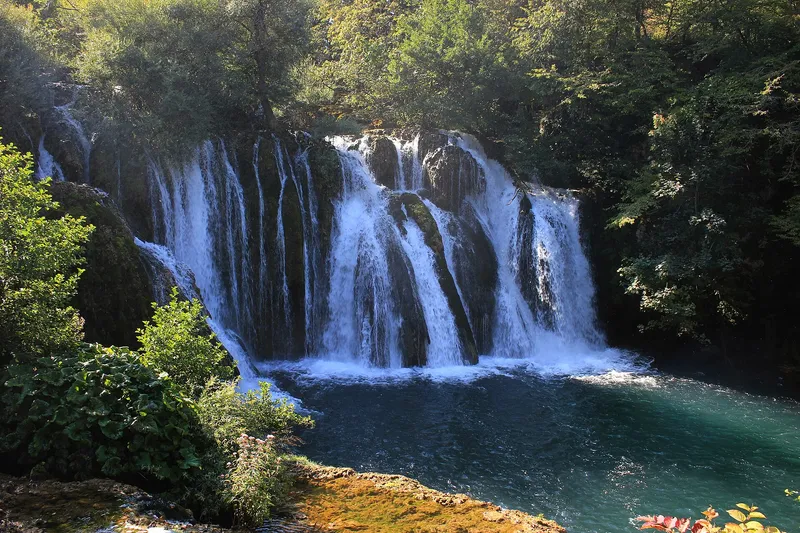
Milančev buk and the tufa cascades
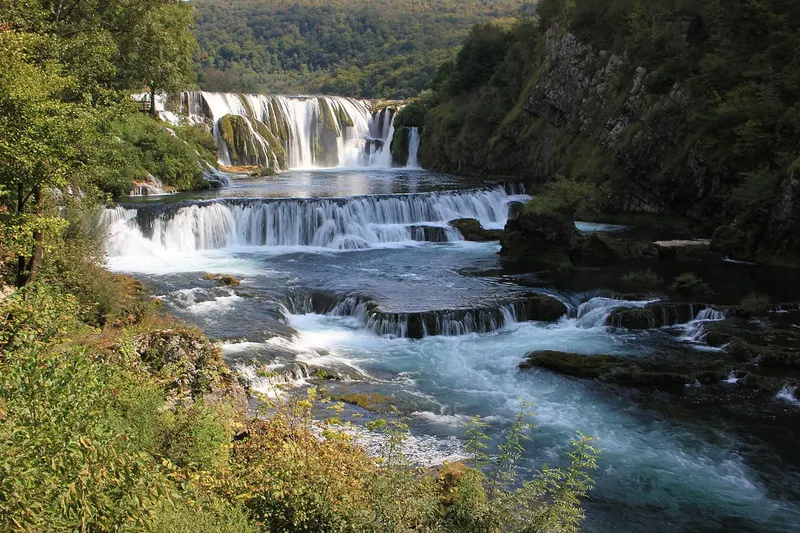
A chain of waterfalls runs through the whole village down to the mouth of the Unac. One of them is Milančev buk in the Martin Brod visitor zone; the whole sequence is 800 metres long with a drop of 54 metres. The steps formed over a long period in very clear water rich in mosses and algae, from which tufa barriers grow. Cascades, small river islands, rapids and waterfalls shape the Una along almost its entire course.
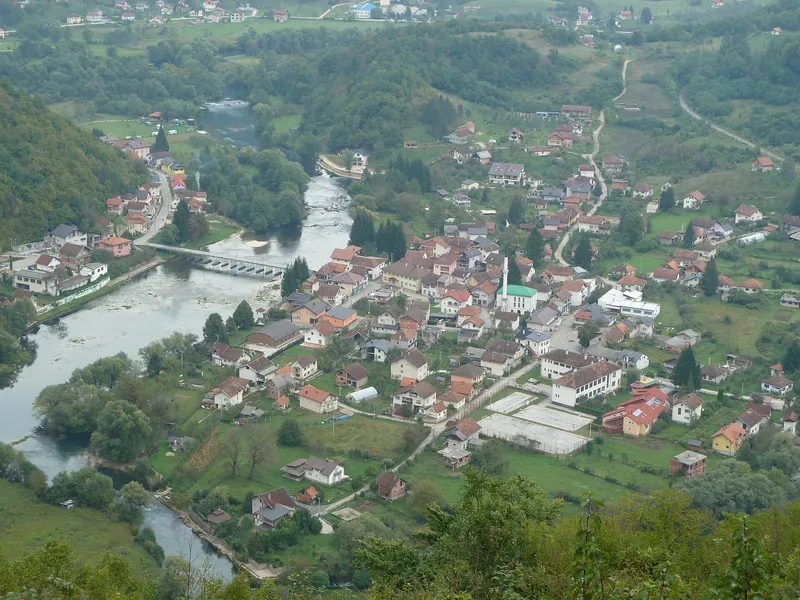
The Unac skirts the east of the village and joins the Una here. Its canyon ends at Martin Brod; with steep rock walls and waterfalls it draws climbers, paddlers and anglers.
Mills and the bučnica
Martin Brod used to have a great many mills. A stream ran past almost every house, and on each one the water drove one or even two mills. People from the surrounding area brought their grain here to be ground.
About 200 metres from the waterfall stands the bučnica, a natural, eco-friendly washing place. It is thought to be more than 300 years old.
Rmanj fortress
Rmanj fortress was built in the late 14th or early 15th century on the peninsula formed by the Unac at its mouth with the Una; it was originally called Konuba. It was a four-sided stone fort with a round tower. It is first mentioned in 1431, when the Hungarian King Sigismund pledged it to Nikola Frankopan. Below it grew a settlement of craftsmen and traders, called a “civitas” in a charter of 1494, with a crossing over the Una. In 1524 Rmanj came under Ottoman rule.
The walls were razed to their foundations, and only the round tower, about 10 metres high, survives. Since 2016 it has been protected as a National Monument of Bosnia and Herzegovina.
Rmanj Monastery
About 700 metres south-east of the confluence, some 30 metres from the left bank of the Unac, stands the active Serbian Orthodox Rmanj Monastery, dedicated to Saint Nicholas. Its exact founding date is unknown; the Commission to Preserve National Monuments dates its origins to the late 15th or early 16th century. Folk tradition credits Katarina Branković, daughter of the Serbian despot Đurađ Branković, with founding it in memory of her son Herman, who died young; according to tradition, his name became “Rmanj” over time. At the beginning of the 17th century Rmanj became the seat of the metropolitans of Dabar-Bosnia.
In 1944, during the Second World War, German bombing razed the monastery to its foundations and destroyed its frescoes. Rebuilding of the church began in 1974 and was completed in the 1980s. In the war of 1992–1995 the church was devastated again; the monks returned in 1998. The single-nave domed church is plain on the outside, its only decoration a ring of 12 shallow arched niches below the dome cornice. Since 2007 the monastery site and the remains of the historic complex, with the remains of the original frescoes, have been a National Monument.
Getting around Martin Brod
Two hiking trails lead through Martin Brod, the “Martina staza” and the “Put pod gredu”. Martin Brod has a dedicated 900-metre fly-fishing stretch called “Unac”, for brown trout and grayling. Near park entrance no. 5, on the right of the road into Martin Brod, is the “Lucica” picnic area with covered tables and benches, close to where the Unac joins the Una.