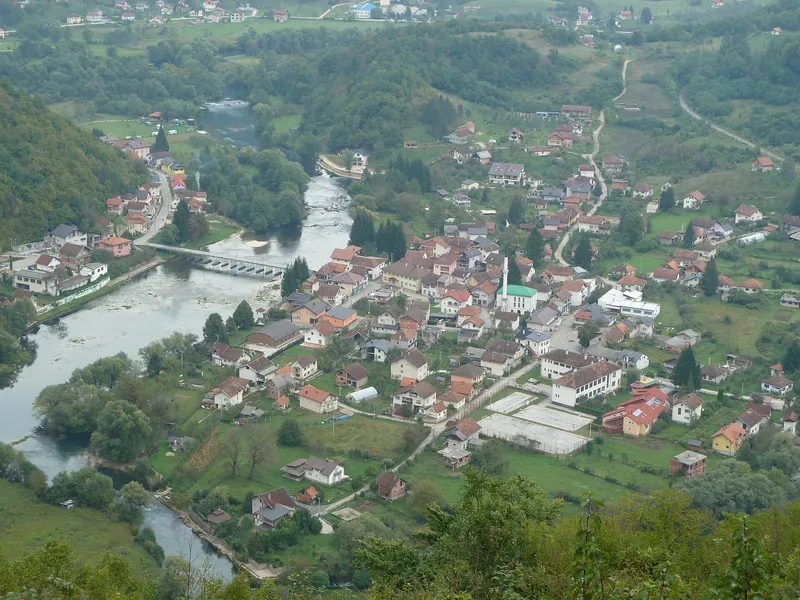
Setting
The town belongs to the City of Bihać in the Una-Sana Canton and lies about 3 kilometres from the border in a small basin of the Una valley. The mountains around it rise to more than 1100 metres on both sides. The larger part of Kulen Vakuf, including the centre, lies on the left, southern bank. Typical features are the terraces of the riverside houses, which stand on stilts over the Una, and the mosque stands in the centre. Since 2008 the area has been part of Una National Park, which protects the Una and its tributaries, the Krka and the Unac.
History
Grave finds show that the area was already settled in the Bronze Age, and in Roman times the place was called Cleuna. Old routes crossed here, among them the Roman road from Zadar between Dalmatia and Pannonia. The Ottoman kasaba of Džisr-i-kebir, the Great Bridge, grew up with the building of the mosque of Sultan Ahmed I. After the Treaty of Karlowitz in 1699, Halil Pasha had the town expanded and fortified: it stood on an artificial island by the left bank, surrounded by ramparts with gates and bastions. In the 18th century it was unofficially named after its benefactor as Palanka Mahmut Pasha Kulenović, and in the 19th century the name Kulen Vakuf took hold.
Austria-Hungary had the walls pulled down after the occupation of 1878, and in 1903 a great fire struck most of the town. In early September 1941 insurgents killed between 1000 and 3000 people in Kulen Vakuf, Ustaše prisoners as well as Muslim and, in smaller numbers, Croat civilians. Before that, the local Ustaše had murdered Serbs in the town and the surrounding villages. During the Bosnian war most residents fled to Bihać, and many returned after the war.
Ostrovica and Havala
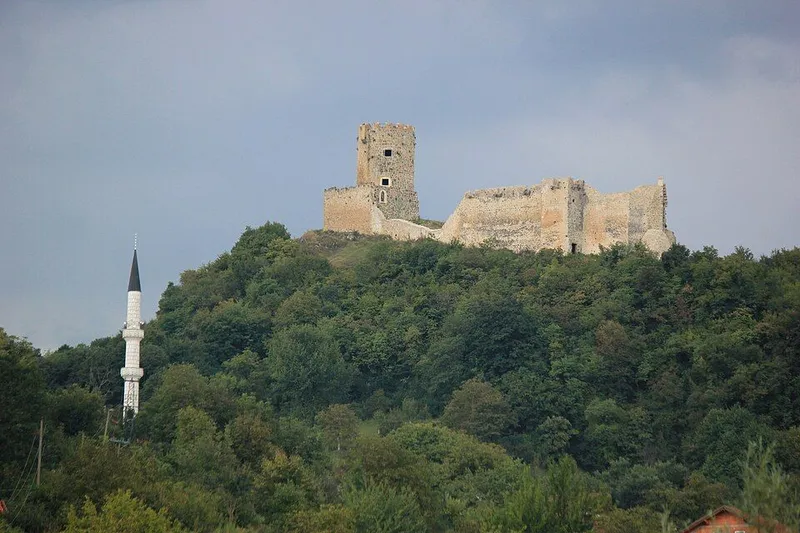
Above the town, on the left bank of the Una and its tributary the Ostrovica, rises the fortress of the same name. The name comes from the Slavic ostr, meaning sharp or pointed. The castle was built in the Middle Ages, when the area belonged to the župa of Lapac, and the Ottomans later expanded it. Since 2012 Ostrovica has been a national monument of Bosnia and Herzegovina as a historic site. Opposite, on the right bank, are the remains of the Ottoman fortress of Havala, built in the mid-17th century and owned by the Kulenović bey family.
Fly fishing and the river
Kulen Vakuf is a modest tourism centre on the upper Una, and most visitors come for water sports or fly fishing. In the town lies the 1.5-kilometre fishing reach 1B Kulen Vakuf, where brown trout and grayling are the main species. Fishing follows the national park's rules, with fixed seasons for both species, and handling the catch responsibly is part of it. The national park also offers rafting, cycling and hiking.
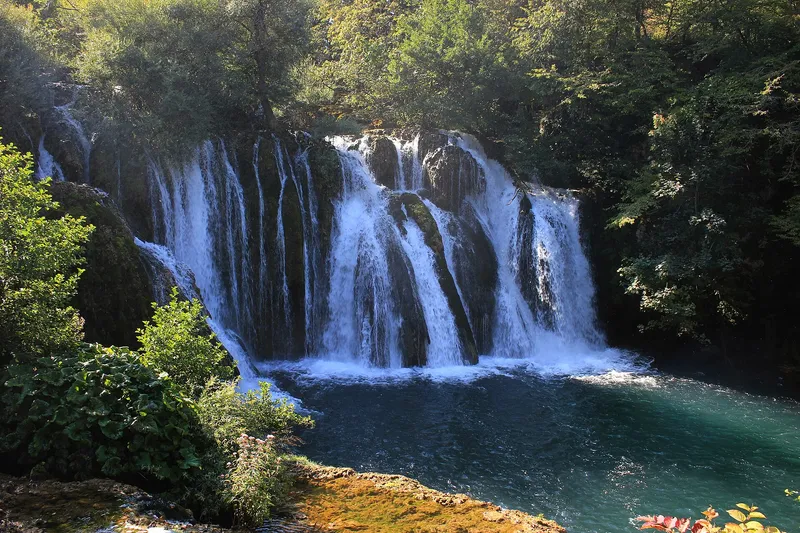
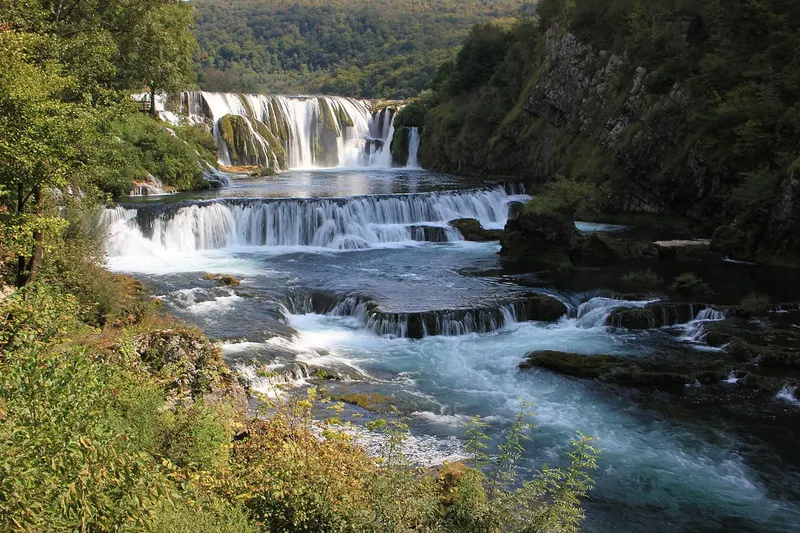
About 10 kilometres to the south lies Martin Brod at the entrance to the Unac gorge, known for its waterfalls and tufa terraces. The International Una Regatta for kayakers also starts there.