Origins
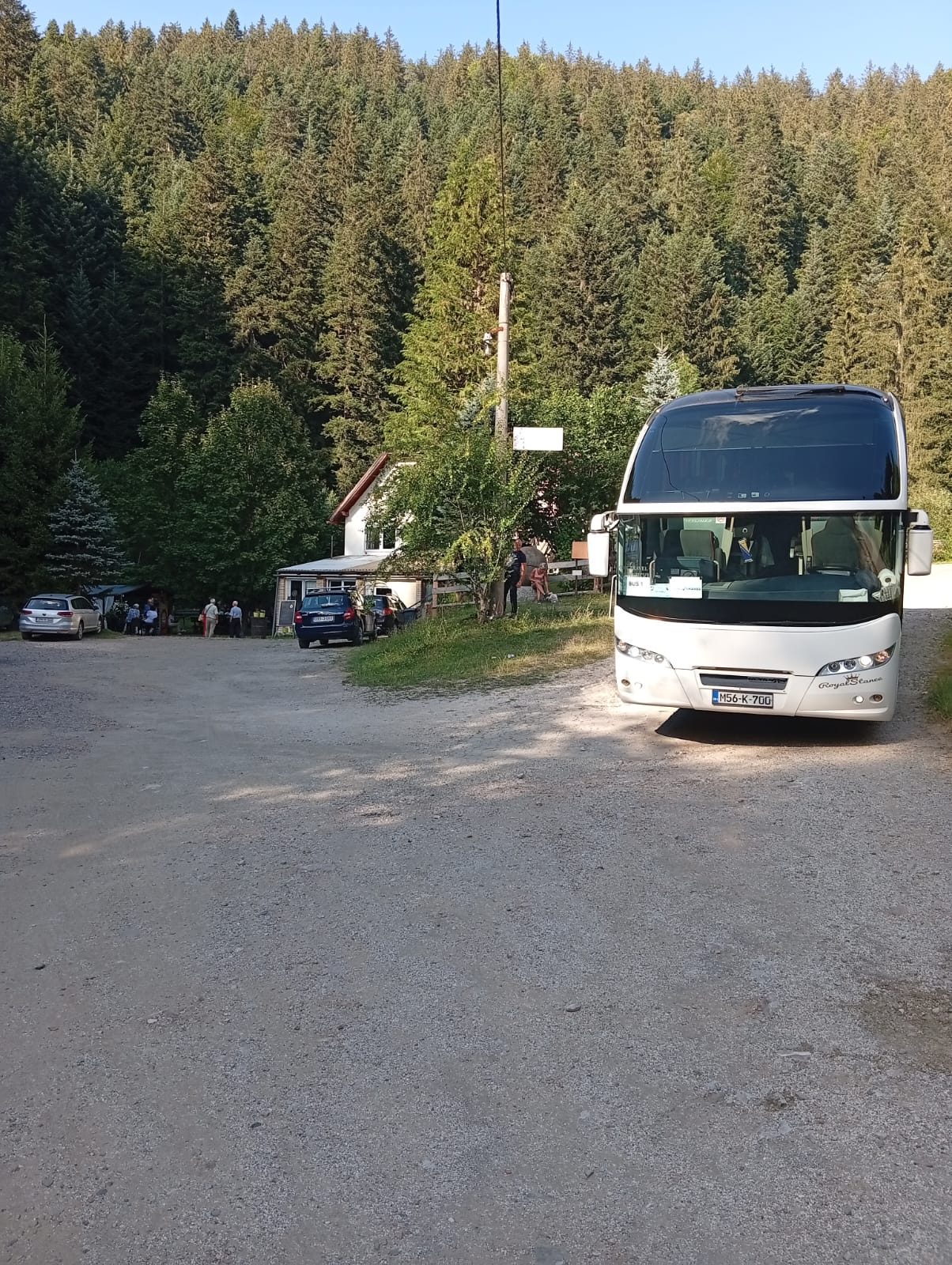
The complex was founded by the businessman Boris Stanišić in March 2003. At first there was only a pond, a tavern and a brook, and the site has been expanded steadily ever since. For the village he collected old objects, mainly from central and eastern Bosnia, and the tools date from the 19th and 20th centuries. The result is a mountain village in the heart of the flat Semberija.
Log houses, mills and ponds
The secular part consists of some 20 log houses of the Dinaric type with tall roofs. They were built in the late 19th and early 20th centuries and moved here from mountain villages in central Bosnia, for instance from Brgule near Vareš and Dugandžići near Olovo. Inside are old furniture, wooden spoons, cheese-making equipment, cradles and carpets.
At the centre lie two ponds, around which stand a stream mill from 1937, a water mill from 1917, a dairy house from 1948, a smithy, a stone well and a granary. Cooking is done on a traditional hearth, and the pastries are made from flour ground in the two mills. Swans and ducks live in the village, and a small stable keeps three ponies for children's riding lessons.
Monastery and replicas
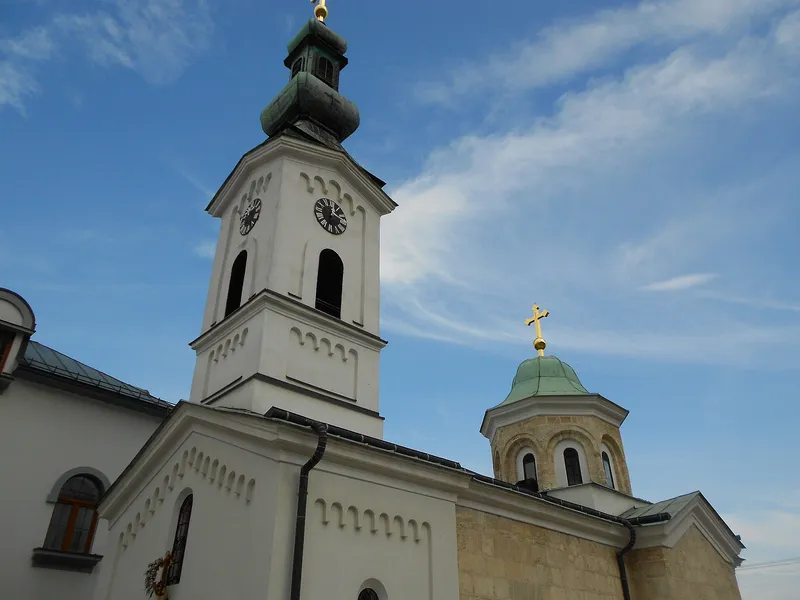
Paved stone paths lead to the second, spiritual part, a group of stone replicas of historic and religious buildings. Crossing a copy of Sarajevo's Kozija ćuprija, you reach the Monastery of St Nicholas, a replica of Kumanica Monastery in Serbia, a foundation of the Nemanjić dynasty. Three bishops consecrated it on 22 May 2006, and relic fragments of St Nicholas and Tsar Uroš lie in the altar. Since then baptisms and weddings have been held here.
Beside the monastery stand a konak in the style of medieval architecture and a baptistery modelled on a small church in Alaska. By the pond lies a stone amphitheatre with 380 seats for open-air cultural events.
Railway, carriages and crafts
From Podlugovi station a small electric park railway runs around the lake, through tunnels and over bridges. It recalls the narrow-gauge line to Bijeljina, which was shut down on 26 May 1979. From the village, carriage and hunting-sledge outings are offered through the villages of Semberija and to the bank of the Drina. A wooden house from 1933 sells handmade wooden furniture such as three-legged stools, chairs and tables, old tools and souvenirs.