History
Trebinje is first mentioned in the 10th century by Constantine Porphyrogenitus, under the name Tribunia. The town lay on a caravan route from Kotor and Dubrovnik to Bosnia, Serbia and Montenegro.
In 1377 Trebinje came under the medieval Bosnian state, where it became part of the lands of the Kosača noble family. It was then under Ottoman rule until 1878 and afterwards part of Austria-Hungary until 1918. The fortifications on the surrounding hills, today's main street and several squares and parks date from this last period.
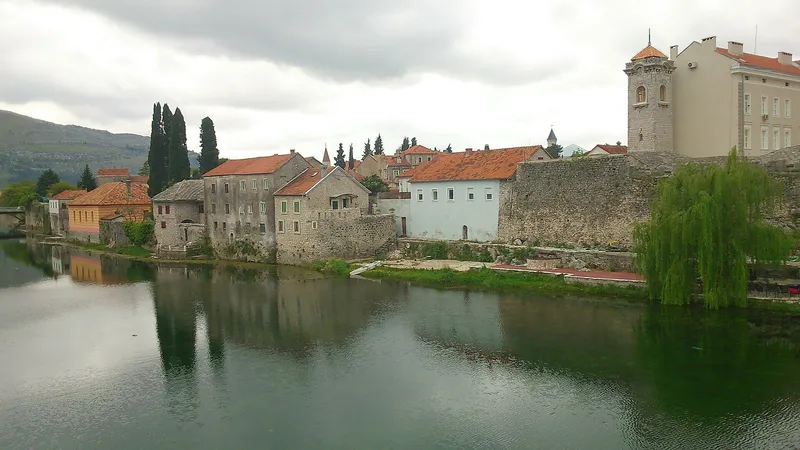
Kastel old town and the centre
The Kastel old town lies on the western bank of the Trebišnjica. The Ottomans built it where the medieval fortress of Ban Vir once stood. The Resulbegović family built the town walls, the old town square and two mosques at the beginning of the 18th century; the Osman-Paša Resulbegović Mosque dates from 1726. Today the lanes are lined with shops, cafés and restaurants.
The centre is shaped by Austro-Hungarian buildings and large plane trees. Dučić Street has the monument to Jovan Dučić, the poet and diplomat from Trebinje, and the Catholic cathedral from the 19th century. Under the plane trees on Freedom Square is the Green Market with produce from Herzegovina. The historic urban area is designated a National Monument of Bosnia and Herzegovina.
The Arslanagić Bridge
One of the town's landmarks is the Arslanagić Bridge, also known as the Perović Bridge. Grand Vizier Mehmed Pasha Sokolović had it built in 1574 as an endowment, and it served as a trade link between Herceg Novi and Dubrovnik. It is named after Arslan Agha, who fled Herceg Novi after the Venetians conquered it, and collected tolls at the bridge.
The bridge does not stand in its original place: it was flooded in 1965 during the construction of a hydroelectric plant, then moved downstream and rebuilt in 1972 between the Gradina and Police neighbourhoods.
Monasteries and Crkvina hill
On Crkvina hill above the town stands Hercegovačka Gračanica. The church was built in 2000 following the will of Jovan Dučić, who wished to be buried here; it was modelled on the Gračanica Monastery in Kosovo. In October 2000 the poet's remains were brought here from the USA.
Tvrdoš Monastery lies west of the town on the right bank of the Trebišnjica. It stands on the foundations of an older church, and the site's history reaches back to late antiquity. The monastery was destroyed and rebuilt several times, particularly badly in 1694 during fighting between the Venetians and the Ottomans. A glass floor in the church reveals foundations from the 4th century. Saint Basil of Ostrog received his monastic tonsure here. The monastery's winemaking tradition goes back to the 15th century. Duži Monastery lies 10 kilometres downstream on the left bank.
Nature, wine and tips for your visit
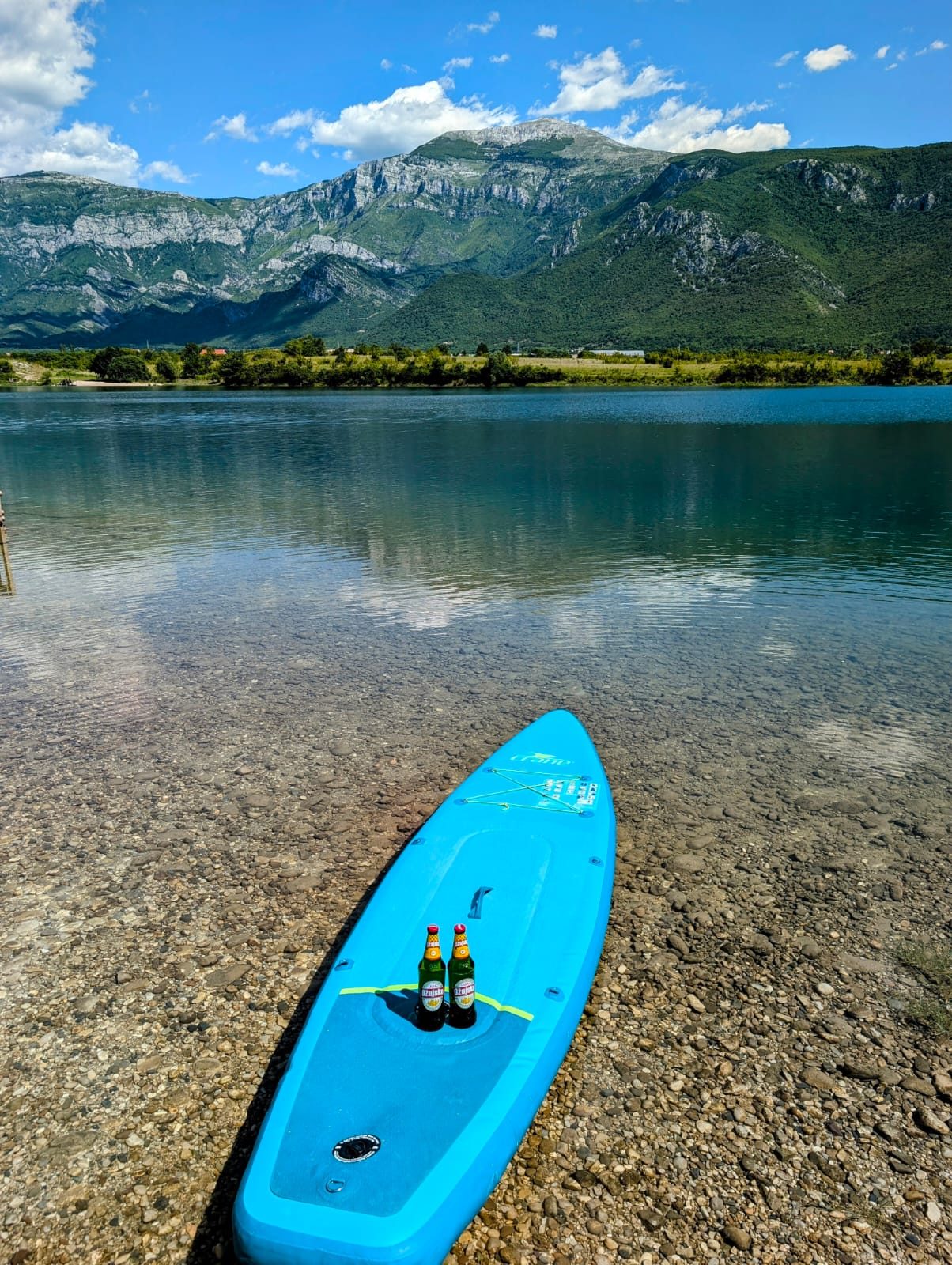
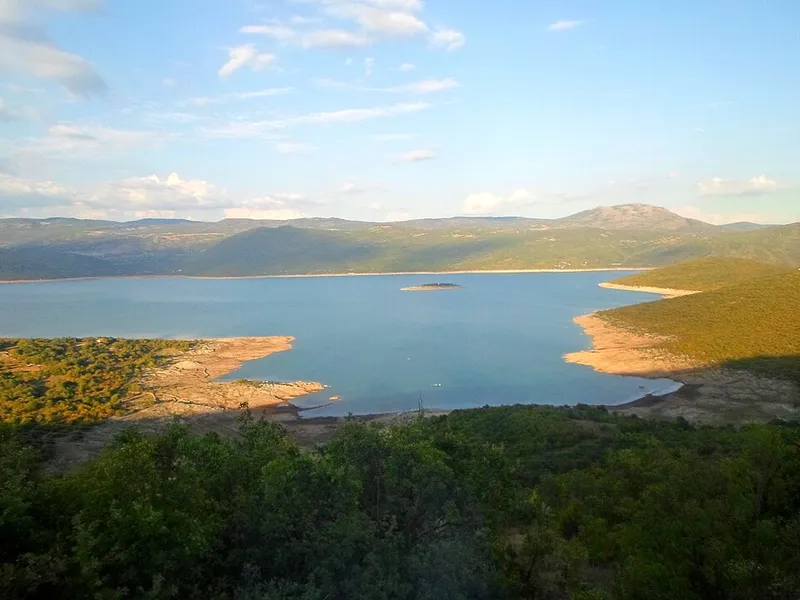
A laid-out footpath leads to the Austro-Hungarian Strač fortress, with views over the town and its surroundings. On hot days, the Trebišnjica and its tributary, the Sušica, offer places to swim. Around the town you can canoe on the lake at Lastva, cycle across the Popovo polje karst field or follow the Ćiro walking and cycling path.
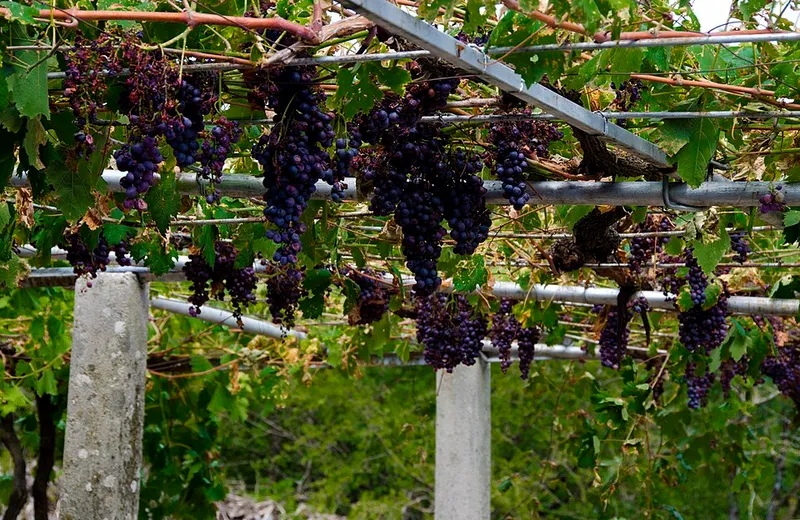
Hungarian winemakers once planted 12 hectares of vineyards in Lastva near Trebinje, and their Žilavka was supplied to the Habsburg court in Vienna. Today many families make wine in a relatively small area; typical varieties are Žilavka and Vranac.