From the Middle Ages to the Ottomans
The castle was built in the Middle Ages and is first mentioned in 1280, in the time of King Ladislaus IV of Hungary. At that point it belonged to the Babonići and later to the descendants of Mlatko of Peć, who became known after the place as the lords of Kladuša. In 1464 Martin IV Frankopan acquired half of the estate, and Velika Kladuša remained in Frankopan hands until 1572. The royal administration then took over the town, only to give it up again in 1585.
By 1633 at the latest the Ottomans had taken the area and the castle, after which they strengthened the fortress with an additional wall. It was of great strategic importance for the Ottoman advances into Croatia.
Dizdars, the garrison and the Hrnjica brothers
After the conquest the Ottomans appointed a dizdar, a castle commander. Until 1790 the garrison numbered 120 men; after the fall of Cetin, 72 men from the garrison there were moved to Kladuša. The castle was repaired in 1800. In 1789 the dizdar was Redžep-aga. The last dizdar was Husein-aga Alagić, whose family had held the office for more than 150 years.
A report by Krsto Frankopan of Tržac dated 20 November 1641 shows that the harambaša Mujo Hrnjica lived here with his brothers and with Mustafa Kozličić. In 1833 the castle had four serviceable cannons and one broken one. Until 1835 Velika Kladuša belonged to the captaincy of Ostrožac. On 17 October 1835, near Kladuša, troops of the general of Karlovac defeated the army of the Ostrožac captain Murat-beg Beširević.
The resistance of 1878
During the Austro-Hungarian occupation of Bosnia, a handful of Krajišnici defended the castle for ten days against a light infantry battalion of the occupying army. On the night of 19 to 20 October 1878 the last eight defenders left the fortress because they had run out of ammunition. This marked the end of Bosnia's armed resistance to the occupation.
The castle today
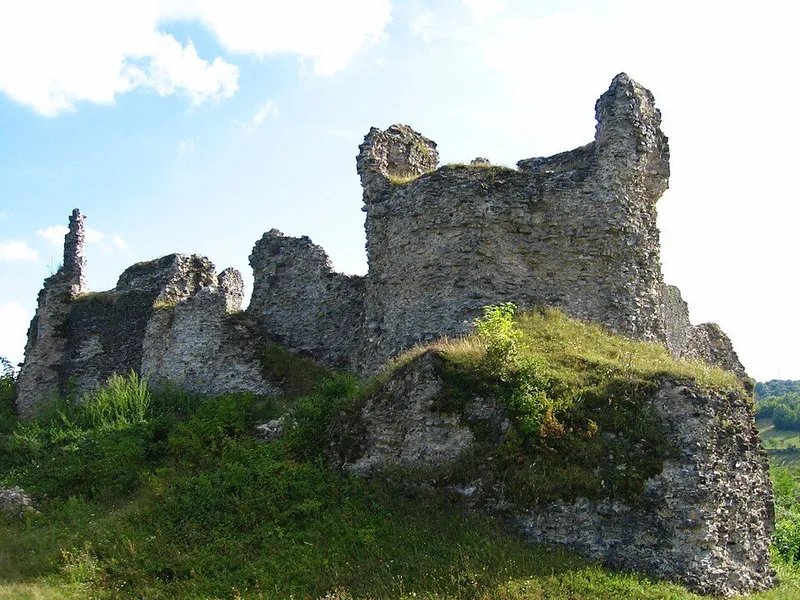
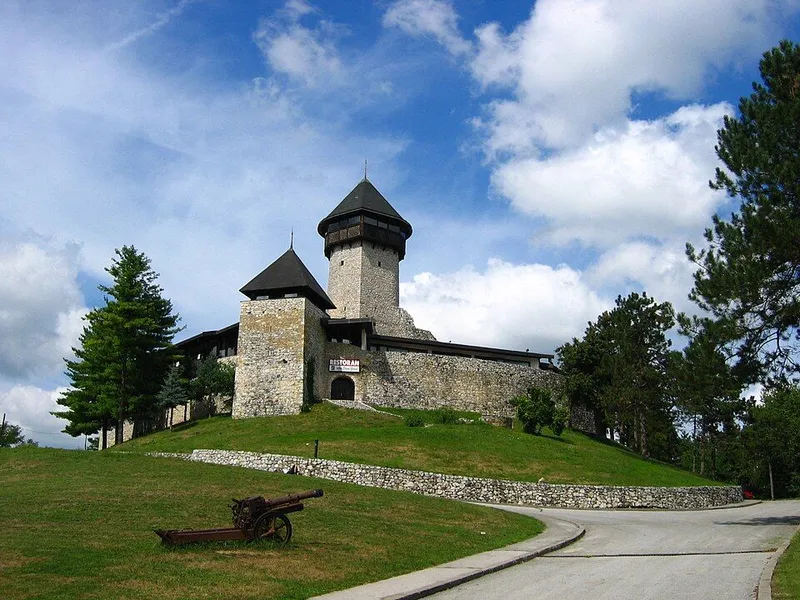
The castle was later converted into a building for tourism and hospitality. On 14 April 2023 the wooden dome on its tower burned down completely. Today the castle and the old buildings around it are in poor structural condition.
Several place names in the area recall the Hrnjica brothers, such as the well Hrnjičin bunar and the tower Hrnjičina kula. Mujo, Halil and Omer Hrnjica are known above all as heroes of epic folk poetry. The castle rises above the town, through which the Grabarska flows before joining the Kladušnica.