Location and cave system
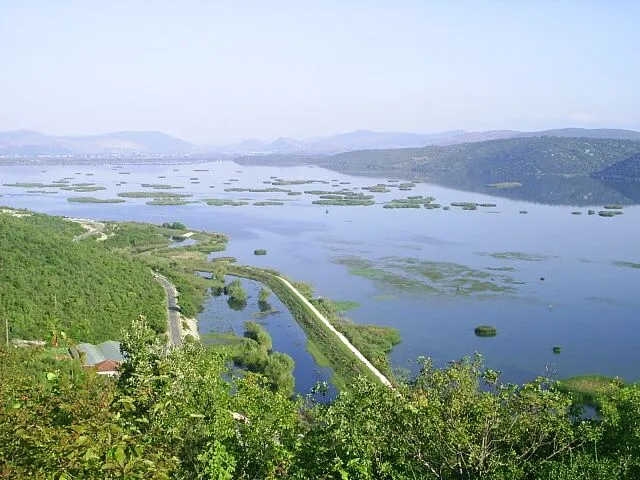
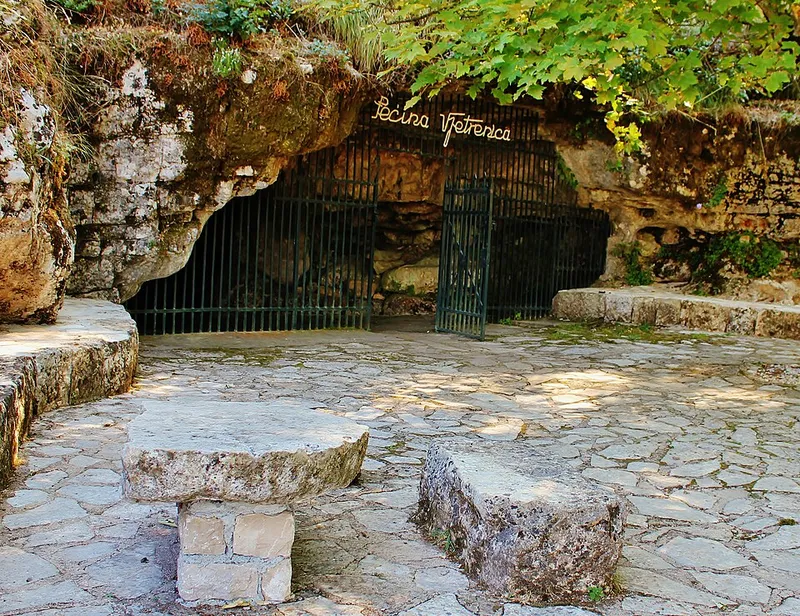
The entrance lies on the edge of Popovo polje in the municipality of Ravno, 300 metres east of the centre of Zavala village at 260 metres above sea level. Vjetrenica is a hydrologically active through-flow cave with four watercourses, dozens of smaller seasonal streams and underground lakes. According to UNESCO it is 7,324 metres long and forms part of the Trebišnjica river system.
Its name, meaning wind cave, comes from the strong draught at the entrance. It arises because the constant temperature inside evens out with the changing temperature outside: in summer warm air enters through deep crevices above the cave, cools down and flows out of the main entrance. Occasional measurements have recorded up to 10 metres per second. In winter, when it is much colder outside than inside, the airflow reverses.
Life in the dark
The cave has yielded more than 230 recorded taxa, among them 180 animals, 14 fungi and 35 protists. Of these, 93 live exclusively underground, 48 in water and 45 on land, and 40 were described to science for the first time here. The amphipod genus Niphargus alone is represented by nine species. Vjetrenica is also home to Marifugia cavatica, the only subterranean tubeworm in the world, and Velkovrhia enigmatica, a freshwater hydrozoan found only in groundwater. Several species are regarded as living fossils whose closest relatives died out long ago.
In 2024 UNESCO inscribed the cave on the World Heritage List under criterion (x), which covers biodiversity. It is the first stand-alone natural site of Bosnia and Herzegovina on the list. Today Vjetrenica lies within the strict protection zone of the Vjetrenica–Popovo polje Protected Landscape.
A history of exploration
Pliny the Elder mentioned the cave as early as the year 77 in his Naturalis historia. The major discoveries were made by the Czech speleologist Karel Absolon from 1912 to 1914, and Mihajlo Radovanović of Belgrade gave the first scientific description in 1929. Vjetrenica opened to visitors in 1964. In 1968 a complete leopard skeleton was found, which is now kept in the National Museum in Sarajevo.
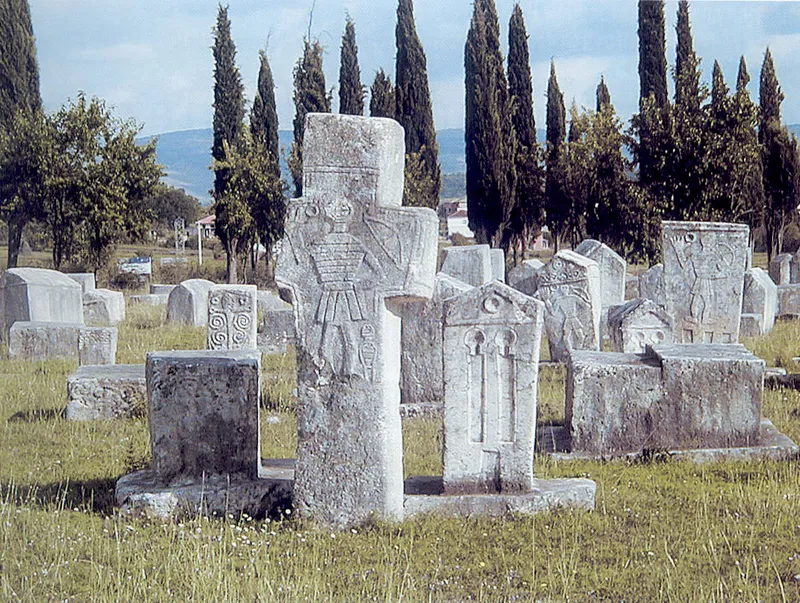
The equipment was destroyed during the war of the 1990s, and the cave reopened to visitors in the spring of 2010. Right at the entrance lies the grave of a 15th-century nobleman; a stećak carved into the rock with motifs of a knight on horseback and a hunt can still be seen.
What you see on the tour
The entrance measures 7 by 3 metres and is closed by an iron grille gate. Beyond it come spacious passages and halls, groups of dripstones and rimstone pools, which are dry in summer and spill from one into the next in the rainy months. The Golden Hall, with a large yellow flowstone, is regarded as the symbol of the cave. Further in stand the stalagmites of Tursko groblje, up to 3.5 metres tall, and the visitor path ends at Hajdučki stol, a group of rocks arranged like a table and chairs. The air temperature stays at around 11 degrees all year, so warm clothing makes sense even in summer.
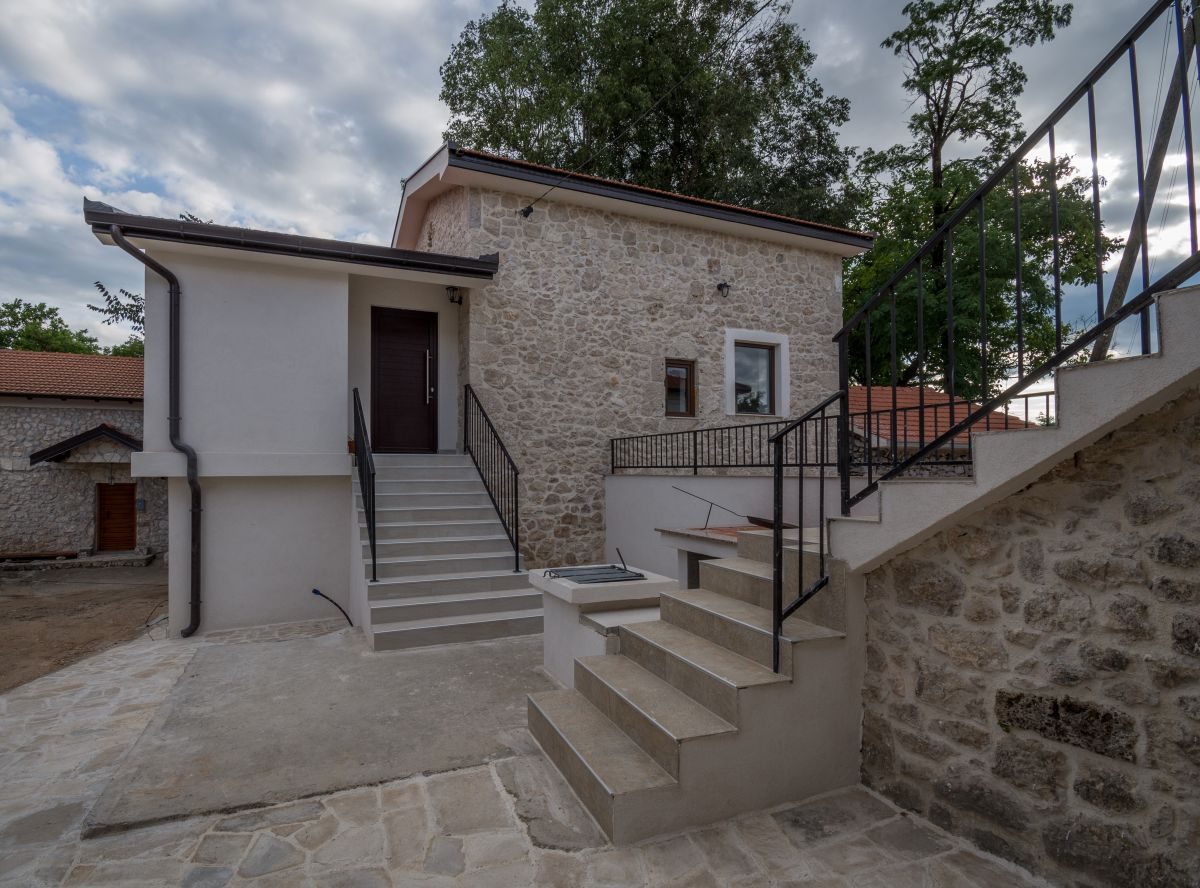
Together with the village of Zavala and its old stone architecture, the cave forms an ensemble of nature and built heritage.