History
People were buried in this area long before the Middle Ages: several Illyrian burial mounds nearby show that Radimlja continues an old tradition. Three large chest-shaped stones, two of them richly carved in low relief, are regarded as the core of the necropolis.
The cemetery is closely linked to the Hrabren-Miloradović family, who lived here in the 15th century. Their settlement on the nearby hill of Ošanići was then called Batnoge. Voivode Stipan, whose name appears above the portal of the church at Ošanići and on a large stone chair in front of it, died around 1470. His son Petar is recorded in 1477 as the elder of the Vlach community (katun) of Hrabren.
During Austro-Hungarian rule (1878–1918) the road between Čapljina and Stolac was built straight through the necropolis, splitting it in two.
What you can see
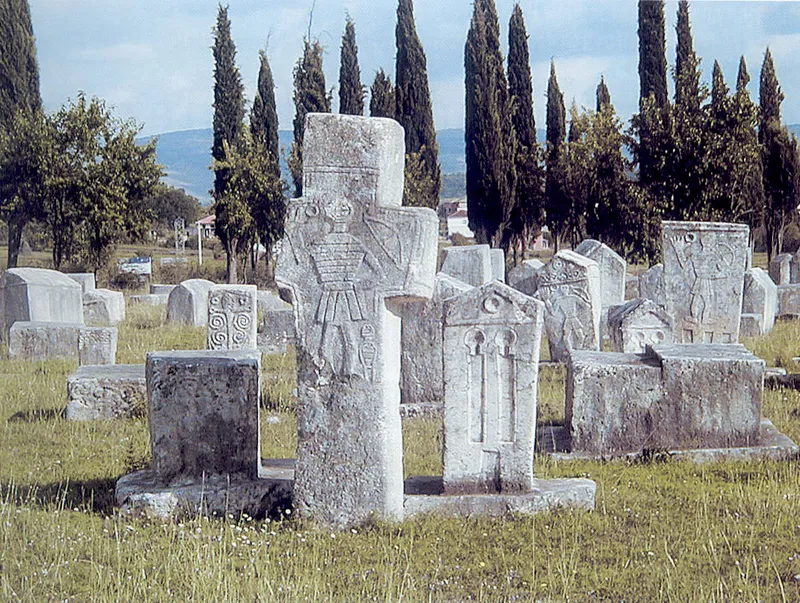
Radimlja has 133 stećci, set out in rows and aligned from northwest to southeast. There are 36 slabs and one slab on a base, 27 chests and 24 chests on bases, 4 tall chests and 5 tall chests on bases, 2 stones shaped like a gabled roof and 31 more on bases, and 3 cross-shaped stones.
63 tombstones are decorated, in sunk relief, by incision or with both techniques. The gabled stones and the tall chests are especially richly decorated, and some have arcades with columns and arches on their sides. Frequent motifs are vines with trefoil leaves, twisted ribbons, the sun, stars and crescent moon, along with crosses, shields, swords, and bow and arrow. The male figures with one hand raised high stand out; other reliefs show fighting, hunting and dancing.
The limestone came from a quarry on Ošanići hill, about 800 metres to the northeast, where an unfinished stećak remains to this day.
Inscriptions and stonemasons
Five tombstones carry inscriptions in Bosančica, the Bosnian form of Cyrillic. They name members of the Hrabren-Miloradović family and describe Radimlja as their family land "at Batnoge". One stone marks the grave of Radoje, brother of Voivode Petar; both were sons of Voivode Stipan. Radoje Vukovič, a nephew of Petar, died in the 1480s or 1490s.
Scribes and stonemasons left their mark too: Bolašin Bogačič, Miogost and Ratko Brativonič or Brativojevič signed their names on the tombstones.
Protection and World Heritage
The necropolis has been protected since 1967, at first as a cultural monument of Bosnia and Herzegovina. In November 2002 the Commission to Preserve National Monuments declared the historic area of Radimlja a national monument. Systematic conservation work on the stones was completed in 2010.
Since 2016 Radimlja has been one of 28 sites of the World Heritage property of medieval stećci graveyards in Bosnia and Herzegovina, Croatia, Montenegro and Serbia. Stećci were made from the second half of the 12th century into the 16th century, mainly in the 14th and 15th centuries. All three Christian communities of the Middle Ages buried their dead under them: the Orthodox, the Catholic and the Bosnian Church.
Surroundings and visiting
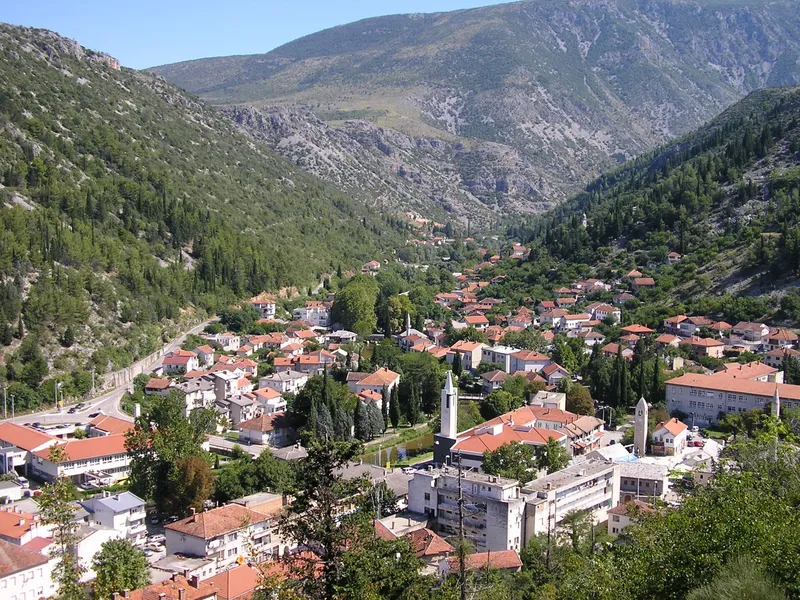
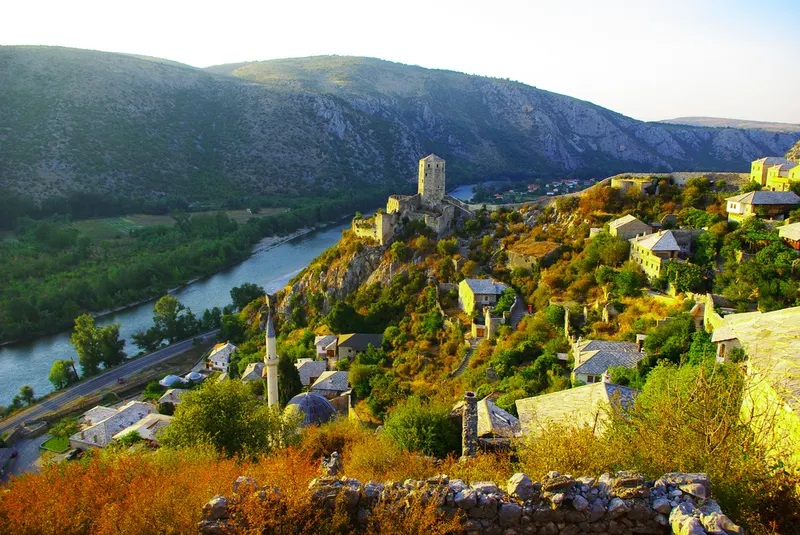
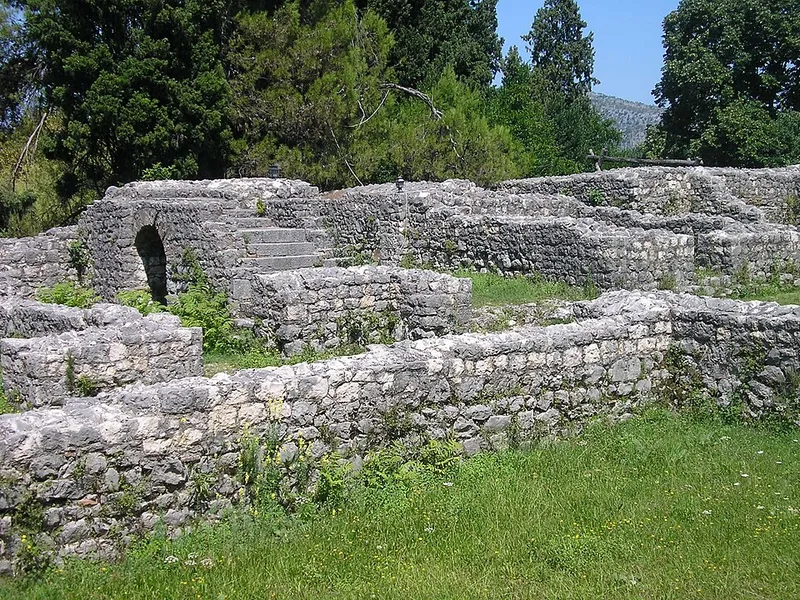
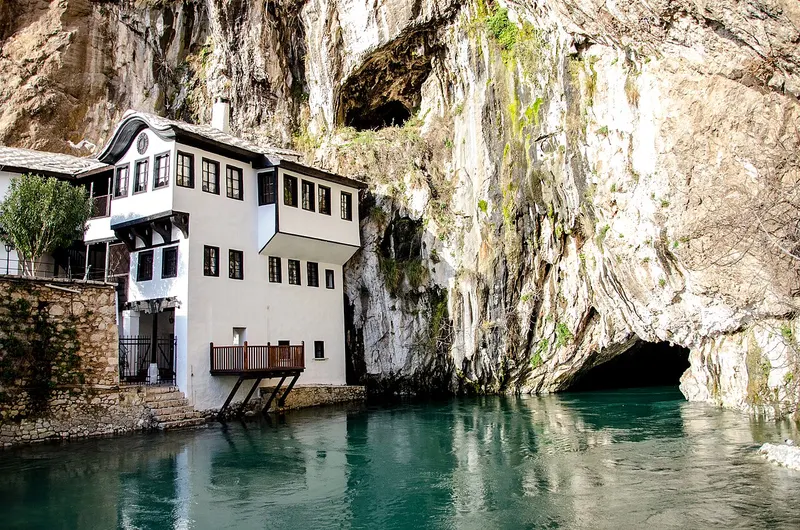
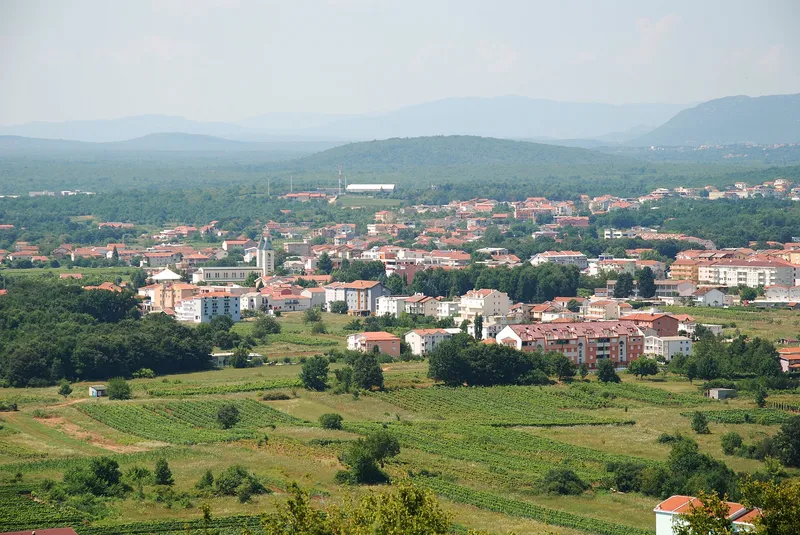
Radimlja is part of the historic area of Stolac, where traces of many periods survive: the prehistoric Badanj cave at Borojevići, the Hellenistic town of Daorson, the medieval forts of Vidoški grad and Vršnik, the Church of Saints Peter and Paul at Ošanići, and Ottoman mosques and a bazaar.
The tombstones stand on both sides of the road to Stolac. Cypresses line the southeastern edge, and the Radimlja, a tributary of the Bregava, flows past on the west and south.