Setting and name
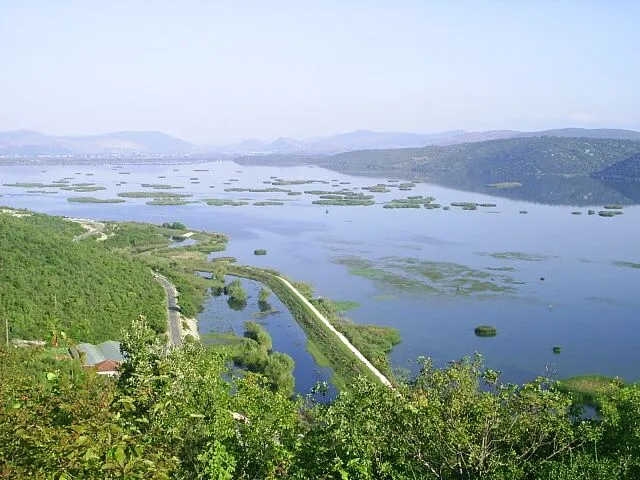
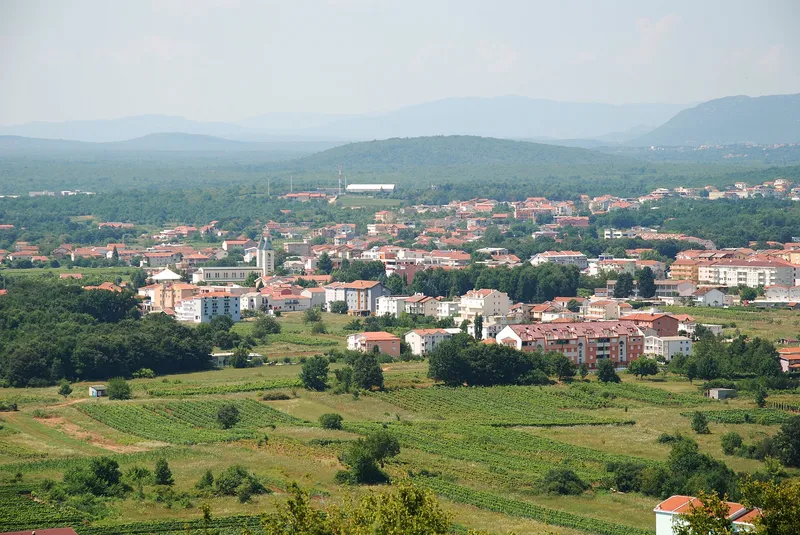
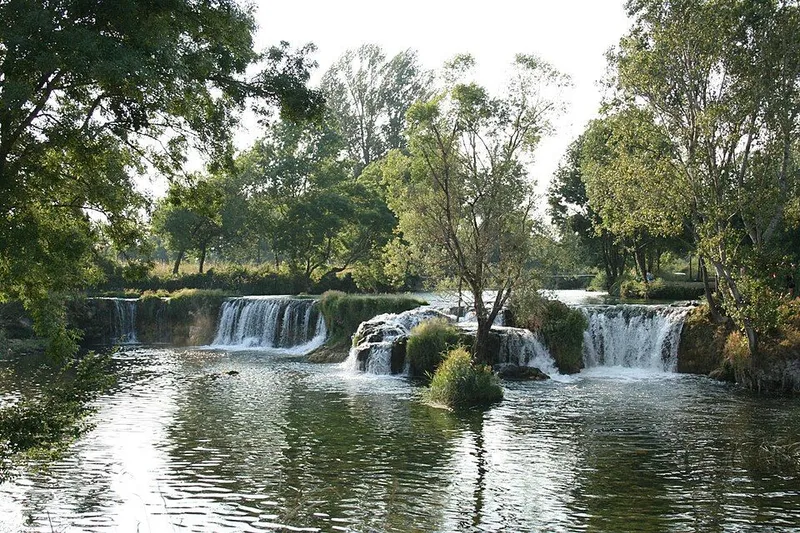
The complex stands on a levelled hill beside a branch of the Neretva, on the road to Gabela, formerly the old road to Metković. It lies in the wedge where the Trebižat flows into the Neretva, surrounded by lush Mediterranean vegetation. Mogorjelo supplied the Roman town of Narona, whose ruins lie in the village of Vid near Metković.
The origin of the name is uncertain. Folk tradition links it to ‘mnogo gorjelo’, ‘it burned a lot’. The linguist Petar Skok connected it with the old Mediterranean word magullellus, a hut. Today the accepted view is that Mogorjelo is a shortened form of the Greek name Hermagoras, after Saint Hermagoras, a disciple of Mark the Evangelist who was especially venerated in Aquileia.
From farm estate to fortified villa
In the middle of the 1st century a settler from Italy had a private farm estate built here. The farm building stood on a spur of the hill and the residence on the sunny southern slope. The estate had a bath, an oil press, a mill and a bakery, while a brickworks, a pottery workshop and a stable lay outside. The complex burned down in the 3rd century.
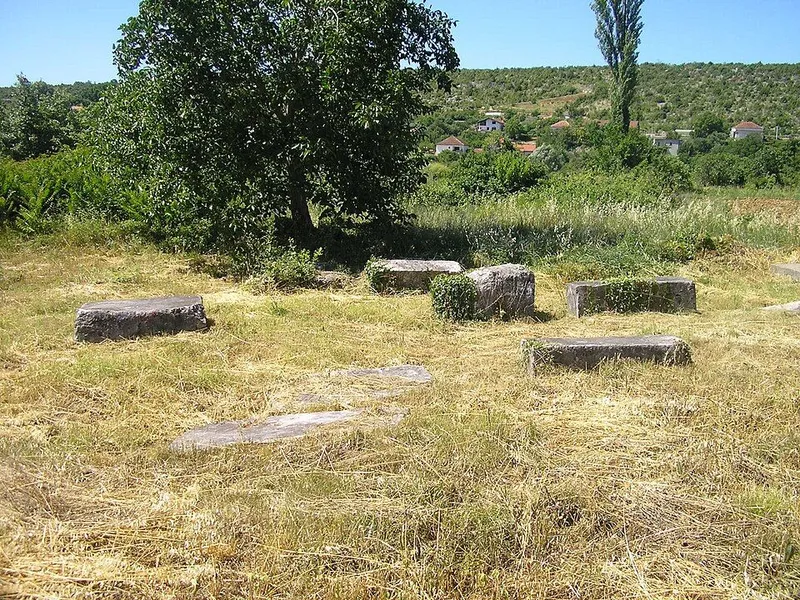
In the early 4th century a state estate was built over the ruins, with the villa that makes up most of the site today. The working quarters of the older building, with the installations for wine and oil, the mill and the bakery, were incorporated into the new one. The estate was destroyed in a great fire, probably between 401 and 403 during the Visigoth invasion. Life went on nonetheless: in the middle of the 5th century two early Christian basilicas were built inside the walls, and items of Carolingian origin from the 9th century were found in the round tower. Burials took place on the site until the 19th century.
What to see
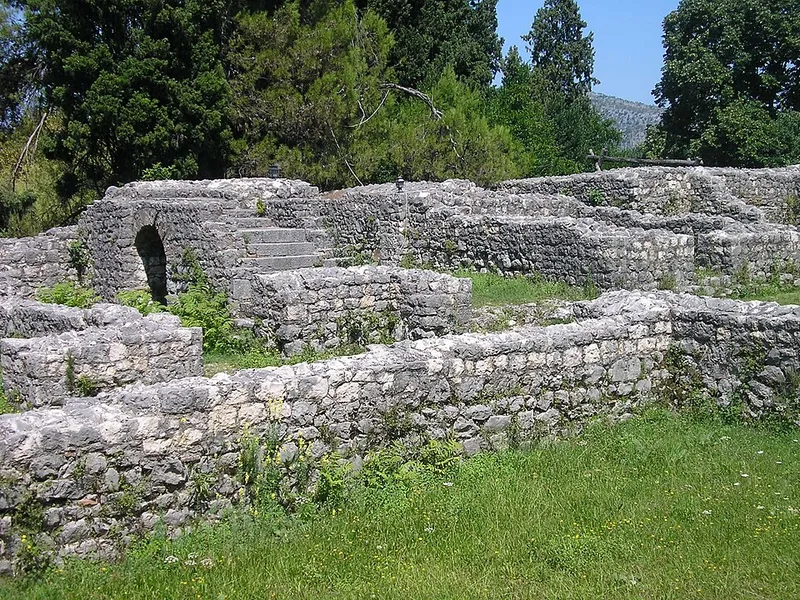
The complex forms a rectangle of 102 by 86 metres with corner towers, laid out much like Diocletian's Palace in Split. Of the four towers, three were square; the fourth, on the east side, was round and set back because of the nearby Neretva. The north gate, the Porta decumana, was decorated with two stone blocks showing acanthus and vines. At every gate, stairs led up to the parapets. Inside were quarters for the workers, stores for tools and harvested produce, and five oil containers sunk into the ground.
In the south stood the owner's two-storey palace. The living rooms on the upper floor had mosaic floors and walls painted to look like marble, and the upper portico had Corinthian columns of stone from the island of Korčula. Of the older 1st-century building, whose working quarters were absorbed into the new villa, only the foundations of the eastern part survive today; the western part was cleared away during the excavations. The ancient press, the torcular, was partly restored and reconstructed by the archaeologist Ivo Bojanovski in 1963 and 1964.
Excavation, interpretation and protection
Mogorjelo was first excavated between 1899 and 1903 under Carl Patsch. He took the complex for a Roman fort in a chain of fortifications between the Krka and the Neretva. Later research did not fully confirm this, and other scholars see it as a fortified large estate, that is, a villa rustica or a palatium. In 1903 and 1904 the walls were conserved and cypresses planted. Further investigations and restoration followed, including in 1947 and between 1951 and 1962.
In November 2002 the Commission to Preserve National Monuments declared Mogorjelo a national monument of Bosnia and Herzegovina.