The Brotnjo plateau
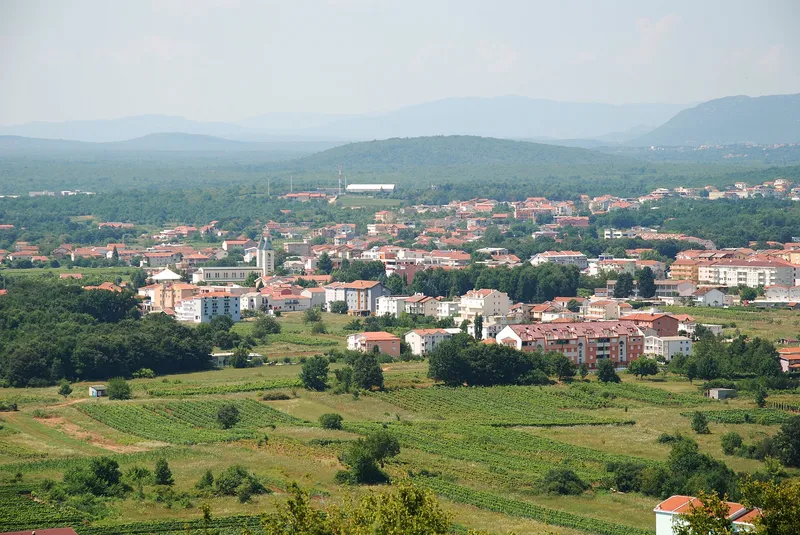
Brotnjo is a fertile karst plateau in Herzegovina, mostly between 225 and 582 metres above sea level. It is bounded to the north by Mount Trtlo at 690 metres and to the east by a stretch of the Neretva, and to the south it reaches the hills of Mala and Velika Crnica. Of its roughly 234 square kilometres, 181 belong to the municipality of Čitluk and smaller parts to Ljubuški, Čapljina and Mostar. The municipality also includes the pilgrimage village of Međugorje, a few kilometres south of Čitluk.
The climate is Mediterranean with warm summers, and besides vines the area grows almonds, pomegranates, oranges, olives and immortelle. For generations families made their living from vines and tobacco. According to recent research, the name Brotnjo comes from madder, broć in Croatian, which was used here in the Middle Ages to dye cloth. The plant now appears on the coat of arms of the municipality of Čitluk.
Wine from Žilavka and Blatina
Vines have been grown on Brotnjo for centuries, and almost every family in the municipality has its own vineyard and makes its own wine. The vineyards are planted mainly with Žilavka, Blatina and Vranac, and the two native varieties are regarded as typical of the area.
Žilavka is a white grape native to Herzegovina. It ripens at the end of September, copes well with shallow karst soils and tolerates drought very well. Its yellow-green wine reaches 11 to 14 per cent alcohol and is served at 12 degrees. Blatina is a red grape native to Herzegovina. Because its flowers are functionally female, it is planted together with varieties such as Trnjak or Vranac. Its dark red wine reaches 13 to 15 per cent in exceptional years and is served at up to 18 degrees.
In the south of Brotnjo lies a stony vineyard where a stone desert was turned into vineland. Žilavka grows there on some 100 hectares and, thanks to sun, stone and irrigation, reaches a high sugar content.
History from the Illyrians to today
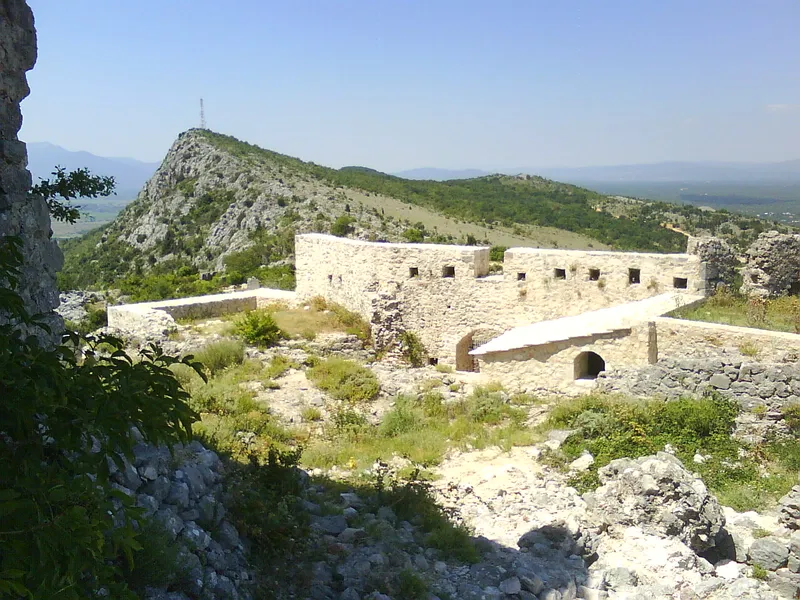
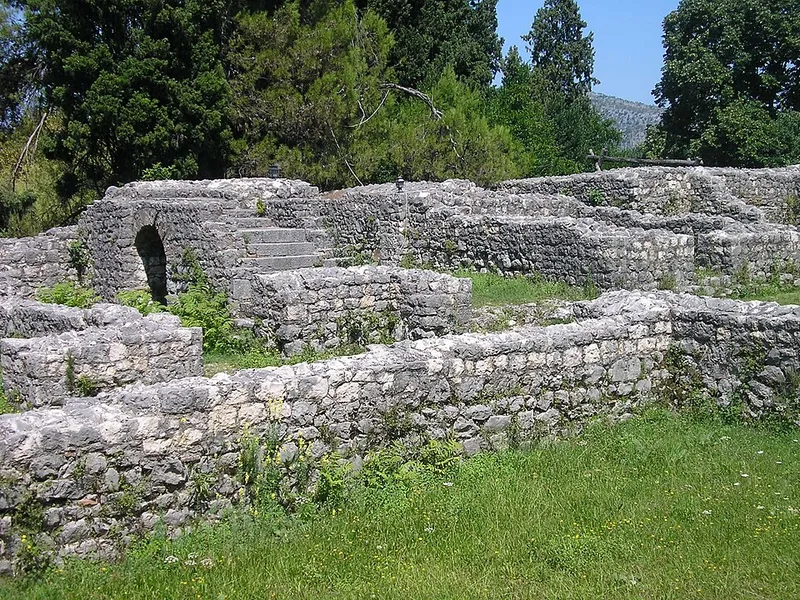
As far as is known, Brotnjo first appears in writing in 1306/07, in connection with trade with Dubrovnik; the document is kept in the archive there. Yet the area has been settled far longer. Numerous Illyrian hillforts survive on the plateau, among them those at Hamzići, Gradnići and Krehin Gradac, where graves, weapons, jewellery, pottery and tools have been found. In Roman times Brotnjo belonged to the province of Dalmatia, and places such as Čerin, Čitluk and Krehin Gradac have yielded Roman coins, remains of buildings and stone monuments.
The Ottomans conquered the area in the second half of the 15th century; a nahiye, an Ottoman administrative district, named Brotnjo is recorded from 1519. Čitluk only grew into the administrative centre of Brotnjo from the end of the 1950s.
Stećci and ancient finds
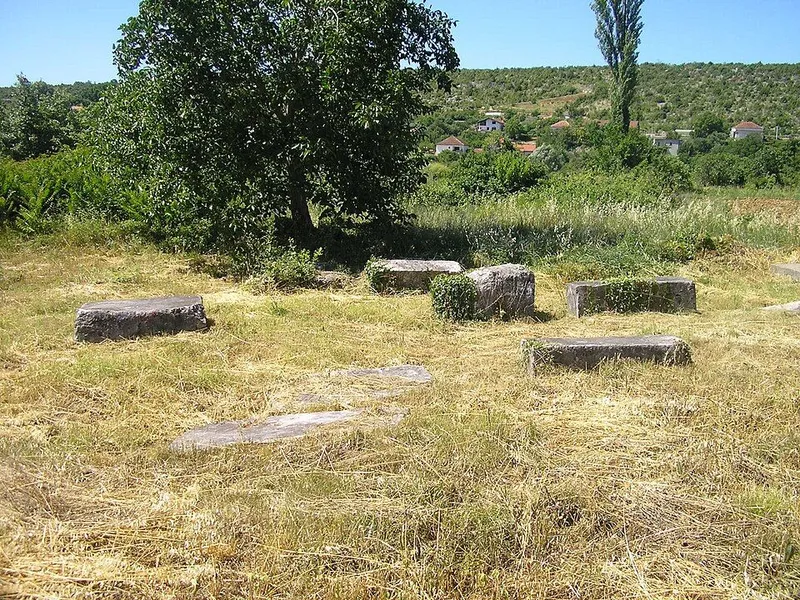
Many medieval tombstones, the stećci, survive in the municipality of Čitluk. Fieldwork in 2018 recorded 61 sites with 796 stećci. All forms are represented: slabs, chests, gabled sarcophagi, tall chests and crosses. Common motifs are the cross, crescent, sun, star and rosette. At Visočica in the Broćansko polje, between Donja Blatnica and Gornji Veliki Ograđenik, lie the stećci of the noble Komlinović family, the medieval lords of Brotnjo.
In Čerin stood an altar to the Roman deities Diana and Silvanus, of which a fragment bearing their names survives. Several stone fragments of an early Christian basilica are built into the parish house and church, and an early Christian sarcophagus and an ancient olive press stand in front of the parish church.