History
The first known inhabitants were Illyrians: the Daorsi in the Trebižat valley, later pushed out by the Ardiaei and the Delmatae. The Illyrians left stone burial mounds, of which there are more than 1000 in the area. Under Roman rule came Bigeste, first a road station and then a military camp, and Pagus Scunasticus, a settlement of discharged soldiers. Croats arrived in the area in the 7th century.
According to tradition, Herceg Stjepan Vukčić Kosača began building Ljubuški in honour of his wife Ljubuša, after whom the place is said to be named. Written sources of the 15th century record it as Lubussa. In the second half of the 15th century the fortress fell to the Ottomans and became a border stronghold with a strong garrison. The Austro-Hungarian army marched in on 2 August 1878, and the period that followed brought progress in infrastructure, farming, industry and administration.
Herceg Stjepan fortress
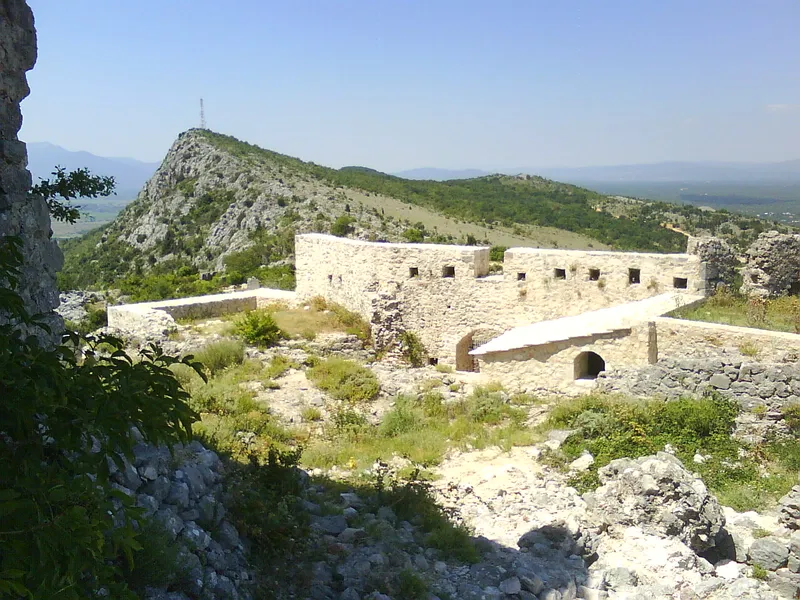
The fortress on Buturovica is usually attributed to Herceg Stjepan. It has two parts: the medieval square main tower, popularly called Herceguša, and an outer wall in the shape of an irregular polygon with massive towers from the Ottoman period. The complex measures about 93 by 49.5 m. Inside are the remains of guardrooms, a granary, a bakery and a powder store, as well as four cisterns, three of which can still be seen.
After 1835 the fortress lost its military role. In October 2003 it was declared a National Monument of Bosnia and Herzegovina, and the monuments commission lists it among endangered monuments because urgent protective work has not been carried out. About 250 m northwest of the entrance are the ruins of a 16th-century mosque, probably built by Nesuh-aga Vučjaković.
Humac: monastery, museum and the Humačka ploča
In 1884 Franciscans led by Friar Anđeo Nuić founded a museum in the Franciscan monastery of St Anthony of Padua at Humac. The present display dates from 2003 and is housed in the monastery's basement. It shows archaeological finds from the wider Herzegovina spanning almost 16,000 years, and a lapidarium of stone monuments stands in the monastery courtyard. The Ljubuški area has yielded 70 Roman monuments, mainly grave stelae of veterans and soldiers from various legions and auxiliary units.
Also on display is the Humačka ploča from the 11th or 12th century, an inscription in Cyrillic script with Glagolitic letters. It records building work on a church of the Archangel Michael; scholars read the builder's name in different ways, such as Krsmir or Kresimir. The monastery library holds more than 20,000 titles from the 16th to the 19th century.
Gračine and the stećci
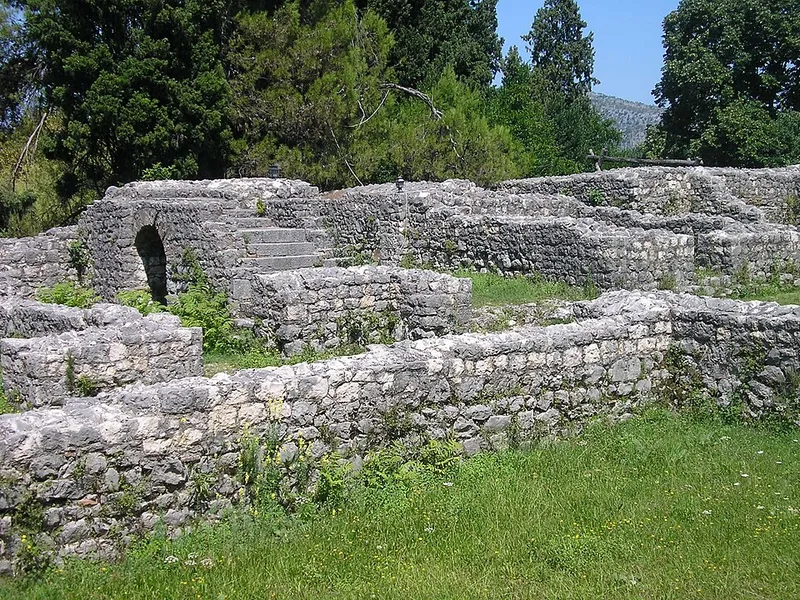
About 2 km southwest of the town, on a plateau above the left bank of the Trebižat at Humac, lies the Gračine site. The Roman military camp of Bigeste, dating from the 1st to 3rd centuries, was partly excavated and conserved between 1977 and 1988; finds include pottery, jugs, vases, coins, jewellery, glass, tools and weapons. New research began there in April 2017.
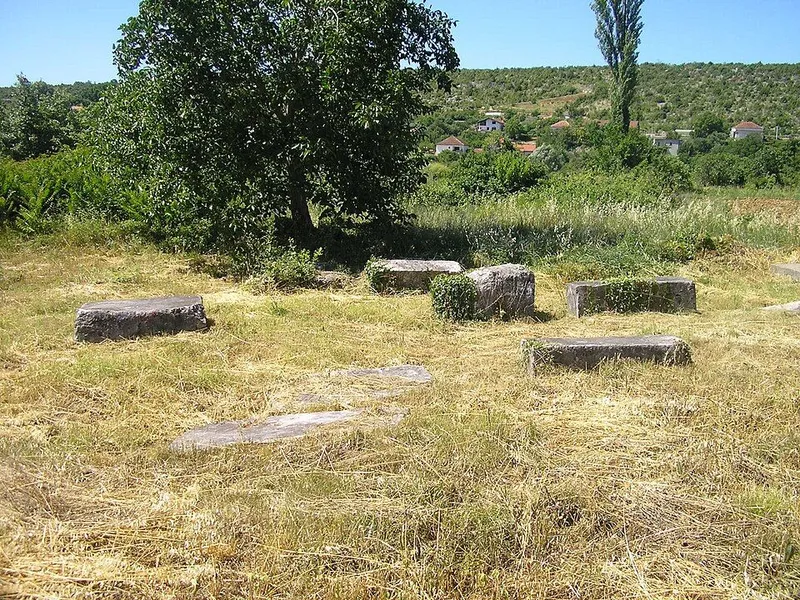
At 7 necropolises in the area, 214 stećci have been recorded; there are necropolises at Studenci, Bijača and Zvirići, for example. The stones show a shield and sword, human figures, twisted rope, the crescent moon, rosettes, trefoil tendrils, and hunting and tournament scenes. Most date from the 14th and 15th centuries. The Bijača necropolis is on the list of endangered monuments.
Waterfalls on the Trebižat
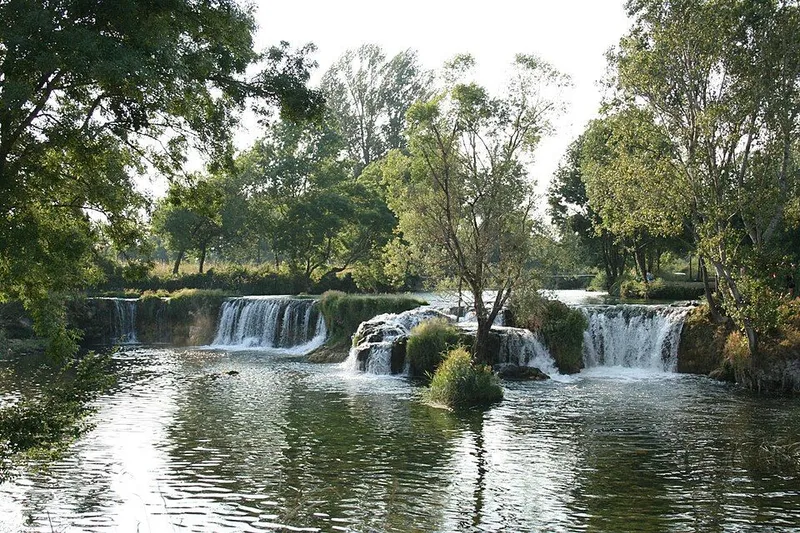
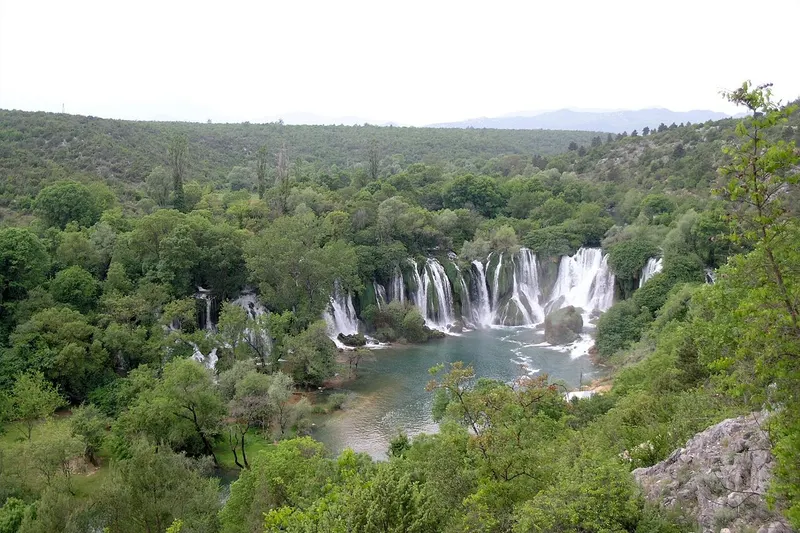
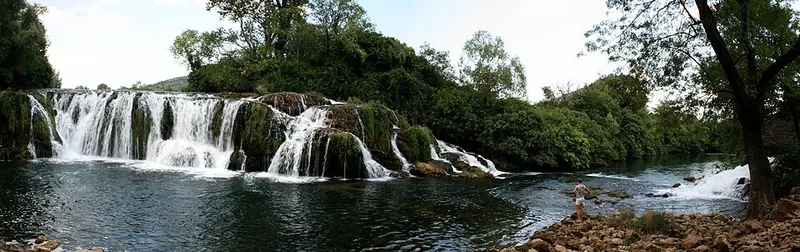
Near Ljubuški the Trebižat forms waterfalls of tufa that builds up over the years. Kravica is 7 km from the town, and in summer, when the water is low, its pool is good for swimming. Koćuša lies in the village of Veljaci, with mills and fulling mills right beside it.