How the waterfall formed
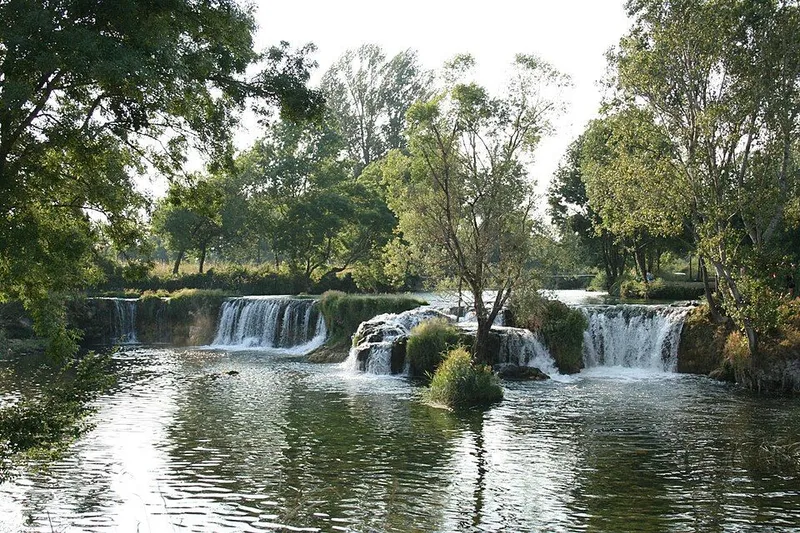
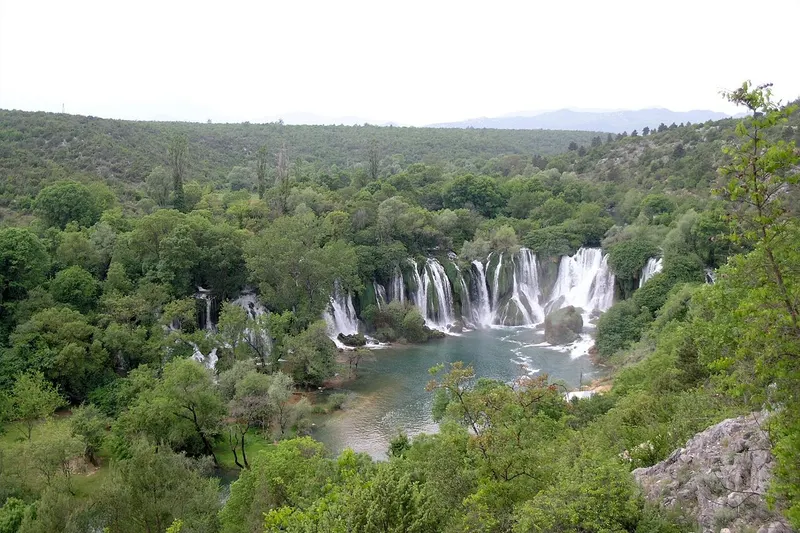
Kravica lies in the karst of Herzegovina, in the Ljubuški area, a few kilometres from the town. Three kilometres downstream of the village of Hrašljani, between the villages of Studenci and Zvirići, the Trebižat drops over a step. The river flows through limestone and deposits tufa, called sedra in Bosnian and Croatian, and the waterfall itself is built from this material.
The rim is semicircular and, depending on the water level, about 28 metres high. Below it lies a natural amphitheatre of water 120 metres in diameter. Grass, mosses, algae and lichens grow on the tufa, while chaste trees, figs and poplars grow beside the falls. The tufa areas around Kravica are among the geological natural monuments of Bosnia and Herzegovina.
Swimming and the seasons
In summer the Trebižat carries less water. That is when you can swim and do water sports in the pool below the falls; swimming is at your own risk. In spring the waterfall carries a lot of water and the otherwise dry landscape turns bright green.
Because the water level and vegetation change so much, Kravica looks different in every season.
Mills and history
In the past, many mills and fulling mills for pounding woollen cloth worked beside the falls. Nearby there is an old mill and a small grotto with stalactites of calcium carbonate. The waterfall once belonged to Zaim-beg Selimić, a well-known landowner, founder of endowments and benefactor from Ljubuški.
Around Kravica: Koćuša, the Trebižat and Ljubuški
The Trebižat has more waterfalls. Upstream, in the village of Veljaci, is the Koćuša waterfall, about 5 metres high, with mills beside it. The river is lined with willows and poplars and rich in trout, and canoe trips lead past its travertine barriers.
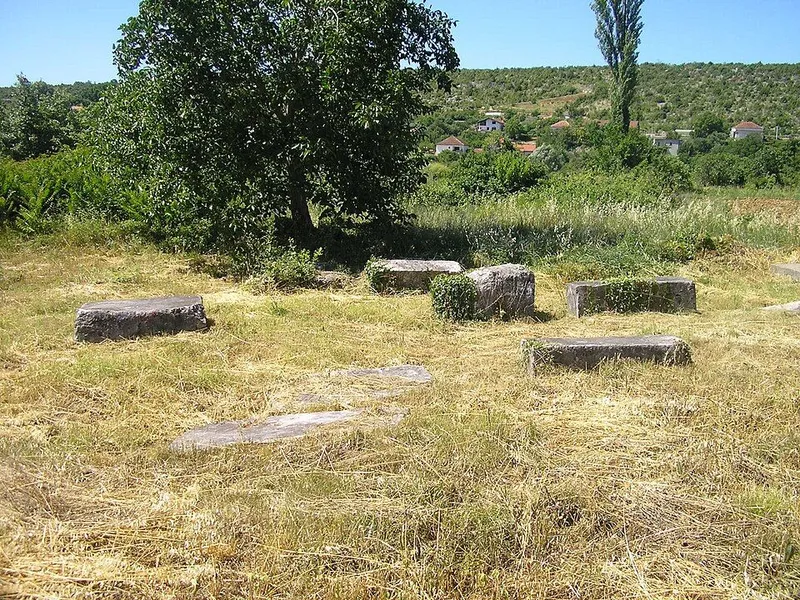
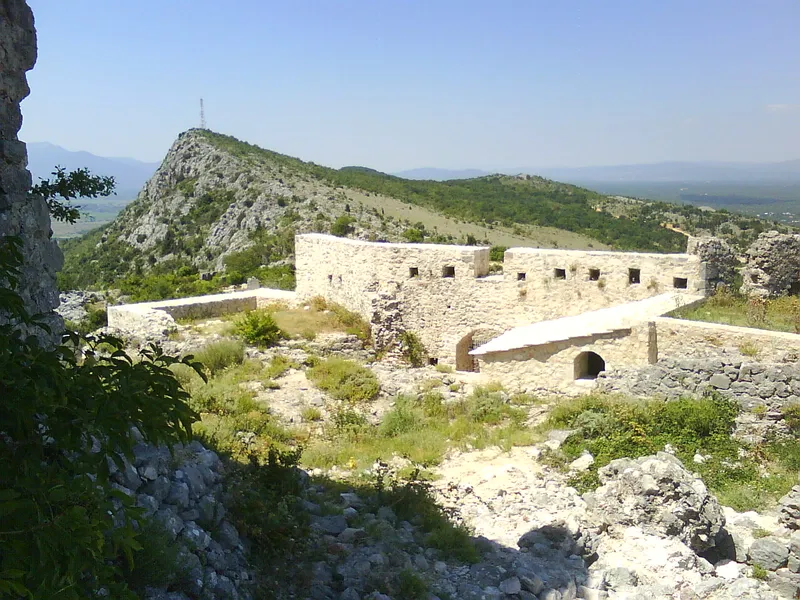
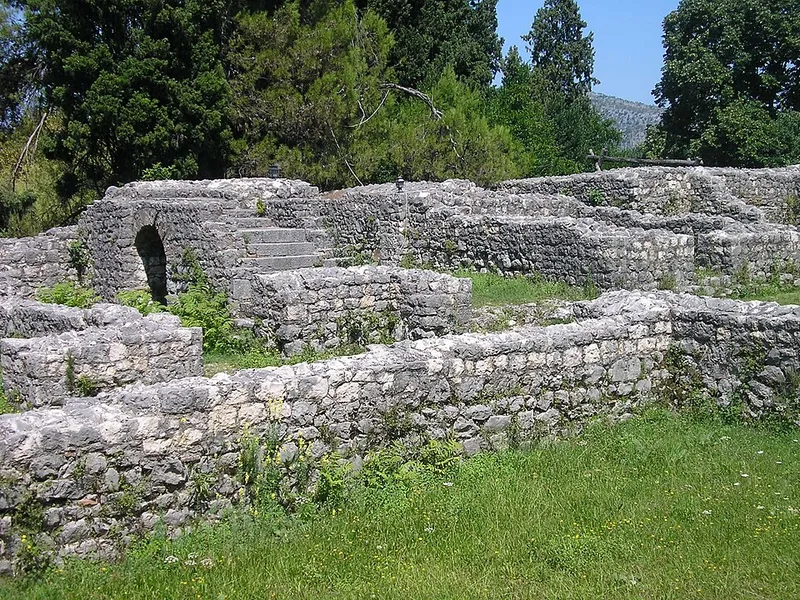
On Butorovica hill above Ljubuški stands the old fortress, with views over the Trebižat valley; the town first appears in writing as 'Lubussa' in the 15th century. In Humac, south-west of the town, are the remains of the Roman military camp of Gračine, also known as Bigeste, dating from the 1st to 3rd centuries. The museum of the Franciscan monastery in Humac displays finds from all over Herzegovina from the Old Stone Age to the present, including some of the finds from Gračine.