A castle at a river crossing
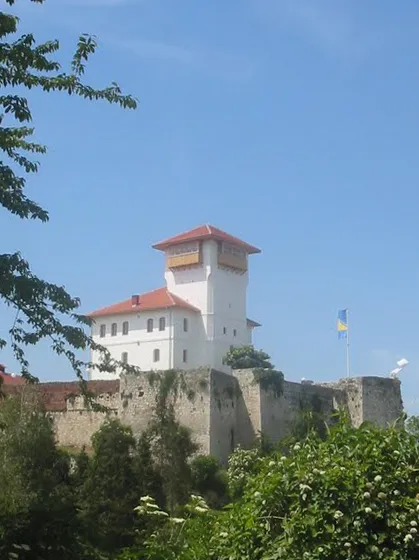
The site is known as Gradina Dobor or Dobor kula. A ferry once crossed the Bosna below the castle, and from there a road ran to the castles of Sokol near Gračanica and Srebrenik on the Tinja and on into the Soli district around Tuzla. A branch led to the Sava at Šamac, the main crossing from Slavonia into Bosnia; in the Middle Ages this was the easiest way for Hungarian armies to enter the country.
The site has a long past: road works in 1975 uncovered the remains of a prehistoric fortification on the southern slope below the castle. In the Middle Ages the area belonged to the župa of Nenavište: a charter of Ban Stjepan II Kotromanić from 1329 shows that the villages of Jakeš and Modriča, right next to the castle, were part of it.
Scene of Sigismund's wars
The first written records of Dobor come from the wars that King Sigismund of Hungary waged against Bosnia in the late 14th and early 15th centuries. Between 1387 and 1390 the Horvat brothers, Bishop Pavao of Zagreb and Ban Ivaniš, allies of the Bosnian king Tvrtko I, took refuge at Dobor. They built a new castle here and kept fighting Sigismund even after Tvrtko died in 1391. In 1394 Sigismund captured Dobor, had it burned and punished the brothers; one of his charters, dated 15 July 1394, was issued in the field camp below the castle.
In the autumn of 1408 the Bosnian army was beaten at the battle of Dobor, and more than a hundred Bosnian nobles were put to death on Sigismund's orders. After his defeat at Doboj in 1415 Sigismund pulled out of Bosnia and lost the districts of Usora and Soli.
From royal seat to Ottoman stronghold
In 1457 the Venetian envoy Pietro Tomasi reported from Dobor that King Stjepan Tomaš had resolved to end his vassalage to the sultan; the papal legate Cardinal Carvajal was also staying here at the time. From 1463 to 1536 Hungarian and Croatian nobles held Dobor, above all the Slavonian Berislavić family. On 27 August 1536 Vienna was informed that Husrev-beg had taken the castle. The Ottomans stationed 40 men here, and Husrev-beg endowed 150 beehives. The learned Aga Dede, born at Dobor and himself a commander of the castle, wrote a description of it that names every dizdar from 1536 to 1623.
On 21 November 1716 Colonel Petraš stormed the castle, the garrison of some 200 men withdrew towards Gračanica, and according to a military report the Austrians demolished the fortress. Although Dobor stayed Ottoman under the Treaty of Passarowitz, it was abandoned and Derventa took over its role. In 1785 an Austrian spy described the castle as old, quite well fortified but deserted.
Towers, wards and finds
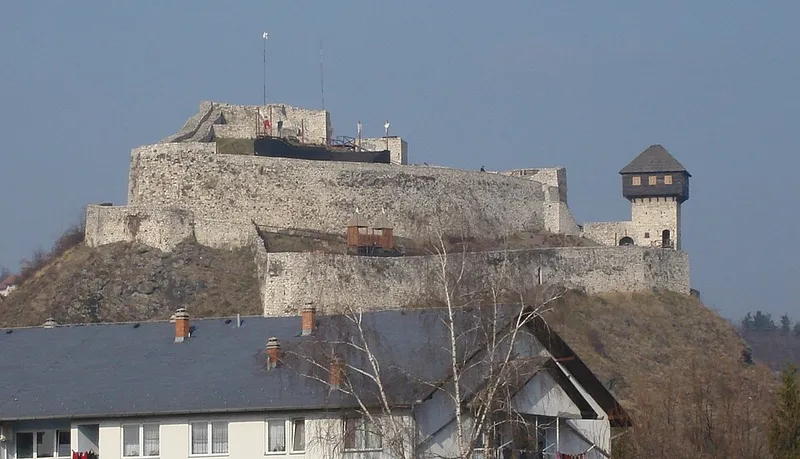
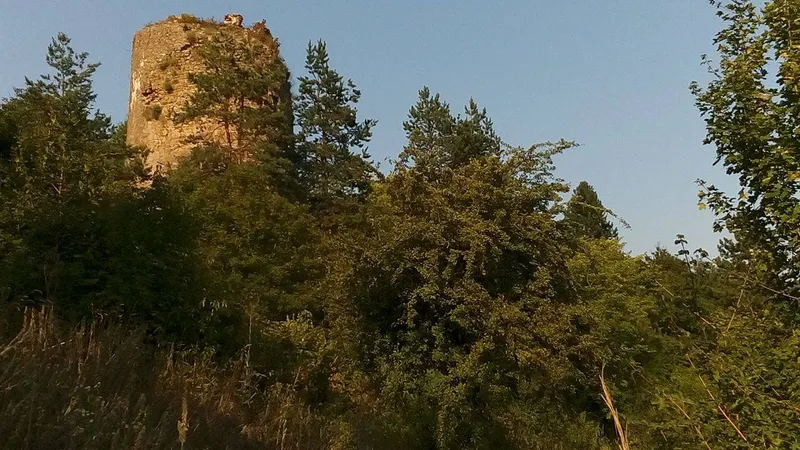
Dobor is one of the few late medieval fortifications to keep its original form, because it later lacked the strategic weight to be rebuilt as a bastion fortress. At its core are two massive towers with a courtyard of 16 by 8 metres between them; ditches cut on the east and west isolated the hilltop and also supplied the building stone. The smaller east tower, built when cannon were already in use, is an irregular cylinder 9.5 to 10 metres across, with four storeys and outer walls about 18 metres high. The west tower is shaped like an inverted D; its tallest surviving section, on the north side above the Munjači brook, reaches 19.5 metres, and with its collapsed top storey it would have stood 24 metres high. Its ground floor held a dungeon. An outer wall 1.5 metres thick and some 8 metres high enclosed an area of 86 by 32 metres.
Between 1969 and 1973 much of the castle was excavated under Ivo Bojanovski, and the towers were stabilised. The finds include blue maiolica, crossbow bolts, a Gothic spur and remains of chain mail, plus 29 coins, among them a Dubrovnik dinar of 1366 and two Austrian issues of 1689. They are kept in the National Museum in Sarajevo and the museum in Doboj.