A border castle of medieval Bosnia
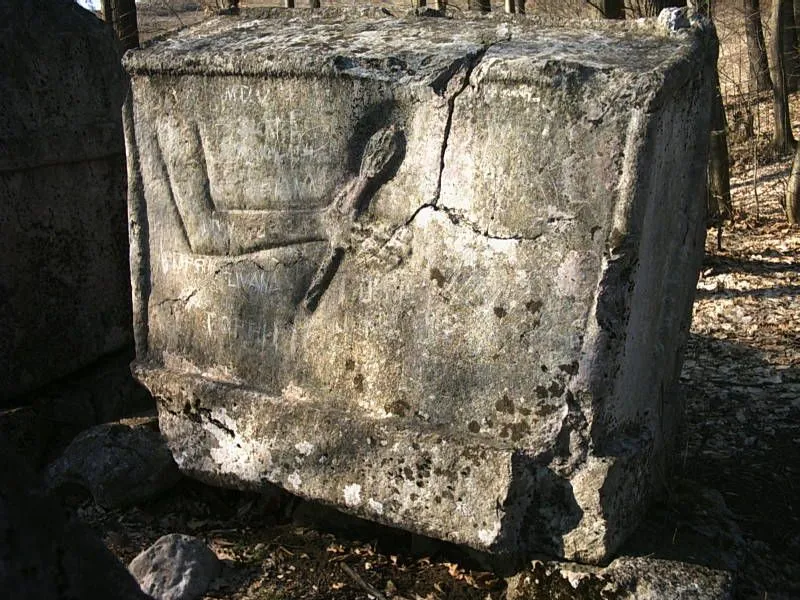
Settlement around Doboj is documented from the Palaeolithic onwards. In antiquity the area was home to the Pannonian tribe of the Breuci; about 4 kilometres to the south, on the Gradina at Makljenovac, the Romans built a cohort camp with a civilian settlement.
Whether the castle was built in the 13th century or in the first half of the 14th is unknown. Doboj is first mentioned in a letter from Dubrovnik dated 28 June 1415, written while King Sigismund lay before Doboj with the Hungarian army. In 1449 the Bosnian king Stjepan Tomaš and Hungary agreed here on joint military action against the Ottomans. With Soko, Srebrenik and Teočak, Doboj formed the southern of two lines of fortresses on the northern border of medieval Bosnia. In the summer of 1476 the Ottomans dissolved their Bosnian puppet kingdom and took over six fortresses, Doboj among them. Two of its guards, Knez Jovaniš and Stjepan, surrendered it without a fight.
The Ottoman period
Until 1835 a dizdar and his garrison were stationed in the fortress. In 1697 Austrian troops on Eugene of Savoy's campaign briefly held the castle, and later they took it again for a short time. After the Peace of Belgrade in 1739 the captaincy of Doboj was set up, one of the small ones: it covered the town and its immediate surroundings with 171 commanders and soldiers. In the mid-18th century rebels from Tuzla were brought to Doboj, as the fortress had a strong stone dungeon. The last captain of Doboj, Sinan, was a loyal companion of Husein-kapetan Gradaščević and fled with him to Slavonia, but returned home in 1832. The castle was abandoned in 1851; the Austro-Hungarian administration carried out the first repairs in 1881.
A walk through the fortress
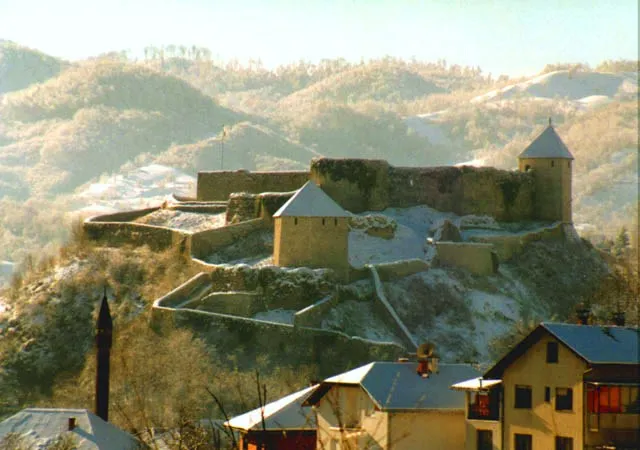
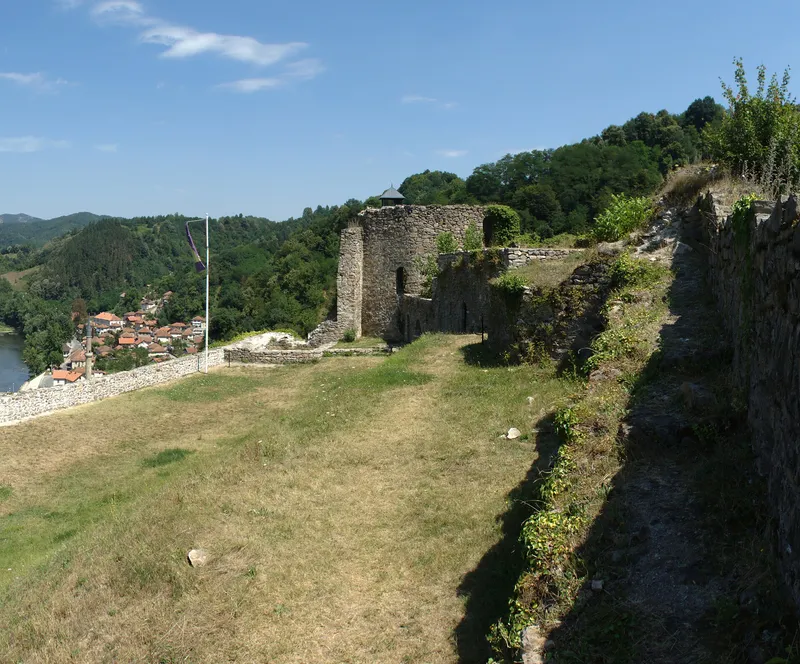
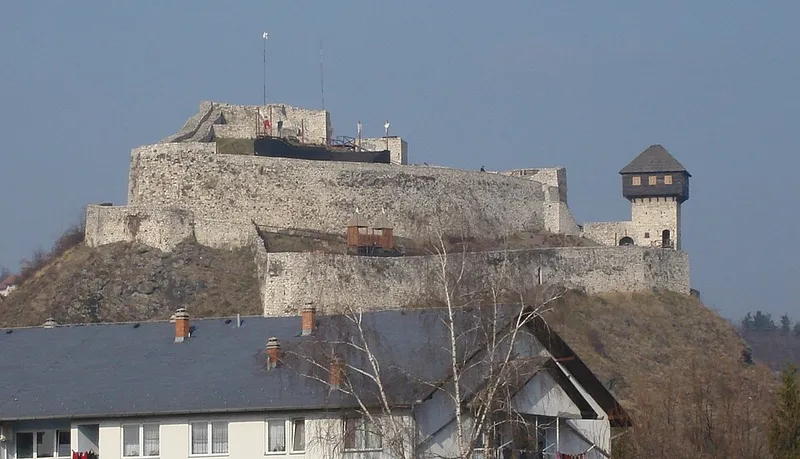
The fortress consists of an upper and a lower castle. The terrain gave it an irregular triangular plan, with its widest side, about 100 metres long, to the north; in all it covers around 3600 square metres. It is entered at the north-west corner through an arched gate in the wall. East of the way into the upper castle stands the gate tower, 5 metres along each side, with a pointed wooden roof covered in shingles.
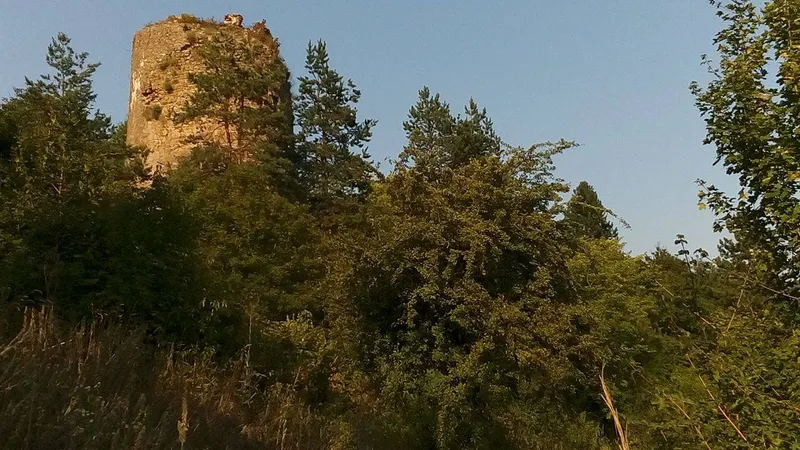
The upper castle, the medieval core, occupies about 1400 square metres on the rocky summit. The square main tower is unusually placed inside the defended area rather than in the wall; it measures 7.20 metres on the outside, with walls 1.75 metres thick, and its foundations were uncovered again in 1962. As at Vranduk, Bobovac and Maglaj, the cistern has two concentric ring walls. In the early 1970s the foundations of an older, semicircular tower were found beneath the six-sided south tower. Such towers were also built at Dobor and Maglaj, which may point to influence from Hungary.
Later, a small tower, two large bastions, a powder magazine with walls 1.5 metres thick and a secret passage in the east wall were added; the north wall and the bastions had openings for cannon. In the Second World War German troops turned the main tower, the south tower, the main bastion and the plateau into bunkers.
Protection and visiting
The castle was placed under state protection on 9 October 1950. In 1962 Zdravko Kajmaković directed three months of work in which, among other things, the top of the main bastion was rebuilt after a drawing by Miteser with 7 gun openings. In 2005 the Commission to Preserve National Monuments declared the walls and towers, together with the movable finds in the museum in Doboj, a national monument. The decision provides for the site to be open to the public and to be used for education and culture.