From manor to fortress
Who founded the fortress is unknown. Finds of prehistoric pottery and uncertain traces of Roman brick suggest that Illyrians lived here first, then Romans and later Slavic settlers. Excavations from 1981 to 1985 also uncovered a rock shelter with a skeletal grave from the late Bronze Age. Tešanj first appears in writing in 1461, in the charter by which Stjepan Tomašević gave the place as crown property to his uncle Radivoj.
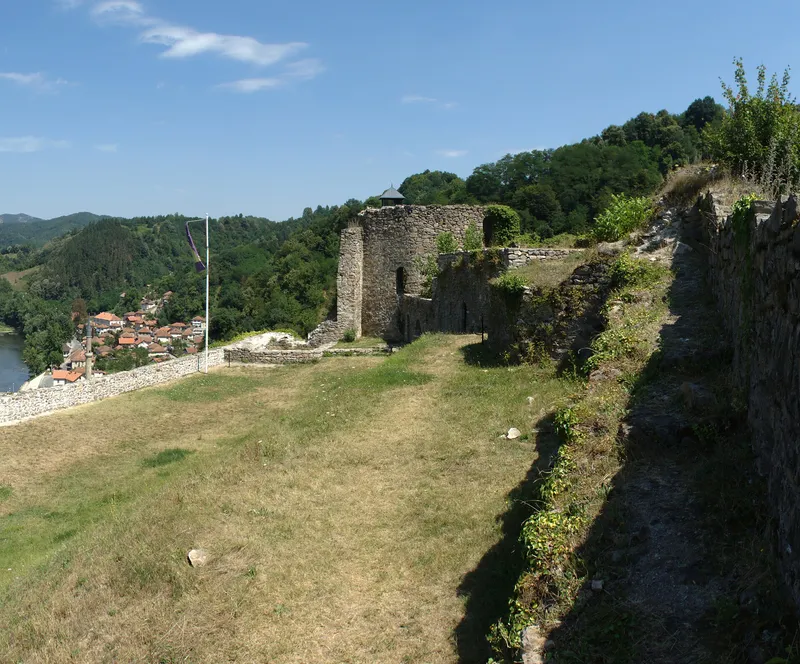
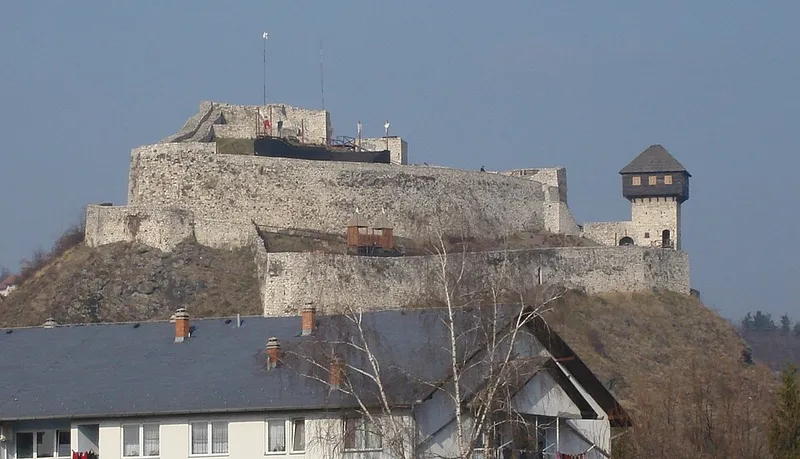
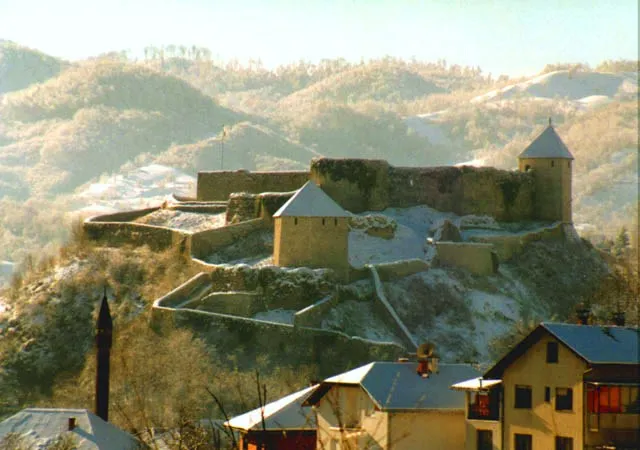
The complex has two parts: one from the time of the medieval Bosnian state and one from the Ottoman period. First came a polygonal, probably seven-sided keep on the summit, later called “Krnja”, and a walled courtyard. On the north-eastern side of the courtyard a twelve-sided tower was built, with a circumference of 48 metres and walls 2.72 metres thick at ground level; it was probably 15 to 20 metres high. The political situation at the beginning of the 15th century called for stronger defences, and the medieval manor gradually turned into a fortress. Finally, walls along the edge of the hill enclosed four baileys, three of which were used as gardens.
Ottoman rebuilding
According to Ištvanfi's account of Hungarian history, the Hungarian army set the fortress on fire and wrecked it while fleeing in 1520, after the Ottomans had broken into Srebrenik and then Tešanj. The Ottomans held the ruin until the 17th century, when, as with most Bosnian fortresses, they had to repair and enlarge it. At the end of the 17th century Tešanj played an important part in the Ottoman defences, and at the beginning of the 18th century, under Sultan Mustafa, the new lower part of the fortress was built. Tešanj remained a strong fortress into the 19th century and was abandoned in 1840.
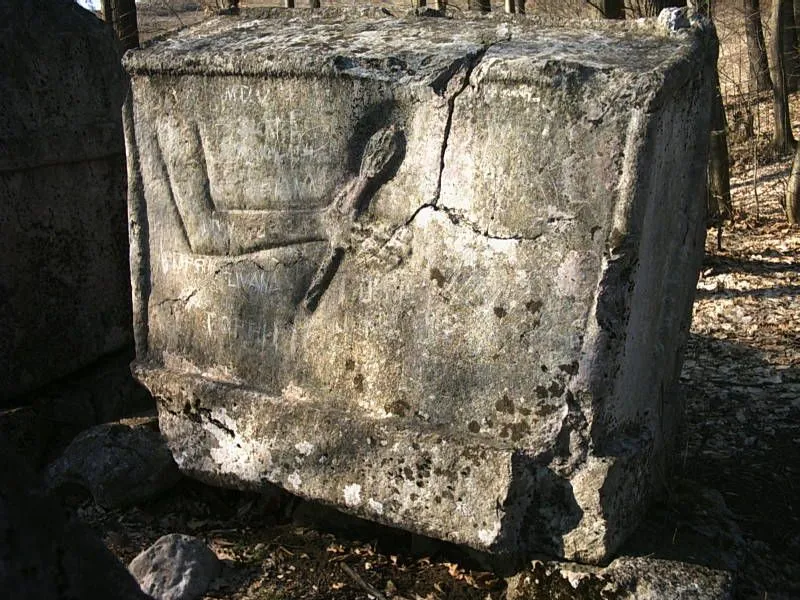
The first new building was the 20-metre Krnja tower. Its lower half was solid, the ground floor held a cistern for 70,000 litres of water, and above it smaller cannon could fire through five openings. The Ottomans turned the twelve-sided tower into a bastion with casemates for the garrison, a powder store and ammunition stores. A crescent and a nadžak, an axe with a long handle, are carved into the frame of the gate next to it.
The lower fortress and the clock tower
In the new part, the Ottomans first built the five-sided tower of the dizdar, the fortress commander. A passage linking the two parts of the fortress ran through its ground floor; the first floor held a living room and a casemate, the second the dizdar's quarters. To the east lies a bastion 23 metres across with a tunnel through its middle and casemates on either side. A protective wall 90 metres long ran to another bastion, which German soldiers turned into a bunker in the Second World War.
The fortress lies at an altitude of 305 metres. It is 120 metres long and up to 80 metres wide, with a circumference of 390 metres and an area of 5600 square metres.
Below the fortress, on the steep slope above the čaršija, stands the clock tower. It was probably built at the end of the 17th or the beginning of the 18th century, when the lower part of the fortress went up, and has the shape of a truncated pyramid 16 metres high. The present clock was bought in Vienna; German soldiers took the old one away in the Second World War.
Protection and visiting
On 20 January 1951 the medieval fortress was placed under state protection. Surveys and conservation and restoration work followed from 1976 to 1990. In July 2003 the Commission to Preserve National Monuments declared the ensemble a national monument. Under the decision the site is open to the public and may be used for education and culture.