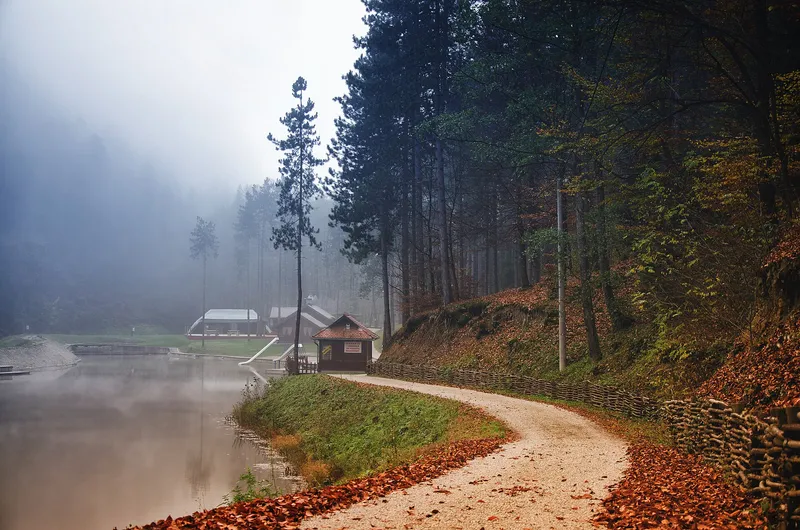
Origins and name
The lake was created by a dam on the Jošava stream. It was built in 1971, still in Yugoslav times, in organised work campaigns. Members of the Gorani reforestation movement took part, along with residents of the villages of Lipac and Jošava and the Yugoslav People's Army. The lake takes its name from the Gorani, who planted forests in the area.
At first it was less popular than hoped, because there was a lot of mud in it and swimmers avoided the water. Only after the war was the site renewed. To stop the water turning cloudy, the bed was concreted, the beach was covered with sand, and diving boards and small cafés were built around the lake.
The lake
Goransko jezero is about 200 metres long and up to 50 metres wide, with a surface area of around half a hectare. On average it is about 5 metres deep. Its water comes from the Jošava and passes through a gravel filter into the lake. The water level is controlled by an outlet at the foot of the dam.
Recreation at the lake
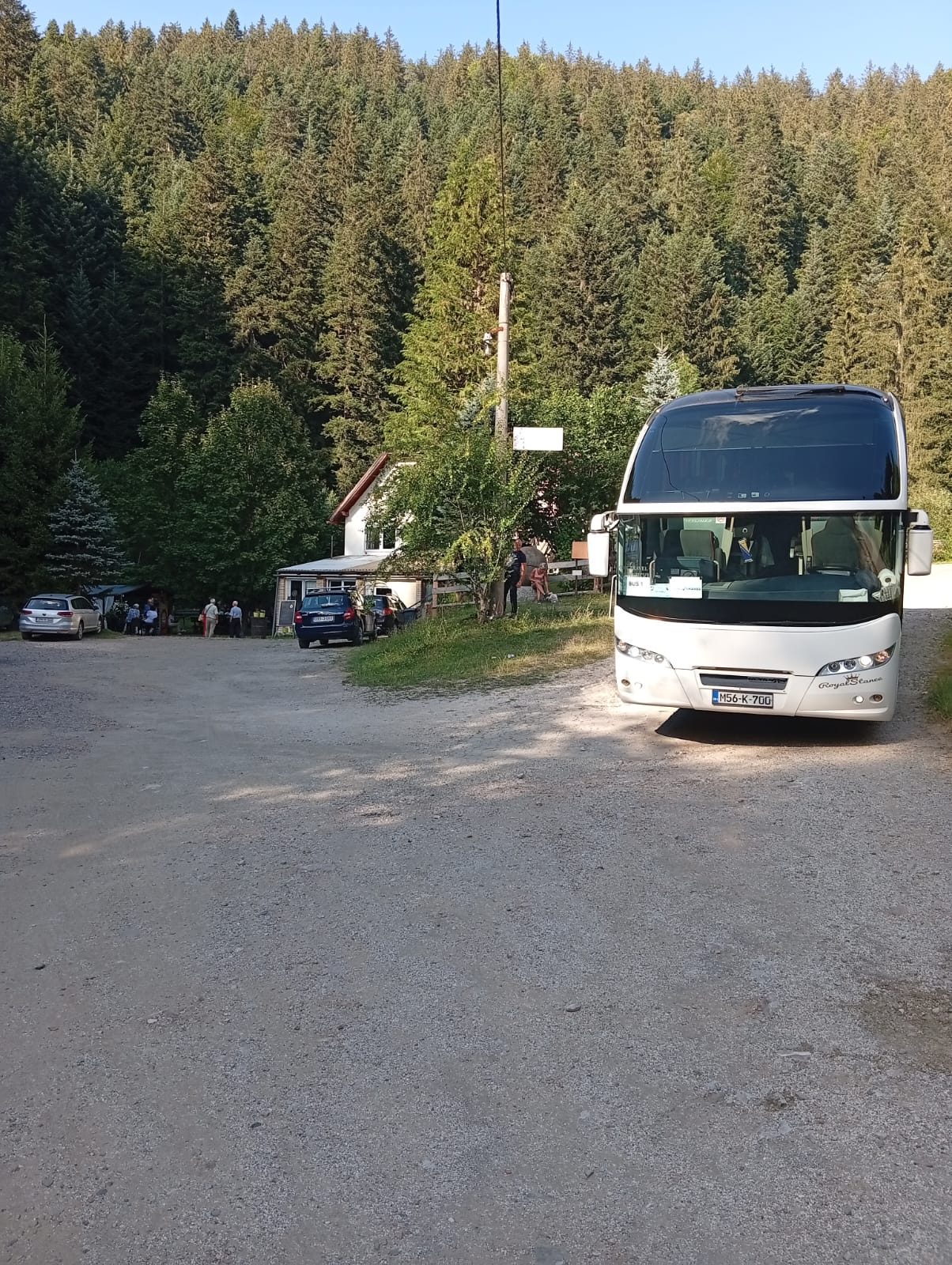
Today Goransko jezero is a leisure and recreation area. An asphalt road leads from Doboj to the lake. The city of Doboj has laid out a car park and barbecue areas right next to it, along with information boards. The site also includes a small stream, a restaurant and a children's playground. It is especially busy in the summer months.
Footpath to Preslica
From the lake a footpath, laid out as an educational trail, leads to the Preslica sports and recreation centre. It too is about 7 kilometres from Doboj, in the Ozren hills at 376 metres in pine forest, and covers some 30 hectares. At its centre stands a monument to those who fell in the Second World War, erected in 1962. The region's liberation struggle began at this spot on 23 August 1941.
Maintained hiking and cycling trails link Preslica with the lake and with the peaks of Gostilj (773 m) and Velika Ostravica (918 m).