The bridge
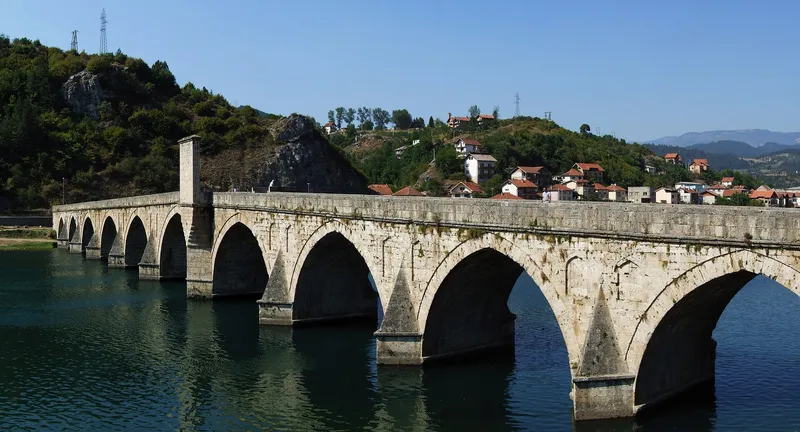
The bridge was commissioned by Grand Vizier Mehmed Paša Sokolović as a tribute to his native region. It was designed by the court architect Mimar Koca Sinan and built between 1571 and 1577. The bridge is 179.5 metres long and rests on 11 masonry arches with spans of 11 to 15 metres. On the left bank an access ramp with four arches joins it at a right angle.
UNESCO regards the bridge as a testimony to cultural exchange between the Balkans, the Ottoman Empire and the Mediterranean, and between Christianity and Islam. In 2003 the Commission to Preserve National Monuments declared it a National Monument, and in 2007 it was added to the World Heritage List.
History of the bridge and town
Višegrad has been documented since the beginning of the 15th century, a time when the Pavlović noble family ruled here. Even in the Middle Ages the Drina crossing was an important stop on the route from Dubrovnik via Sarajevo and Niš to Istanbul, used by many Ragusan merchants. According to Evliya Çelebi, Mehmed Paša also had the lower part of the town laid out in 1577, which became the main settlement around the bridge.
The Drina is a mountain river prone to flooding; in 1896 an exceptional flood swept away the bridge's parapets. In the First World War three of its arches were destroyed and in the Second World War five were damaged, and in the early 1950s the bridge was restored in stone. From 1992, during the Bosnian war, Višegrad and its surroundings saw ethnic cleansing, expulsions and the killing of hundreds of civilians. Two hydroelectric plants that affect the level of the Drina are considered a threat to the bridge's foundations.
Andrićgrad and the surroundings
Between the bridge and the mouth of the Rzav, Andrićgrad was built from 28 June 2011, a project by the film director Emir Kusturica dedicated to the writer Ivo Andrić. The district, also called Kamengrad ("Stonetown"), was officially opened on 28 June 2014 and has shops, a cinema, a bookshop and a gallery. The project is controversial: criticism comes above all from Bosniaks, who fear that the Serbian side is using it to appropriate the town's cultural heritage. Andrić grew up in Višegrad, and his novel The Bridge on the Drina was published in 1945.
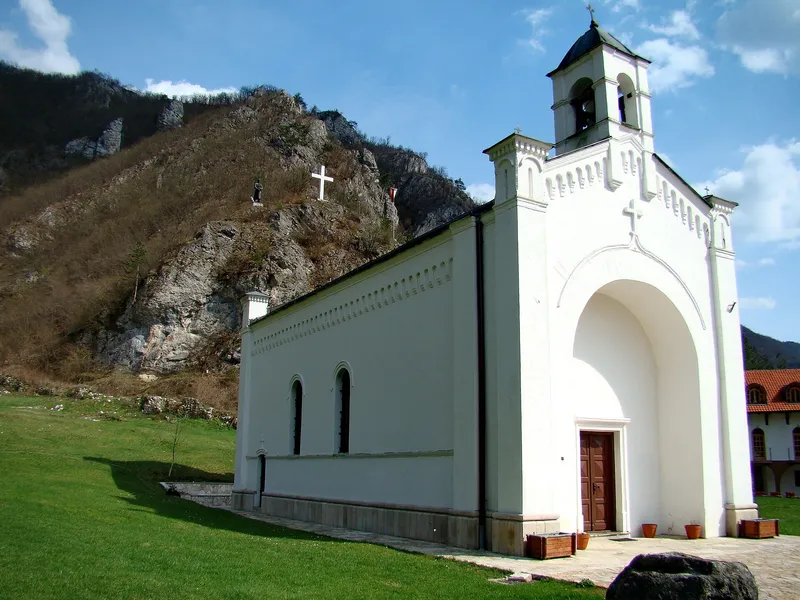
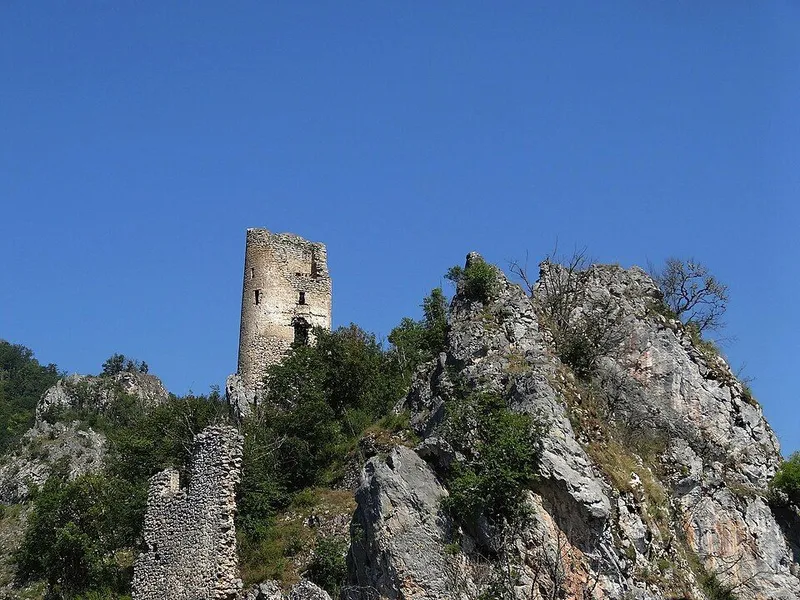
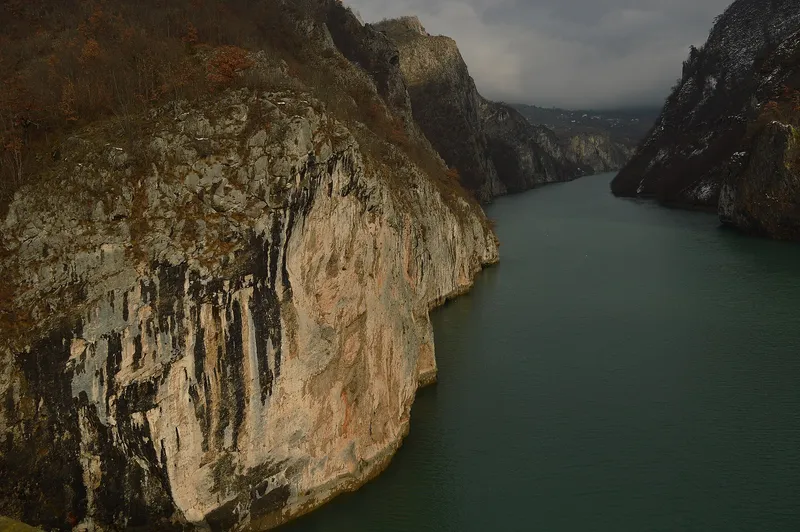
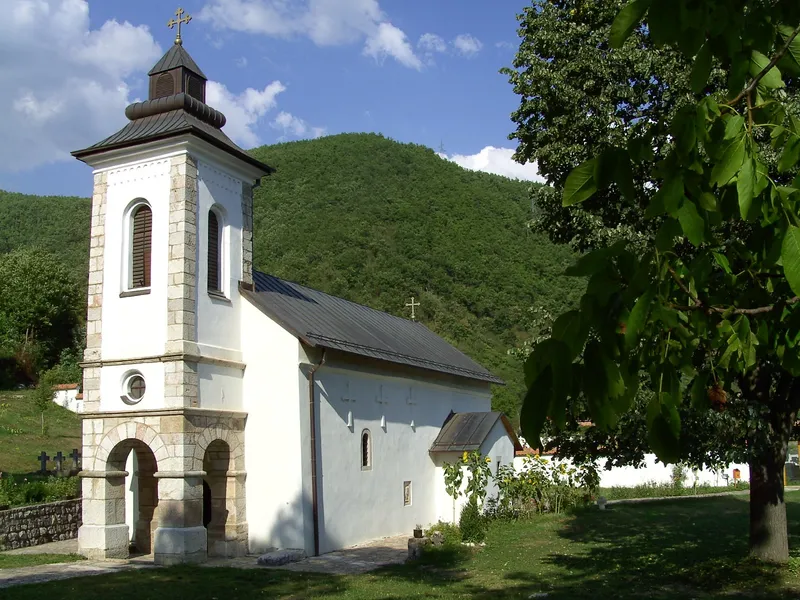
On a hill above the Drina stand the ruins of the Pavlovina fortress, with an upper and a lower castle and a tower known by tradition as Kula Kraljevića Marka. Upstream of the town the Drina is dammed to form Lake Višegrad, more than 20 kilometres long. About 12 kilometres to the east lies the Serbian Orthodox monastery of Dobrun.
Tips for your visit
If you want to get to know the bridge before you arrive, read Andrić's novel, a literary chronicle of life in Višegrad from the building of the bridge to the outbreak of the First World War. On the water, the municipal tourist organisation points to short boat trips and cruises on the Drina, kayak and SUP tours and two bathing spots, Plaža Jaz on the Drina and Plaža ljubavi on the Rzav.