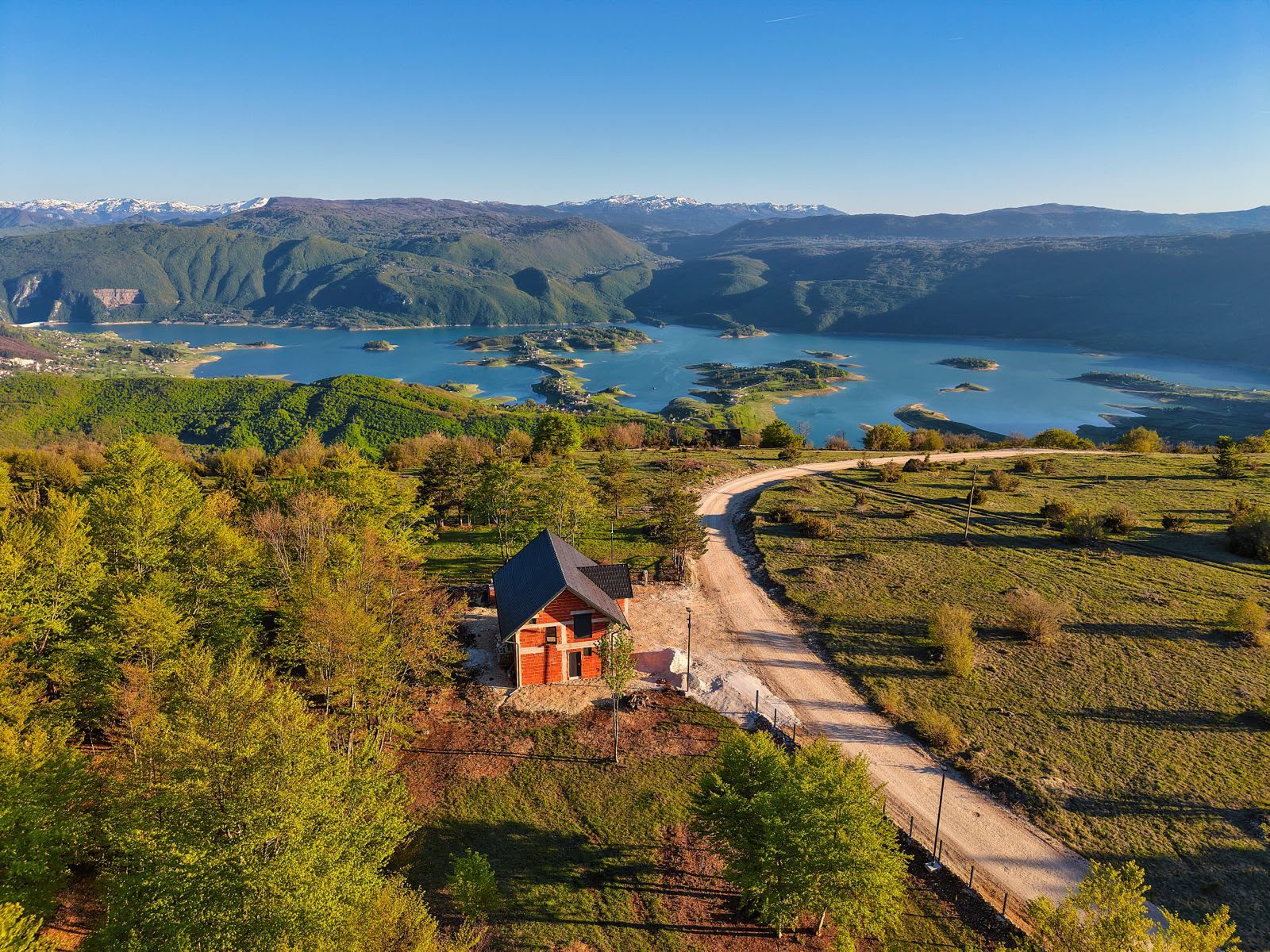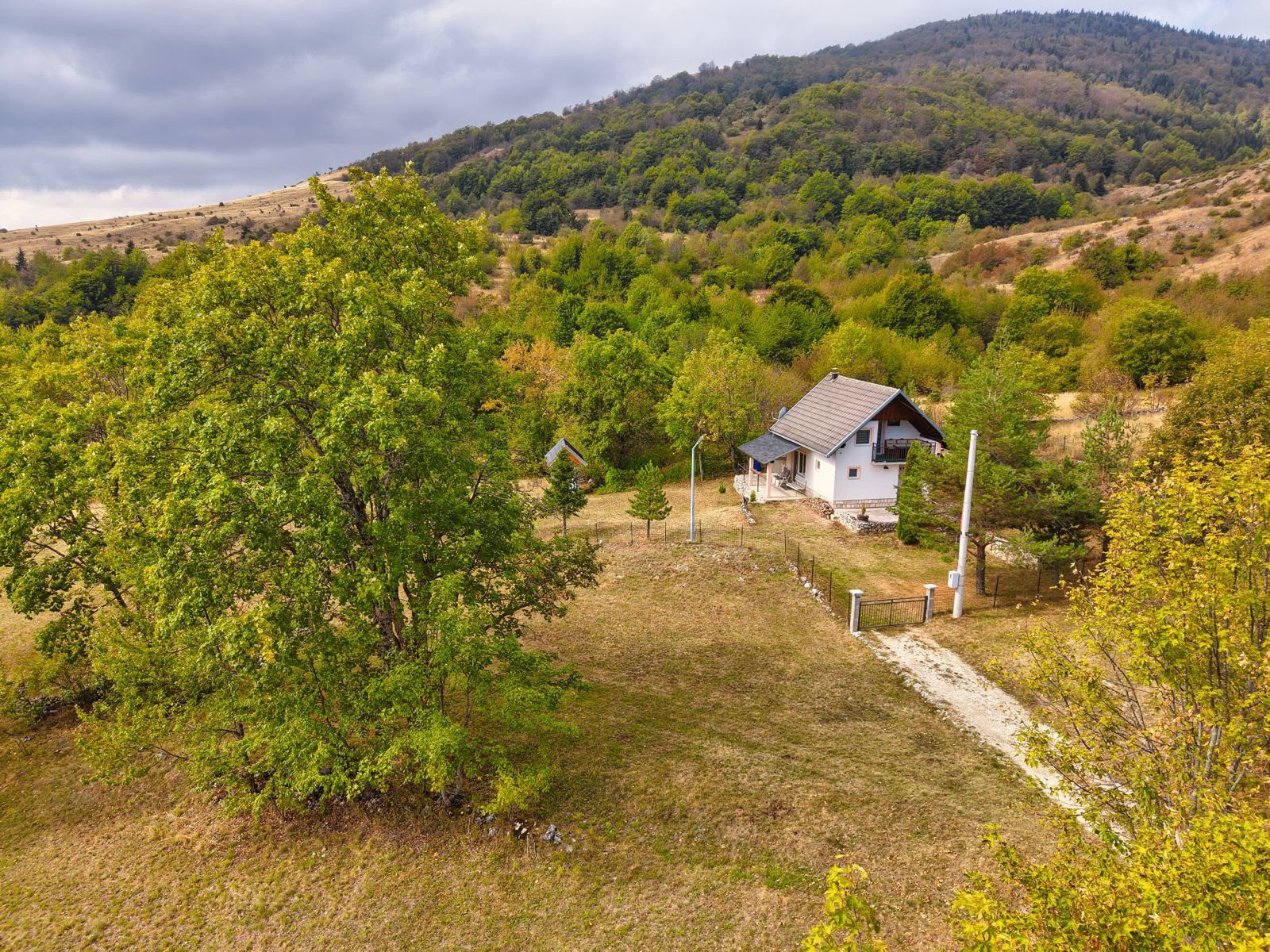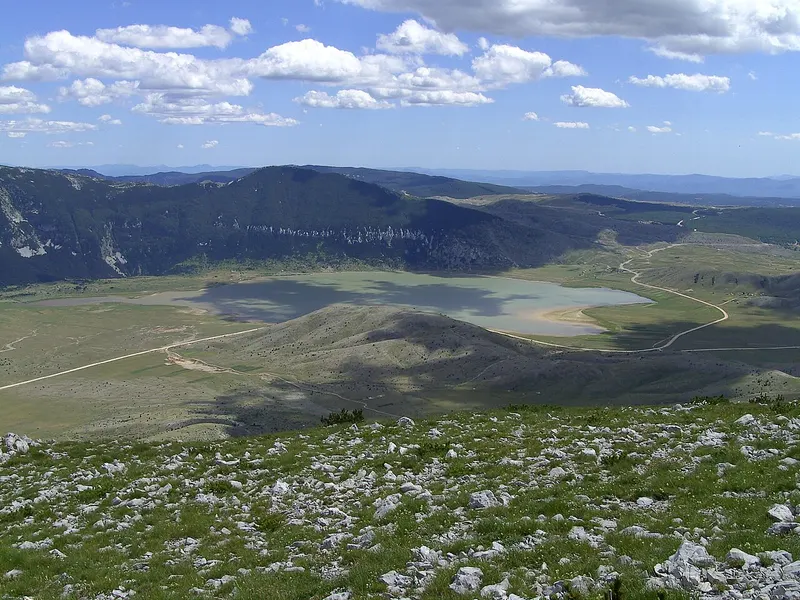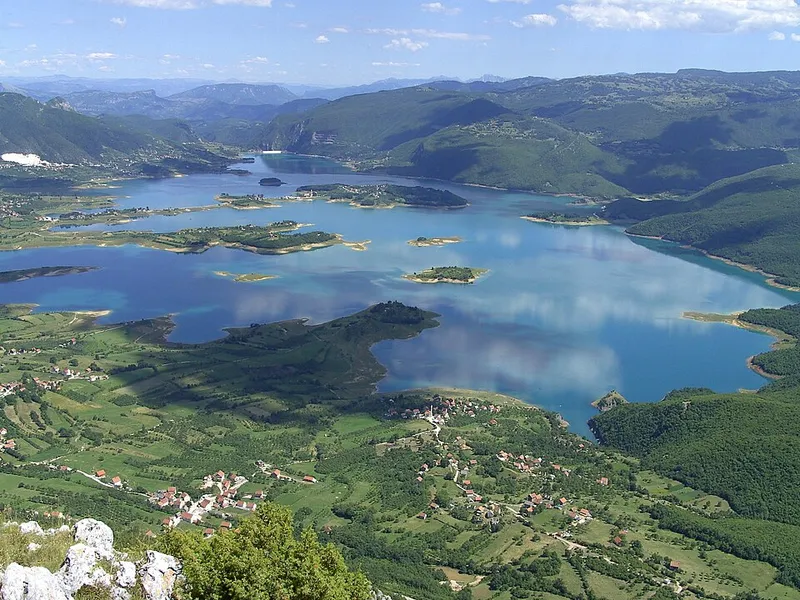
A reservoir in the upper Rama valley
The lake lies in the basin of the upper Rama. The ranges of Raduša, Makljen, Ljubuša and Vran rise steeply around it. The lake is up to 12 kilometres long and up to about 95 metres deep. Its level varies considerably: at full storage, 595 metres above sea level, it covers some 1550 hectares, but at the minimum level of 536 metres only 245 hectares.
It is fed mainly by the Rama, which rises from two strong springs south-west of the village of Varvara. Its catchment of 550 square kilometres marks the very beginning of the Adriatic basin, so the water is very clean. The 100-metre rock-fill dam with a concrete facing was built between 1964 and 1968. The power station lies underground about 9.7 kilometres to the south-east and has two 80-megawatt turbines. Fishing on the lake is managed by the Rama sport fishing society.
Drowned villages and a new peninsula
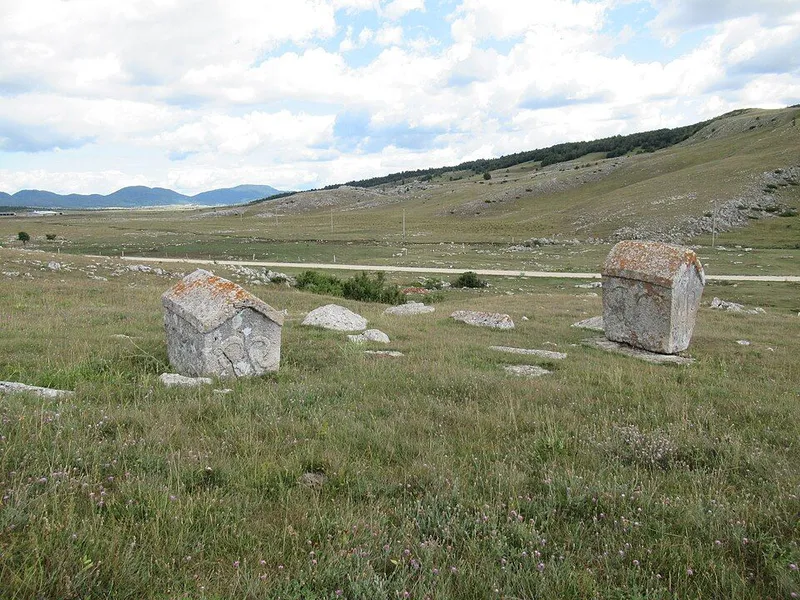
To make way for the reservoir, 2939 people were resettled from the villages of the upper Rama valley. When the water is low, remains of the old settlements reappear and can be visited, among them old gravestones and the base of the minaret of the former mosque at Kopčići.
Šćit changed too: until 1968 the village overlooked the Rama valley, but since the dam was built at Kovačevo polje it has been a peninsula. A road about 2 kilometres long on an artificial embankment links it to the shore. The monastery lies 10 kilometres west of Prozor.
The Franciscan monastery of Šćit
The Franciscans, active in Bosnia since the end of the 13th century, probably founded their monastery in Rama in the 15th century, before the Ottoman conquest. In 1493 the custody of Rama was mentioned at the order's general chapter in Assisi. The monastery and church burned down in 1557, and several friars were killed. After another fire in 1682, the Franciscans left the area in 1687 together with part of the Catholic population and moved to the Cetina region. They took with them the image of Our Lady that is now in the Franciscan church in Sinj.
Rebuilding began in the 19th century: a new monastery building rose on the old foundations by 1857, and on 13 June 1873 the foundation stone of the church was laid, with Emperor Franz Joseph among the donors. On 13 July 1942 the church was burned out; it reopened in November 1956. At its session of 14 to 20 March 2006 the Commission to Preserve National Monuments declared the monastery, church and cultural landscape a national monument.
Art in the monastery church
During renovation in 1966 the bell tower was given its slender shape; from the ground to the tip of the cross it measures 40.05 metres. In 1968 Josip Biffel painted three murals in the apse. The central one covers 72 square metres and shows Mary as protector of the people of Rama, who appear in their folk costume. The stained glass is by Josip Poljan.
In 1997 the sculptor Kuzma Kovačić created the Marian Door on the east wall: on the outside Diva Grabovčeva from local Rama tradition, on the inside the Madonna now venerated in Sinj. Since 1991, when 700 years of the Franciscans in Bosnia were celebrated, many artists have donated works to the monastery, among them Mile Blažević with his terracotta versions of the Rama Cross.