The Lower and Upper necropolis
The Lower necropolis has 43 stećci: 20 slabs, 20 chests and 3 gabled stones. They are finely cut and mostly aligned northwest to southeast. 18 of them are decorated, with borders of slanting zigzags, stylised plants such as lilies, scenes of hunting and of a round dance, a hand holding a sword, a shield and sword, two women, a man with a horse, curving vines with trefoils and a twisted wreath.
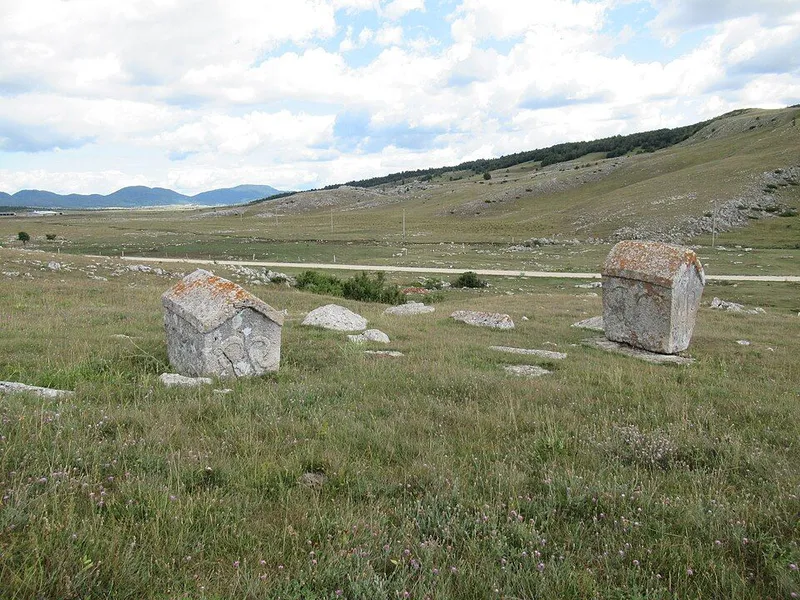
The Upper necropolis has 25 stećci, 10 slabs, 8 chests and 7 gabled stones, some facing west to east and others north to south. 15 are decorated, often with rosettes, crescents, wreaths and crosses. The jousting scenes set under arcades and the stylised lilies stand out for their workmanship. There are also vines, a hand, a staff, a deer and two human figures beneath arcades. No inscriptions have been recorded. All around lie boulders large and small, among which the tombstones almost merge into the landscape; the quarry was close by.
Tombstones of the high fields
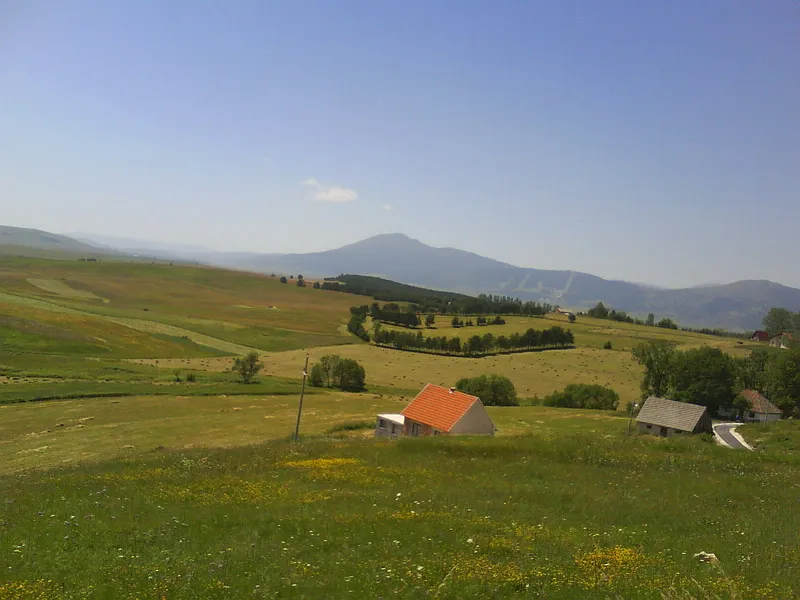
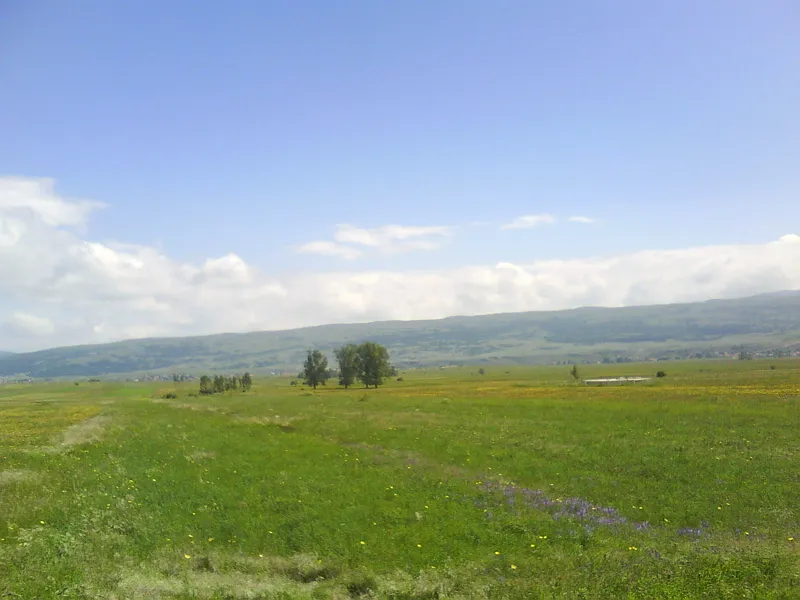
On the high fields around Kupres, Kupreško, Rilićko, Vukovsko and Ravanjsko polje, over 40 necropolises with 1055 stećci have been recorded. They mostly lie along former Roman and medieval routes, often on earth mounds and burial mounds. Slabs and rather small chests are typical of the area, few of them with bases, while gabled stones are rare. These belong to the Dalmatian type, which first appears in late medieval graveyards around Cetina and Imotski and only later in the fields of western and southwestern Bosnia.
More necropolises lie nearby: Trišića njiva and Konopi 800 metres away, and to the west on Crljenica hill a group of 25 stećci. A replica of a stećak from Ravanjska vrata stands in front of the National Museum in Sarajevo.
Routes across the uplands
The harsh climate makes the Kupres plateau ill-suited to permanent settlement, yet finds show that people have lived here since prehistory: hillforts, stone and earth burial mounds, among them the earth mound of Pustopolje near Gornji Malovan, which yielded a find dated to around 1800 BC. Long stretches of Roman roads survive, such as the Solarski put between the valleys of the Janja and the Rama. When the Bugojno–Livno road was built in 1892, workers at Velika Vrata came upon the remains of a Roman house that had served as a watchtower.
In the Middle Ages the trade route from Split to the Vrbas valley crossed Kupres on much the same line as the Roman road. According to tradition, in 1447 the Bosnian diocese asked the Pope to grant an indulgence for the Church of the Holy Trinity in Vrli, that is Otinovci.
Protection and condition
In October 2010 the Commission to Preserve National Monuments declared the prehistoric hillfort and the necropolis of Ravanjska vrata a national monument. In 2016 the site became one of the 28 sites of the stećci World Heritage property; the inscribed area covers 1.51 hectares, the buffer zone 21 hectares.
The 2017 description calls the condition unsatisfactory. Many stones have sunk, shifted or toppled, and it is not certain whether they still stand where they were set. Moss and lichen largely cover them and have already erased much of the carving; a few stones have become almost shapeless, others show cracks. A gravel road runs straight through the necropolis. In 2011 the whole site was surveyed and photographed stone by stone.