The source of the Tihaljina
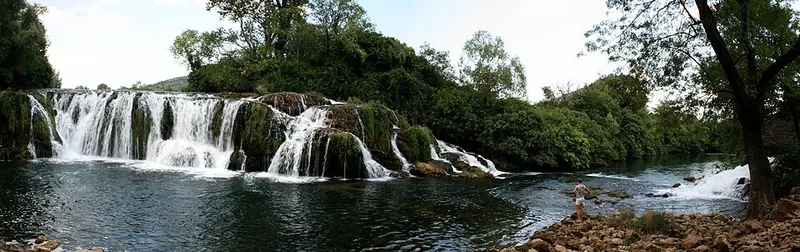
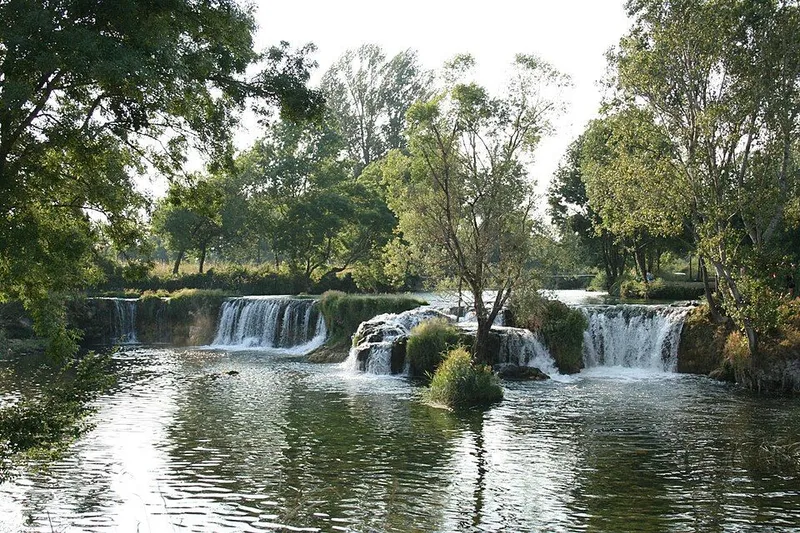
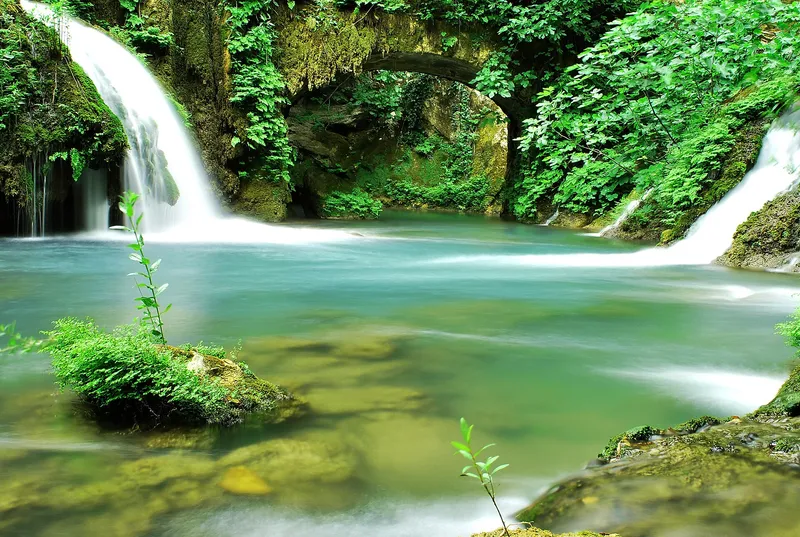
The Tihaljina is the continuation of the Vrljika, which disappears underground a few kilometres earlier as the Matica at the south-eastern edge of Imotsko polje near Drinovci. At Peć Mlini the water returns to daylight from a large karst spring in a cave and flows away over small waterfalls and rapids. The name of the place recalls caves and watermills: seven mills once worked below the spring.
The river changes its name several times along the way. Near Klobuk, where it is joined by the Klokun spring, it is called the Mlade, and later the Trebižat. As the Trebižat it reaches the Kravica waterfalls near Ljubuški and flows into the Neretva at Struge near Čapljina. In total the river is 51 kilometres long.
Ravlića cave
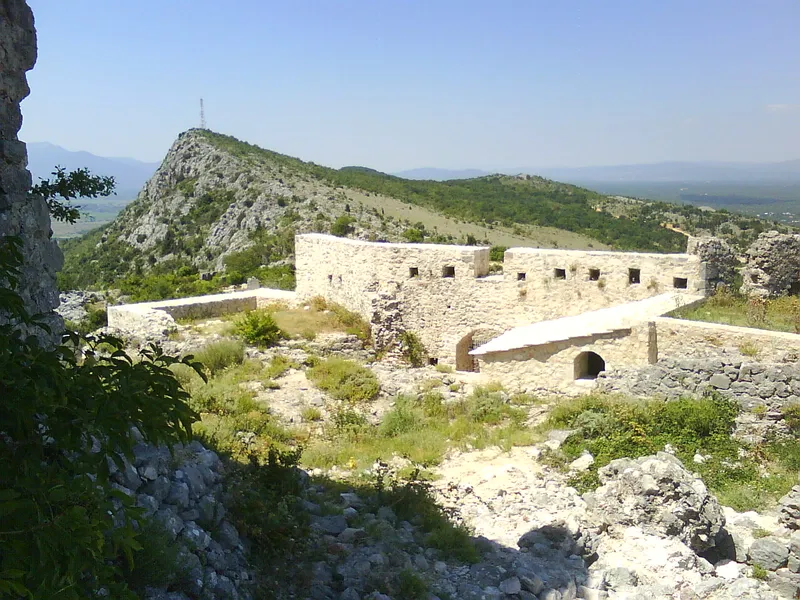
Ravlića cave lies high above the spring on the edge of the hamlet. Its entrance faces south and is about 40 metres wide and about five metres high, so enough light reaches the interior during the day. The cave consists of a larger and a smaller hall, with ceilings 5 to 20 metres high. Drinking water, hunting and fishing grounds and good connections made it habitable for prehistoric communities, and people probably lived here from the Neolithic to the end of the Early Bronze Age.
Large blocks of stone that fell from the ceiling later made living here harder. From the Middle Ages onwards people stayed in the cave only occasionally, the last being the hajduks, the outlaws of the area, in the 18th and 19th centuries.
Finds from the cave
Between 1977 and 1980 archaeologists from all over the former Yugoslavia excavated here under the direction of Brunislav Marijanović. He distinguished four phases of occupation, with pottery belonging among others to the Impresso, Hvar-Lisičići and Cetina cultures. Finds included many hearths, an altar, a structure for hanging pots over the fire and remains of millstones pointing to farming. Hunting and animal husbandry were the main livelihoods, and remains of snails and river mussels show that people also gathered food. There were also stone tools, jewellery, anthropomorphic figurines and the skeleton of a child that did not lie in a grave.
New excavations by the Faculty of Philosophy in Mostar from 2008 to 2010 brought to light a pintadera: a perforated ceramic cylinder about five centimetres long, decorated with two spirals, probably used to print patterns, above all on cloth. The finds from the first excavations are in the National Museum in Sarajevo, those from the later ones in the Archaeological Collection of St Stephen in Gorica near Grude.
Site development and hydropower
The local authorities had the site developed through the cross-border Adriatic Canyoning project, which was funded by the INTERREG IPA Croatia–Bosnia and Herzegovina–Montenegro programme. A footpath to the spring and a larger wooden bridge were built, and a smaller one was renovated. A zip line from Petnik (Petnjik) hill, a sport climbing wall inside the cave and a via ferrata along the Cvitanjske stine cliffs were also set up. In 2019 Ravlića cave was fitted with lighting, and a car park, entrance and paths were laid out and signposted.
The Peć Mlini hydroelectric plant uses the water of the Vrljika and the natural drop of 115 metres between the Nuga area in the Imotsko-bekijsko polje and the powerhouse at the foot of Petnik.