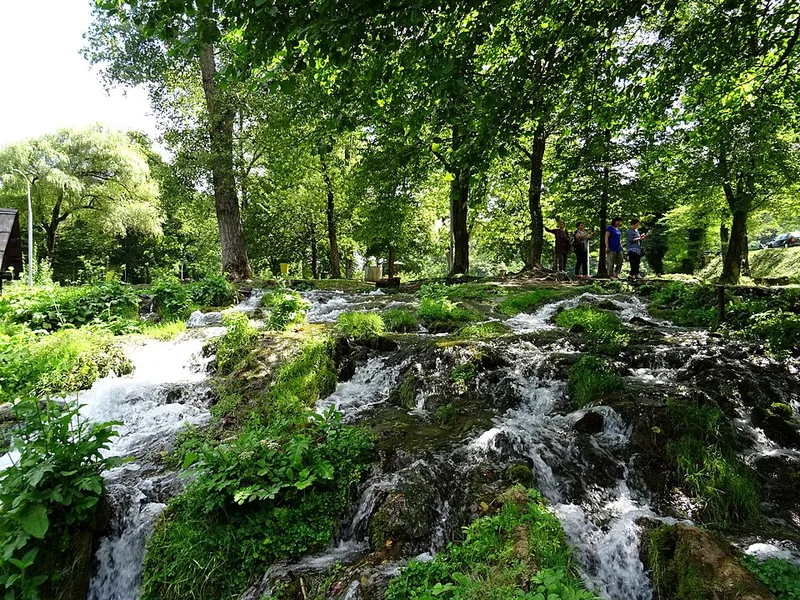
The lakes
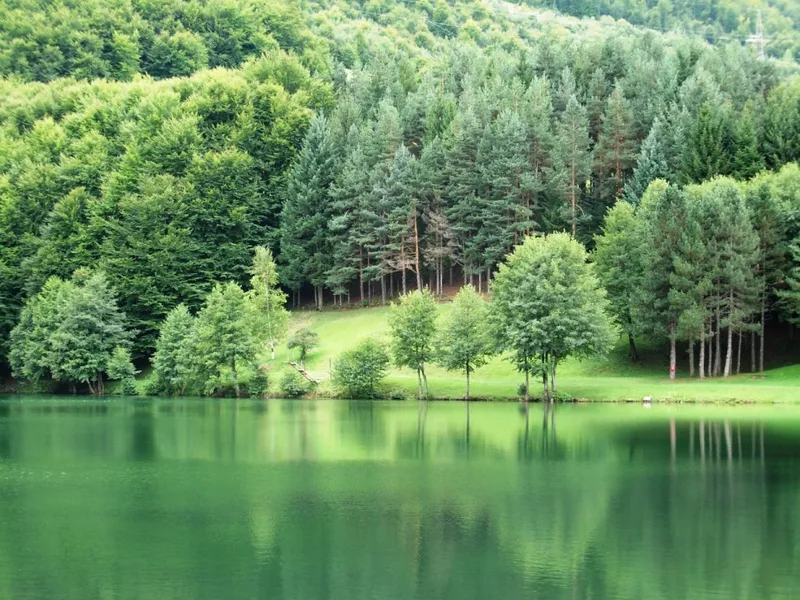
The Pliva Lakes belong to the municipalities of Jajce and Jezero. They were formed from the course of the Pliva, which is also used to generate electricity. The Great Pliva Lake lies at 424 metres above sea level below Jezero, is 3.3 kilometres long and covers 1.2 square kilometres. A natural tufa barrier separates it from the Small Lake, which lies downstream, closer to Jajce.
In the Great Lake the surface water is about 17 °C and the deeper water about 12 °C. The Small Lake is home to catfish, pike, carp and perch, among other fish.
Tufa: how the lakes formed
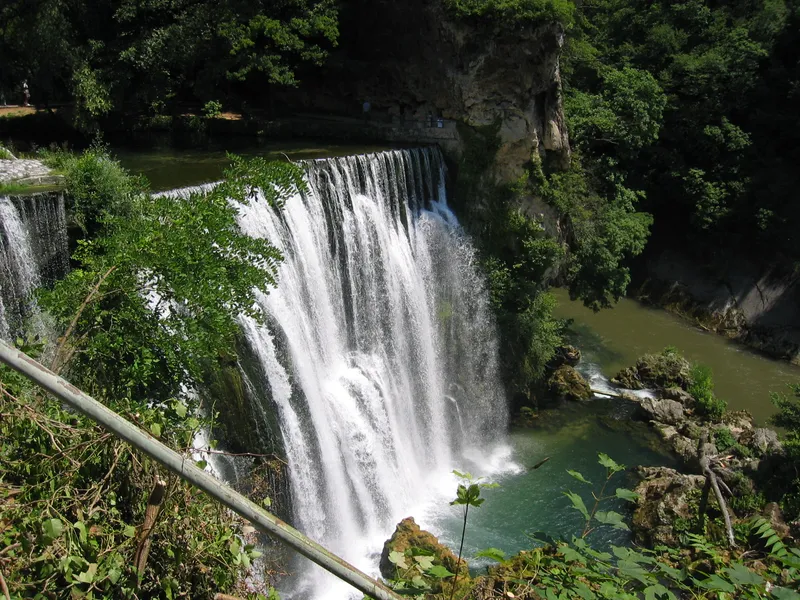
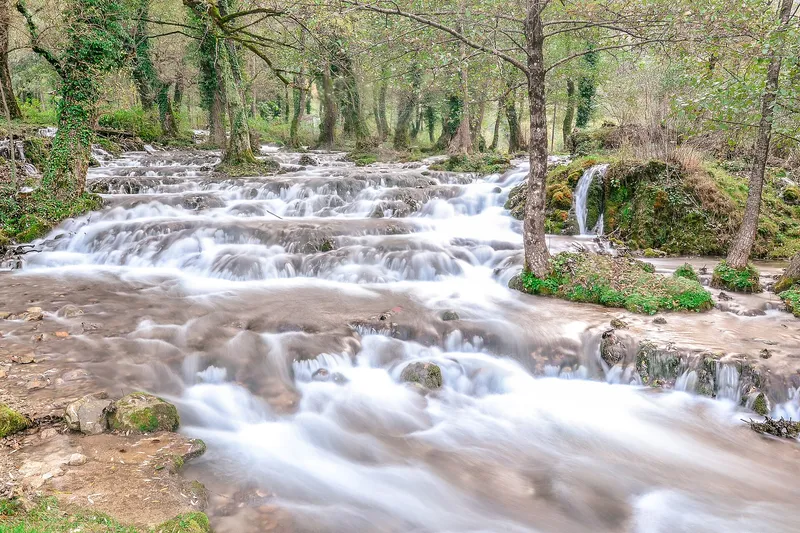
The lakes and barriers were formed by tufa, a limestone deposit that settles out of the water in karst rivers such as the Una, the Trebižat and the Pliva. Algae and mosses speed up the process by taking carbon dioxide out of the water. The waterfall where the Pliva plunges over a tufa wall into the Vrbas in the centre of Jajce was formed in the same way.
People have altered the system. Between 1952 and 1957 a concrete wall was built on the tufa barrier to raise the level of the Great Lake, and the Jajce I power plant uses most of its water. Experts are concerned that tufa formation in the lower course is coming to a halt.
The Mlinčići
Between the Great and the Small Lake, the Mlinčići, a group of small wooden mills, stand on the tufa barriers. In 2016, work began to restore 20 of them so that they can grind again or serve for demonstrations and the sale of souvenirs.
Together, the lakes and mills form the national monument “Cultural landscape – the Pliva Lakes with the complex of mills on the Pliva near Jajce”. It includes a 200-metre buffer strip along the shores in which no new building that disturbs the natural state is allowed. Protecting the mills is thus meant to preserve the whole landscape, which is one of Jajce's hallmarks.
Tips for your visit
The Great Pliva Lake is well suited to kayaking and canoeing; in 1963 it hosted the seventh European Championships and an extraordinary World Championship in flatwater canoe racing. Boats on the lakes may only use electric motors or paddles, to protect the water quality.
Other things to do include boat trips, fishing and, on hot summer days, swimming at the beaches of the Pliva and the lakes; the surroundings are good for hiking and cycling.