Two rivers and a waterfall
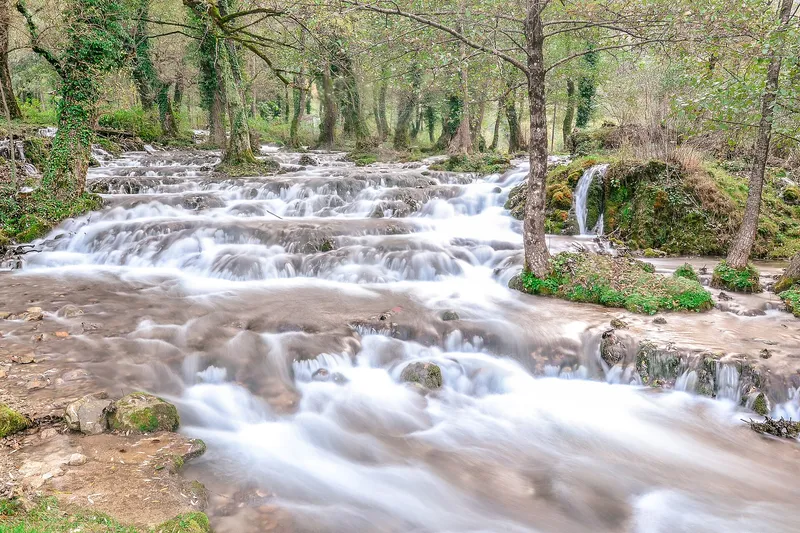
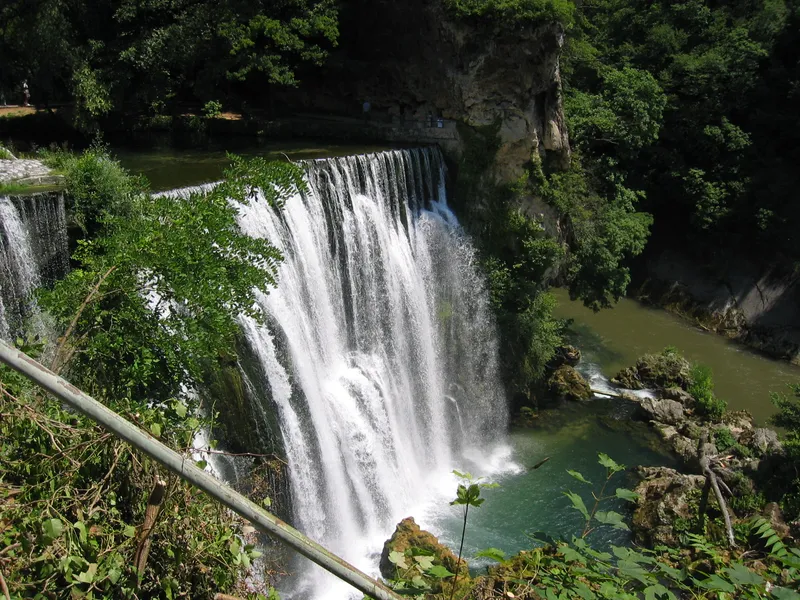
Two rivers flow through Jajce: the Vrbas, a tributary of the Sava about 240 kilometres long, and the Pliva, which links Jajce with Jezero and Šipovo. In the town centre the Pliva falls over tufa into the Vrbas, and the waterfall is the symbol of the town. During the Bosnian war the Jajce I hydroelectric plant lay on the front line and was out of service, and high water damaged the tufa. In 1996 flood waves caused further damage: overflow sills at the waterfall were damaged, and a large mass of earth slid away on the right bank below the falls. The waterfall is about 22 metres high.
Royal town and fortress
Jajce is first mentioned in writing in 1396, in the title of Duke Hrvoje Vukčić Hrvatinić. He had the existing fortress at the confluence of the Pliva and Vrbas enlarged and made it his seat. Later Jajce passed to the Kotromanić family and became a royal town. In November 1461 Stjepan Tomašević was crowned here as the last Bosnian king; in 1463 the Ottomans captured and executed him. After that, until 1527, Jajce was the seat of a Hungarian banate, and from 1528 to 1878 it belonged to the Ottoman Empire.
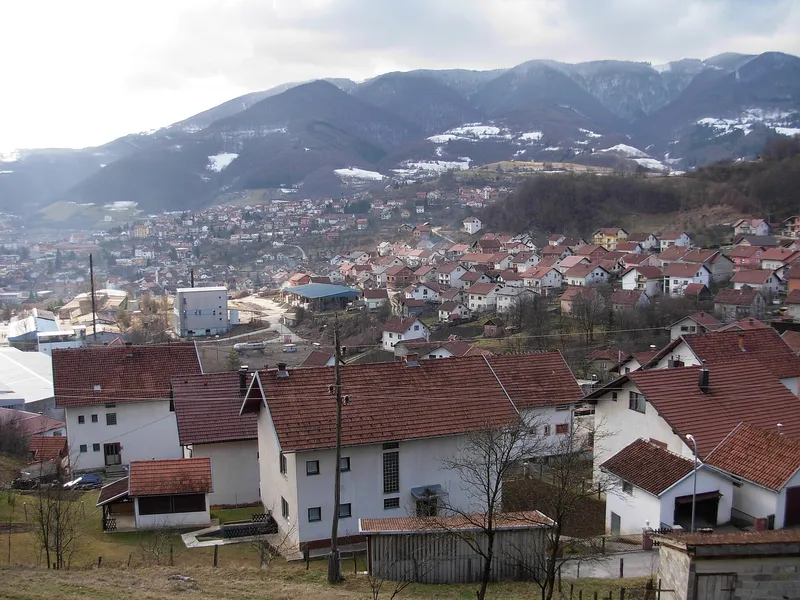
The complex of citadel, walls and towers lies on the southern slope of a rocky hill between the Pliva and Vrbas; the medieval town has a perimeter of about 1300 metres. It took its final form in the Ottoman period: the towers became bastions, the walls were thickened to between two and five metres, and St Mary's church with St Luke's tower became the Sultan Suleiman mosque.
Catacombs and Mithraeum
Near the former St Mary's church lie the Bear Tower and the catacombs, an underground church holding the tombs of Duke Hrvatinić and its own fortifications, preserved in their original form. Older still is the Mithraeum, a temple of Mithras carved into the rock and dating from the 4th century at the latest. Its relief shows Mithras in Persian dress slaying a bull, accompanied by a dog, a snake and a scorpion. The temple was discovered by chance in the 20th century during the construction of a private house.
AVNOJ museum and the Pliva lakes
In the former Sokol gymnastics society building, the Anti-Fascist Council for the National Liberation of Yugoslavia, AVNOJ for short, held its second session in November 1943; the delegates laid the foundations for a federal state there. The Museum of the Second AVNOJ Session was founded in 1953. Exhibits include the armchair Tito sat in and portraits by the painter Đorđe Andrejević Kun.
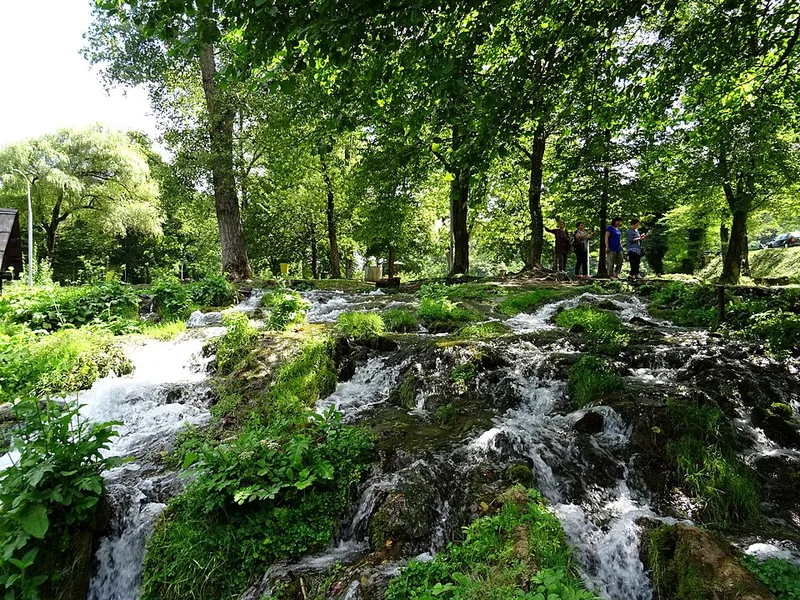
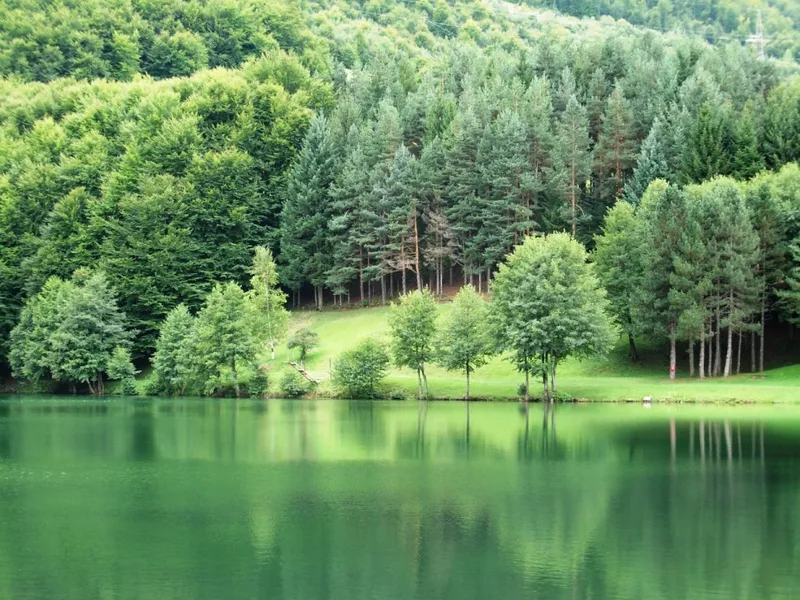
5 kilometres outside town lie the Great and Small Pliva lakes, created by changes to the river's course. On the tufa barrier between them stands a group of watermills known locally as Mlinčići. In 1963 Jajce hosted the European and World Canoe and Kayak Championships.
Tips for your visit
For views of the waterfall there is a viewpoint at the entrance to town on the Street of the Second AVNOJ Session and another below the Banja Luka–Jajce road. Since 2012 the Mithraeum has been enclosed in a glass structure and can be seen from outside; to go in, contact the Ethno Museum in the old school building near the catacombs. Since 2006 the natural and architectural ensemble of Jajce has been on the Tentative List for UNESCO World Heritage.