A fortified manor house
In the view of the Commission to Preserve National Monuments, Komotin was not a war fortress but a lord's residence with all the rooms such a building required. Its defensive character came from its hilltop position, the arduous approach along mountain switchbacks and a ditch spanned by a wooden drawbridge. The tall stone walls are 1.2 to 1.4 metres thick, and their remains still stand some 10 to 11 metres high.
The plan is an irregular quadrilateral with external dimensions of roughly 33.5 × 12.8 and 32.5 × 13.4 metres. Besides a small courtyard there was a large one, along with living quarters. Studies of the wall remains and interior spaces show that the building was permanently inhabited. With carefully dressed outer walls, small windows and a tall, steep shingle roof, Komotin looked more like a medieval house than a castle. A high masonry enclosure around the small courtyard protected the manor; its gate was defended from window openings that also served as loopholes. Ćiro Truhelka described the building as preserved almost up to the roof.
History
When Komotin was built is unknown; all that is certain is that it existed in the 15th century. According to tradition it was one of the fortresses raised by Duke Hrvoje, who also fortified Jajce. Komotin lay in the Luka district, which is named in a charter of Hrvoje from 1412.
Through marriage the castle passed to Radivoj of the House of Kotromanić, an unrecognised claimant to the Bosnian throne, who from then on styled himself lord of Komotin, dominus de Comothyn. On 18 September 1461 the young King Stjepan Tomašević granted his uncle Radivoj large estates and many castles in a charter, Komotin among them. The way the places are listed in the charter shows that Komotin had a district of its own: the mountains of Bočac and Crnička gora, the Podmilačje area on both banks of the Vrbas, and the villages of Cvitovići, Zdaljevac and Seoci.
In 1497 Alibeg, the governor in Bosnia, seized Komotin and stationed a garrison there, even though Hungary and the Sublime Porte were at truce. When the news reached Buda, the king sent an embassy to Constantinople to protest against this act of force in peacetime. Beyond this, hardly anything is known about the castle's history.
The way up
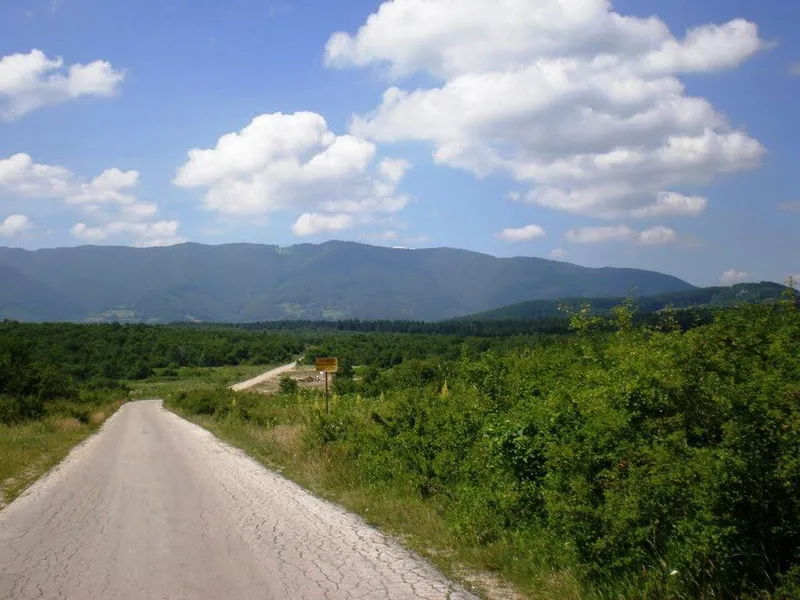
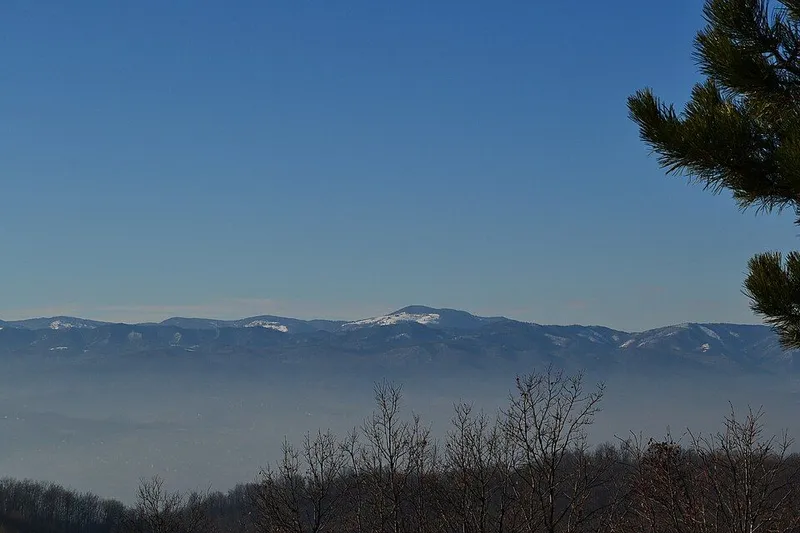
From the main Jajce–Banja Luka road, a narrow track leads to the villages of Cvitovići, Zdaljevac and Seoci. From there the only way on is on foot: first across clearings, then along forest paths and finally up a series of switchbacks. The castle stands at an altitude of 644 metres, and from the summit the view stretches far across the unusual landscape around it.
The approach to the castle was almost impassable because of very steep rocks and dense scrub. In October 2008 five volunteers from the Friedenskreis peace group in Halle, together with villagers and forestry workers, cut a path through the woods, repaired the route, built a small bridge over the Komotin stream and put up signposts. In October 2016 the town of Jajce's agency for heritage and tourism and the Ćusine mountaineering club cleared vegetation from the castle, and the club members marked a trail up from the village of Smionica.
During its site visit in June 2011, the Commission found the area heavily overgrown and in places covered with fallen stone; some sections of wall were in very poor condition through lack of maintenance and at risk of collapse.