The gate of Bosnia
North of the Zenica basin the Bosna valley narrows into the Vranduk gorge. The fortress stands above the left bank at the highest point of the steep gorge and controlled the route along the Bosna from Visoko towards the Sava, which earned it the name ‘gate of Bosnia’. Traffic from the Pannonian Plain passed Vranduk on its way along the Bosna to the Adriatic.
The name is derived from branduk, a word linked to braniti, to defend. Today the M17 main road and the Sarajevo–Šamac railway pass the village in tunnels.
History: royal seat, Ottoman fortress, prison
Vranduk is often linked with ancient Arduba, which is mentioned during the uprising against the Romans in the years 6 to 9 AD, but excavations at the fortress have so far found no fortifications from prehistoric or Roman times. The fortress was built at the end of the 14th century in the župa of Brod, one of the seven districts of medieval Bosnia, and was first a seat of the bans and then of the kings. Vranduk is first mentioned in writing in 1410.
Bosnian kings received envoys here, concluded agreements and issued charters. In 1447 King Stjepan Tomaš built a church of Saint Thomas at Vranduk, and a Franciscan friary is recorded in 1449.
The Ottomans took Vranduk in 1463. It then became the seat of the short-lived Kingdom of Bosnia that the Ottomans set up and abolished again in 1476. In 1697 Eugene of Savoy bypassed the hard-to-take fortress on his campaign. In the 18th and early 19th centuries it was used to hold political prisoners. Austrian troops occupied Vranduk in 1878 and kept a garrison there until 1890, after which the fortress was abandoned.
What to see: citadel, tower museum and mosque
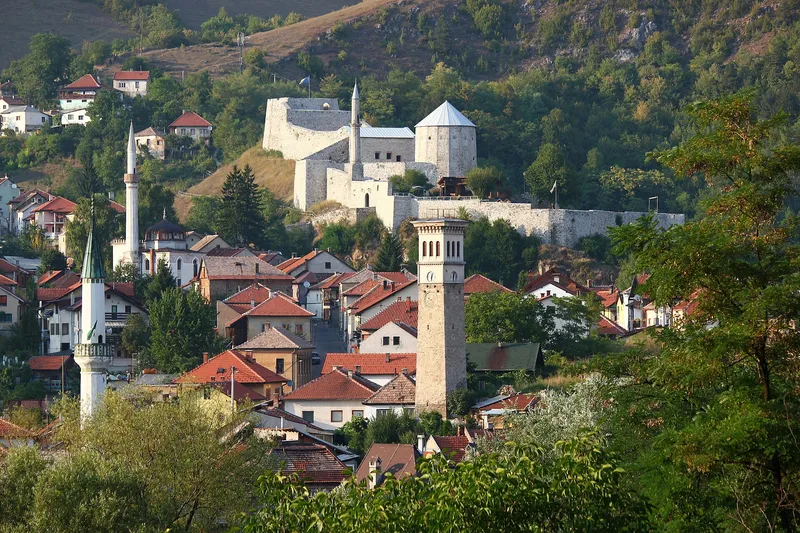
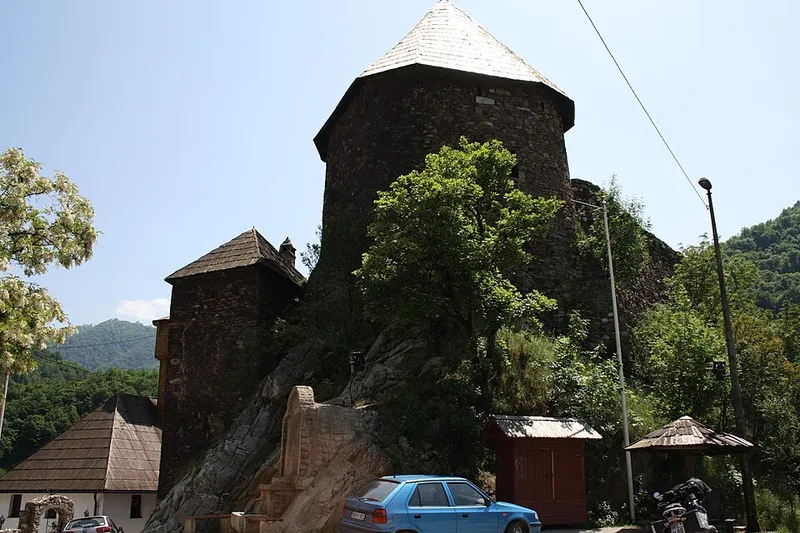
Vranduk is a hilltop fortress consisting of a citadel with a main tower and remains of the curtain wall. The entrance is on the east side, and inside lies an elongated courtyard of about 35 by 22 metres with a cistern and the square tower on the north side. In the Middle Ages the main tower was taller; a small tower and the east wall were added later to protect the entrance. The remains of the so-called Dizdar's house have also been found.
The fortress has been restored and turned into a museum. Archaeological and historical displays fill two floors of the large tower, while the smaller tower is devoted to medieval cuisine. Tours are organised by the Zenica City Museum, which also keeps the many medieval and Ottoman finds unearthed inside the walls: vessels, jewellery, coins, tools and spurs.
Right next to the fortress stands the old mosque of Vranduk, also called the Sultan Fatih Mosque. It was built as the fortress mosque after the Ottoman conquest in 1463. Because there was no room inside the walls, it stands just outside them. According to some accounts it was built on the remains of a medieval church.
Vranduk village
The village grew up around the fortress, and together they form a protected ensemble that was declared a national monument of Bosnia and Herzegovina on 25 January 2005.
A traditional Bosnian house in the village is part of the permanent exhibition of the Zenica City Museum and displays ethnological exhibits over several floors. Many watermills more than 200 years old still work on the Vrandučka river. The village still serves potkriž, a dish made to a medieval recipe from layers of homemade dough and meat, cooked in a baking tray. Events are held at the fortress throughout the year, such as the festival Tragovima bosanskog kraljevstva (On the Trail of the Bosnian Kingdom) with medieval music and knights' performances.