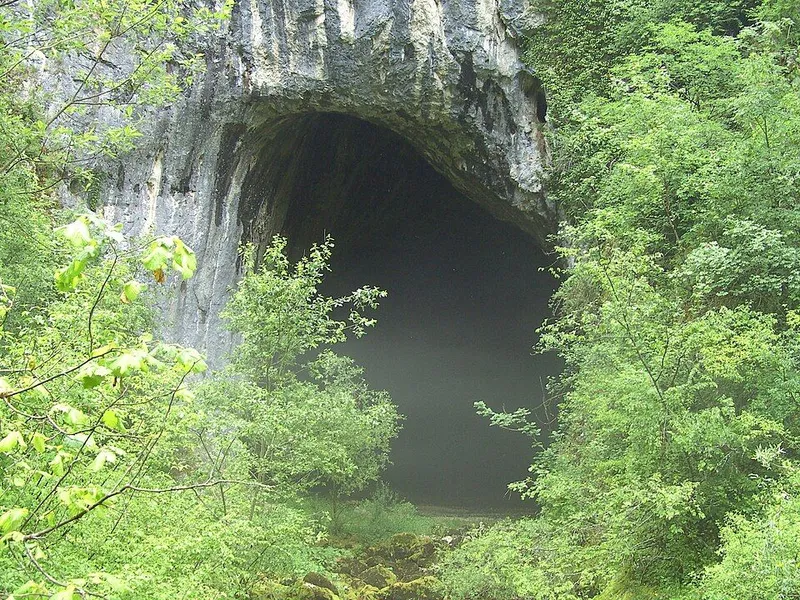
Cave and spring
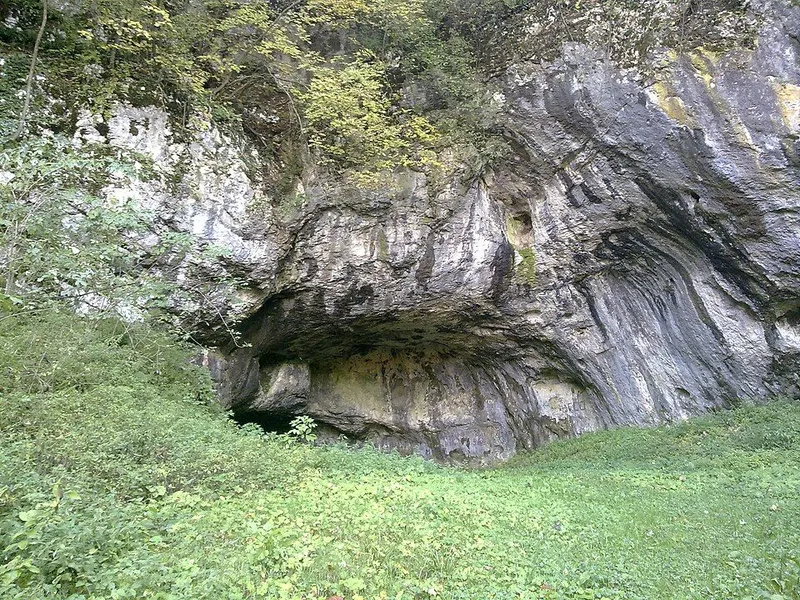
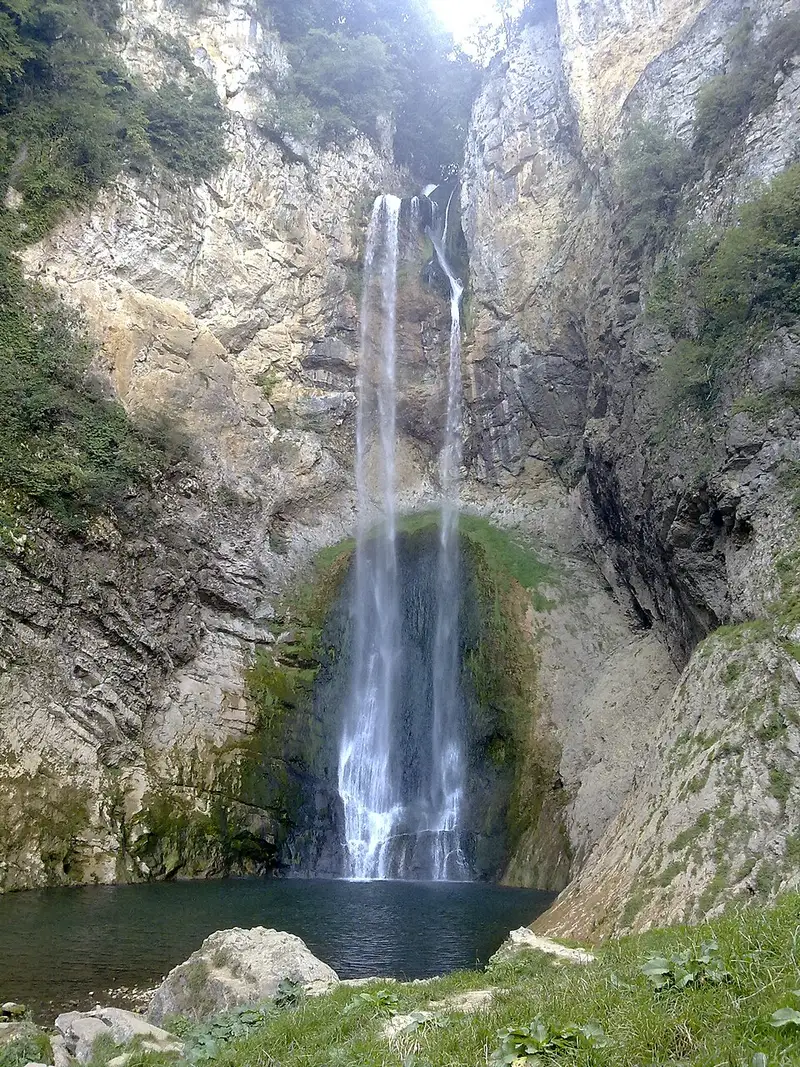
Dabar Cave is a spring cave. The water of the Dabar emerges as Dabarsko vrelo immediately below the entrance portal, a typical situation in karst areas. Over time the water has moved down to a lower level, so the old cave level is now dry. After snowmelt or heavy rain, however, water flows through it again, and one of the source branches of the Dabar emerges from time to time inside the cave.
Beyond the entrance a spacious chamber opens up. Further in there are small lakes whose level rises in rainy and snowy periods. During heavy rainfall a large lake forms that makes going any deeper difficult or impossible. There are only a few formations such as stalactites and stalagmites.
Traces of early settlement
Finds from the entrance section, including objects of everyday use, show that people were already using the cave in prehistoric times. The remains of a pile-dwelling settlement were also discovered nearby and are thought to date from the Illyrian period. During the flood of May 2014, erosion damaged the archaeological site in the cave.
Life in the dark
During scientific research several decades ago, the olm (Proteus anguinus) was found in the lake inside the cave. This endemic species has survived since prehistoric times only in very clear water and in darkness. Speleological surveys in 2016 also confirmed the cave spiders Nesticus arenstorffi, Lepthyphantes centromeroides and Metellina merianae. The cave shrimp Troglocaris bosnica lives here too; it has been found only in this cave and in Suvaja Cave near Lušci Palanka.
An ecological study of the Dabar river published in 2025 highlights the cave, with its endemic subterranean crustaceans and the olm, as a particular ecological asset of the area.
The Dabar river
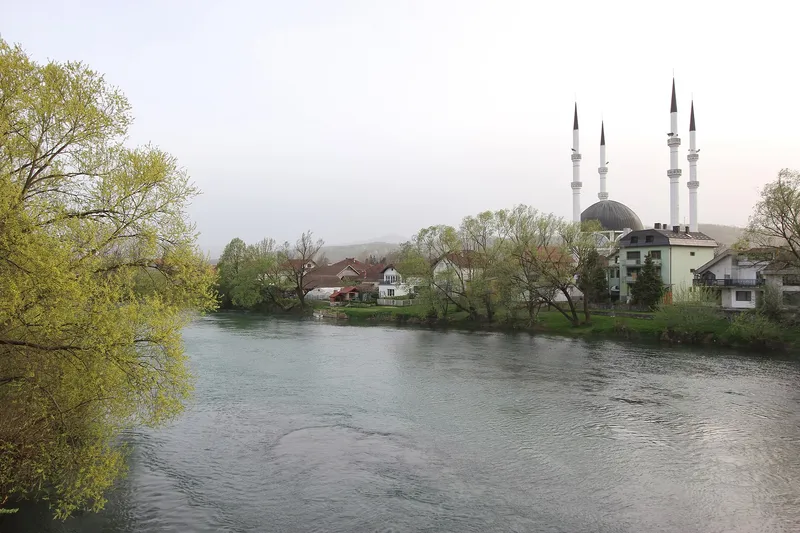
The Dabar is a small karst river and a left tributary of the Sana. From its source to its mouth it flows through a canyon-like, largely uninhabited valley with dense vegetation. According to the 2025 study its ecological status is good, especially in the headwater section, with water quality declining slightly downstream.
The Dabar is rich in salmonid fish and well known among anglers. The angling society “Sana” from Sanski Most manages it, and the traditional “Zlatni Dabar” competition is held on a dedicated fishing stretch.
Tips for your visit
At the end of the access road there is a small parking area, and from there a 400-metre path leads to the cave and the spring. The site has paths and is signposted. The entrance section is easy to visit because the floor is level. After heavy rainfall it is hardly possible to go further in, as a large lake then forms inside. The spring and the cave are an excursion spot for the people of Sanski Most, and clean-up and access maintenance campaigns are organised from time to time.