The Krupa waterfalls and mills
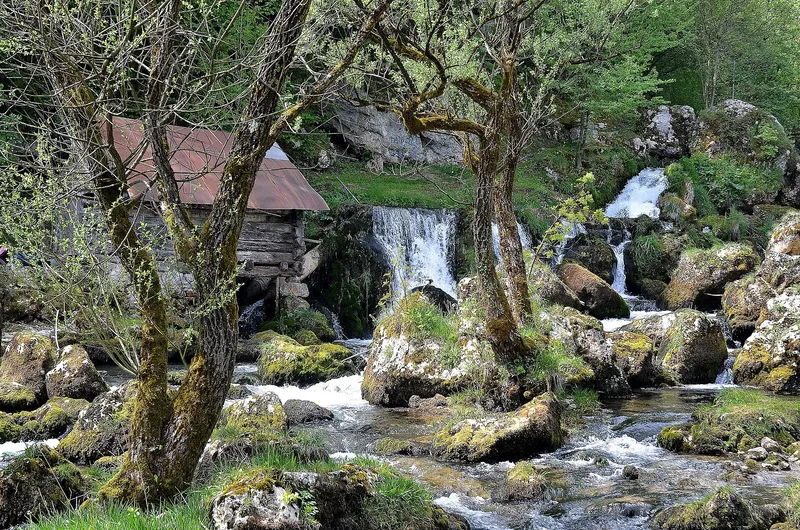
The Krupa is the continuation of the Ponor river, which sinks at the southern edge of Podrašničko polje near Mrkonjić Grad and resurfaces here. After just 4 kilometres it flows into the Vrbas; the waterfalls are about a kilometre above the mouth. The water tumbles in cascades over tufa steps, forming many small pools.
Old wooden mills and footbridges stand by the falls, and the water still drives the mills today; flour ground there can be bought. There are nine mills on the Krupa. A laid-out path leads downstream and upstream as far as the spring. Above the spring is Strikina pećina, a cave with traces from the Palaeolithic.
The monastery of St Elijah
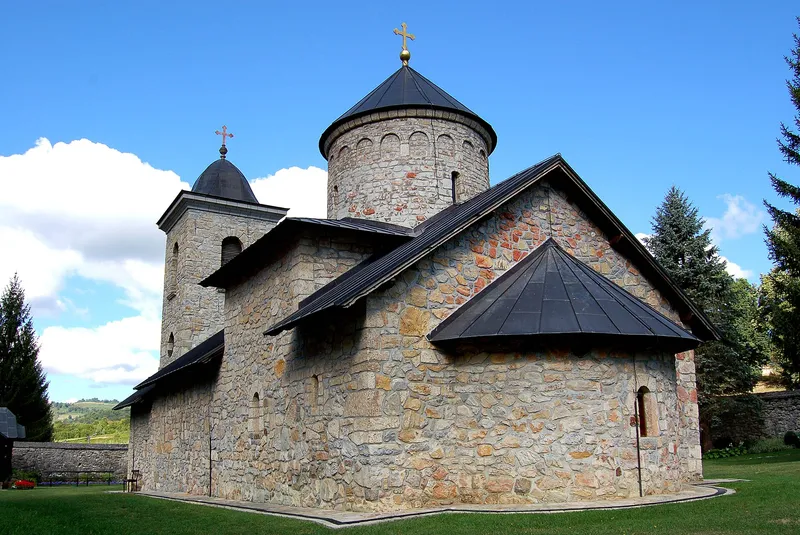
Krupa Monastery dates back to the Middle Ages; by tradition it is an endowment of Stefan Nemanja. Its Church of St Elijah is a single-nave building of rough rubble stone with several construction phases, and it is historically linked to Greben fort. Excavations found traces of an older sanctuary, probably a basilica from the 6th or 7th century, and fragments of painted plaster from before 1527–1528.
Around the church is a cemetery with tombstones, two of them carved in high relief with crosses, rosettes and a crescent moon. Metropolitan Sava Kosanović had the church restored in 1889; it burned in 1941 and was rebuilt in 1964. A footpath through the forest leads to the monastery.
Greben fort
Above the Tijesno gorge, on steep cliffs, stand the remains of the medieval fort of Greben, made up of three stepped sections. It is first mentioned in 1192, then in 1322 and 1346. In the 14th century it was held by the Hrvatinić family, lords of Donji Kraji, as shown by charters signed here in 1374 and 1375. Greben was destroyed when the Ottomans took the Banate of Jajce in 1527–1528; in 1562 Ottoman sources refer to it as Greben and Vrh Krupa, after which it was apparently abandoned.
Only the tower above the Vrbas and part of the walls running down towards the canyon are better preserved. A climb on foot leads up, and from the top there are views over the Vrbas canyon and the village.
The log church and the natural bridge
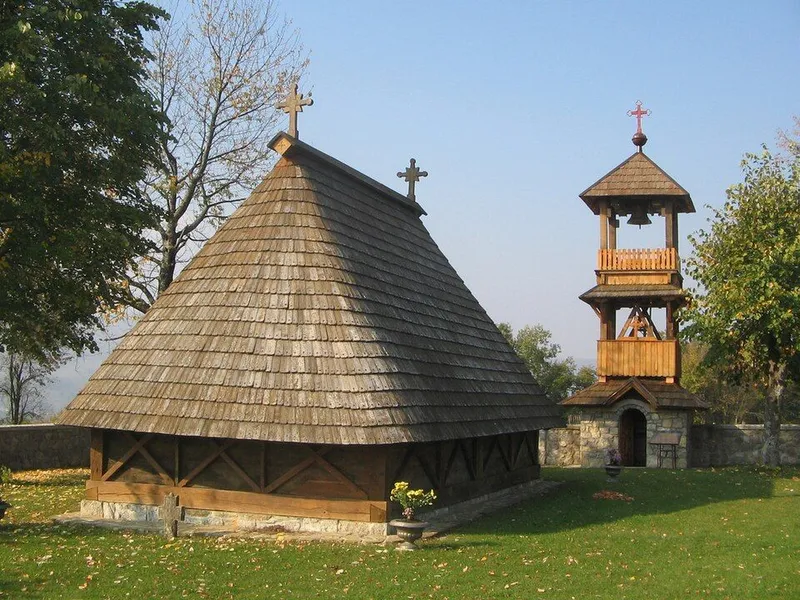
In the hamlet of Polje, near the houses of the Tovilović family, stands an old log church dedicated to St Nicholas. According to oral tradition it was built in 1735 and consecrated in 1752. It is made of oak beams, 8.3 m long and 6 m wide and high. A Gospel book printed in Moscow in 1778 survives inside. One legend says the villagers carried the timber overnight to the present site.
The area also has the Kameni most, the Stone Bridge, also called the Maiden's Bridge: a natural rock arch formed by erosion. The name comes from the tale of a girl who leapt from it because of unrequited love.
Village tourism
In 2025 UN Tourism added Krupa na Vrbasu to its list of Best Tourism Villages, together with 51 other villages; the list was announced in Huzhou, China. The village had been nominated by the Banja Luka tourism authorities. Since 2023 the local association Green Greben Grad has managed what is on offer: guided heritage walks and monastery visits, forest tours, craft workshops and truffle hunts followed by meals in village homes.