Ploče and Bare
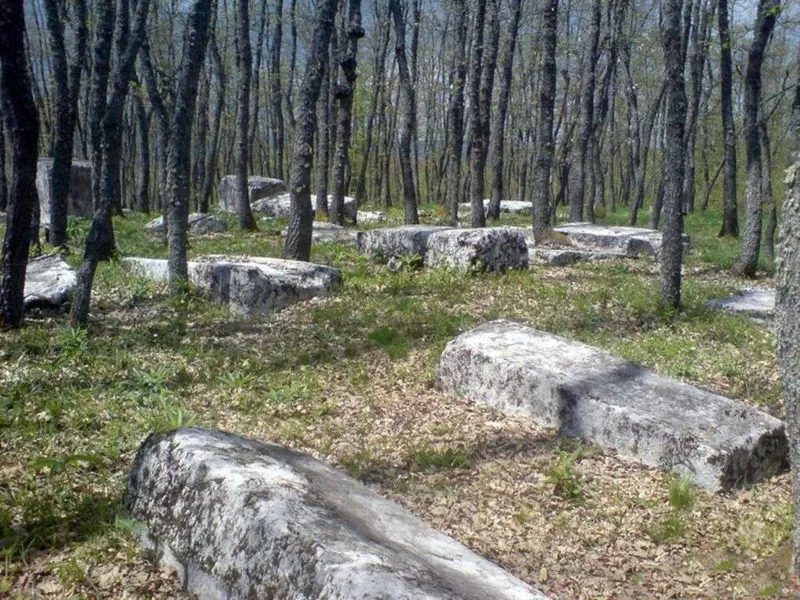
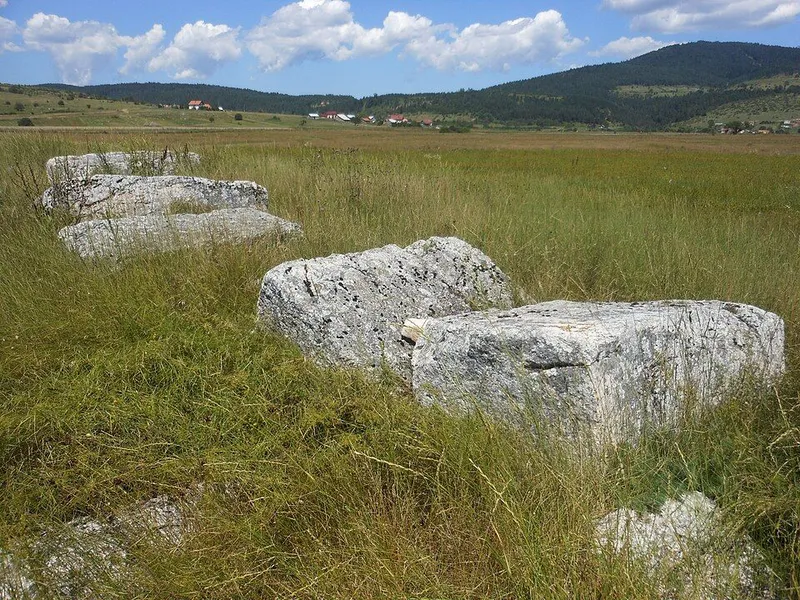
The necropolis at Ploče sits on a prehistoric burial mound with a radius of 40 metres and a height of about 3 metres. At its centre is a square hollow, probably the site of a medieval building. 51 stećci have been counted – 50 chests and one gabled stone – laid out like rays around the middle of the mound; three stand a little apart, 10 metres to the north. Three chests are decorated.
The second necropolis, Bare, lies a short way off on a rise without a circular base, some 80 metres long and 30 metres wide. Its 83 stones – 78 chests, one gabled stone and 4 fragments – are aligned north to south. Six chests are decorated. Both plots are fenced. In 2012 the heritage institute of Republika Srpska recorded a total of 132 stones and fragments. The motifs include a line that marks a double burial, a rosette, a sword and a cross; there are no inscriptions.
Burial mounds and hillforts
Glasinačko polje has been inhabited since prehistory, because routes between the valleys of the Bosna and the Drina crossed here. Over 50 prehistoric hillforts and more than 1200 burial mounds in groups are known; the oldest mounds investigated date from the early Bronze Age. The area is associated with the Illyrian tribe of the Autariatae. The Iron Age group known as Glasinačka flourished from the mid-7th to the mid-5th century BC, as settlements, graves and many finds show, among them weapons, pottery, jewellery and imported bronze vessels.
The area was explored early: Đorđe Stratimirović, Ćiro Truhelka, Vejsil Ćurčić and Franjo Fiala investigated hillforts and mounds from 1886 to 1891, and in 1971 Šefik Bešlagić recorded the stećci. Further medieval necropolises lie at Talin, Laze, Kusače, Čavorine and Potpećine.
Middle Ages and Ottoman period
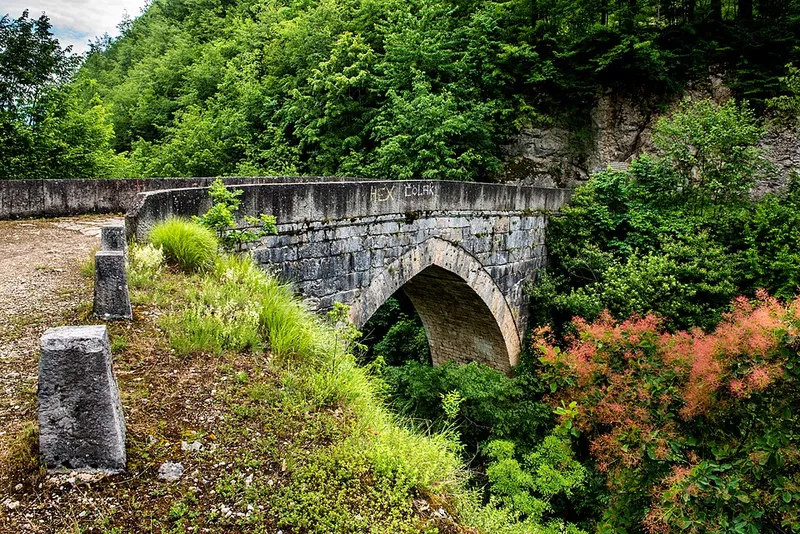
The fact that many medieval necropolises were laid out on or beside burial mounds shows that the area was well populated at the time and that burials continued at the same spots. In the Middle Ages the area lay in counties that, together with neighbouring Prača, formed part of the Pavlović lands, among them the county of Pale in the basin of the Paljanska Miljacka. In the 15th and 16th centuries it lay in the Ottoman vilayet of Pavle and the nahiya of Olovo; at the end of the 16th century the new kadiluk of Birač, that is Vlasenica, was created, which also took in Knežina and its surroundings. Numerous graveyards with nišani survive from that time. Under Austro-Hungarian rule the field was known as Bandino polje. In the 20th century a road was built beside the necropolis, splitting Luburića polje in two.
Protection and condition
In October 2010 the Commission to Preserve National Monuments declared the prehistoric burial mounds and the necropolises of Luburića polje a national monument, and in 2016 they became one of 28 sites of the stećci World Heritage property. The inscribed area covers 3 hectares, the buffer zone 4.6 hectares.
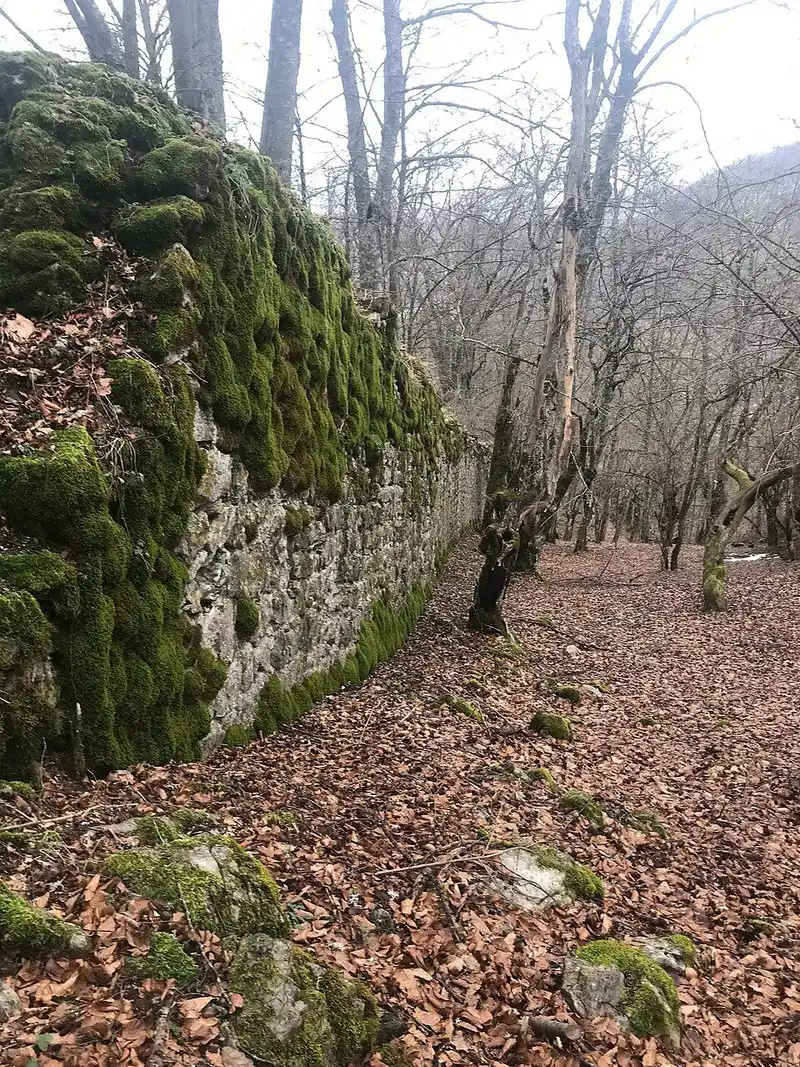
The 2017 description calls the condition satisfactory, with the stones in their original positions. Most are coated with moss and lichen, however, and many have been damaged by long exposure to the elements, cracked or sunk so that they cannot be seen in full. In 2011 the site was surveyed and photographed stone by stone.