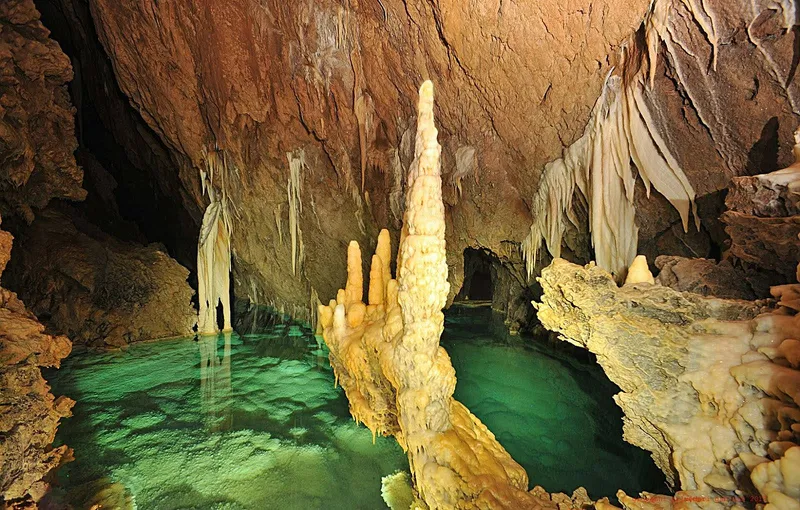
The Prača gorge
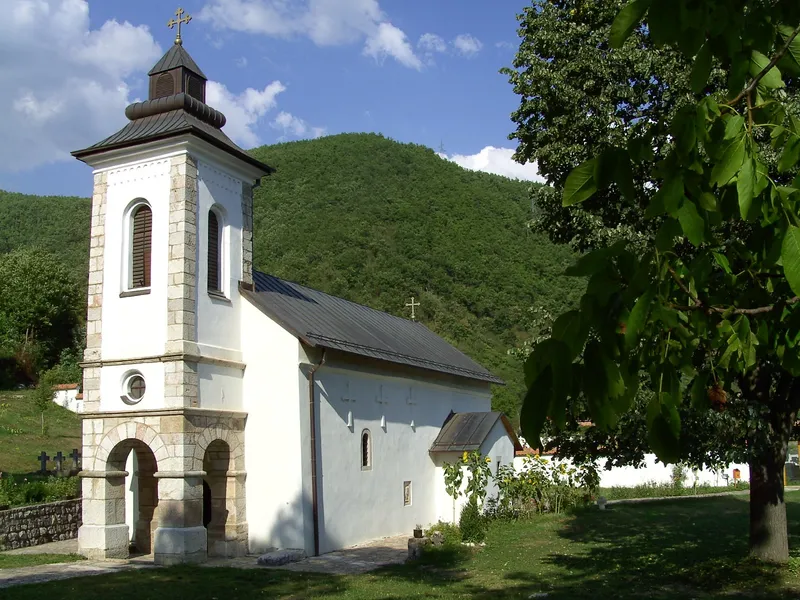
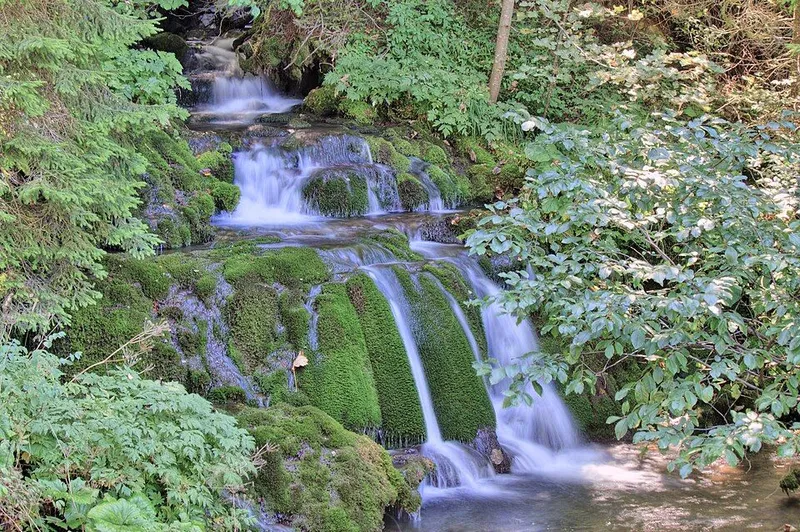
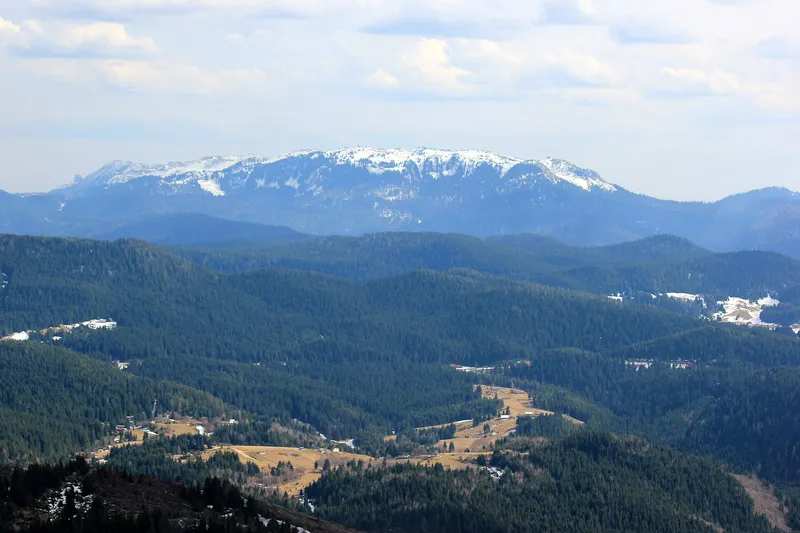
Prača Nature Park lies in the east of Republika Srpska in the municipality of Rogatica and covers the middle course of the Prača and its catchment. The gorge runs from Mesići to Renovica and is in places more than 400 metres deep. The Prača is 62.6 kilometres long and is a left tributary of the Drina. Because the limestone lets water through, there are few surface streams; sinkholes dominate the surface, while caves and a few shafts lie within the rock. The climate is moderate continental with often harsh winters, and the mean annual temperature is around 8 degrees.
Surveys have counted 714 taxa, many of them endemic or relict species, as well as 11 mammal species such as brown bear, wolf and wild boar, and 85 bird species. As early as 1957 the heritage authority of the time protected the narrows of the gorge and the caves of Banj stijena and Govještica; on 1 April 2021 the Government of Republika Srpska declared the area a nature park.
Govještica cave
Govještica’s large entrance lies at 580 metres and is also a spring. Shortly inside, the passage splits into a north-western and a south-eastern arm; the north-western one has not yet been fully explored. The cave has been known since the construction of the Sarajevo–Višegrad narrow-gauge railway in 1906, but a small lake blocks the way right at the entrance. In dry periods it measures only 8 metres across, but after rain its level can rise by 3 metres. According to a document from 1911, explorers then got 100 metres in.
Only from 2010 did speleologists from Bologna and Novara, together with the Centre for Karst and Speleology in Sarajevo, explore the cave systematically: by 2011, 3800 metres had been surveyed, by 2012 already 7715, and by 2013 a total of 9682 metres. Vertical drops, lakes, sumps, an underground river and shafts more than 60 metres deep make it dangerous. Around a thousand bats live inside, cave bear bones have been found, and some passages are filled with calcite crystals and helictites.
Railway line, Borač and neighbouring caves
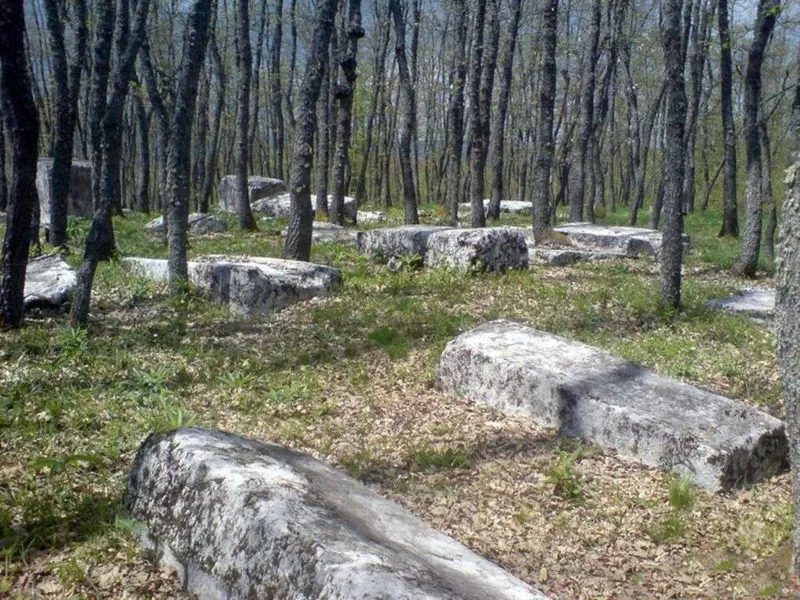
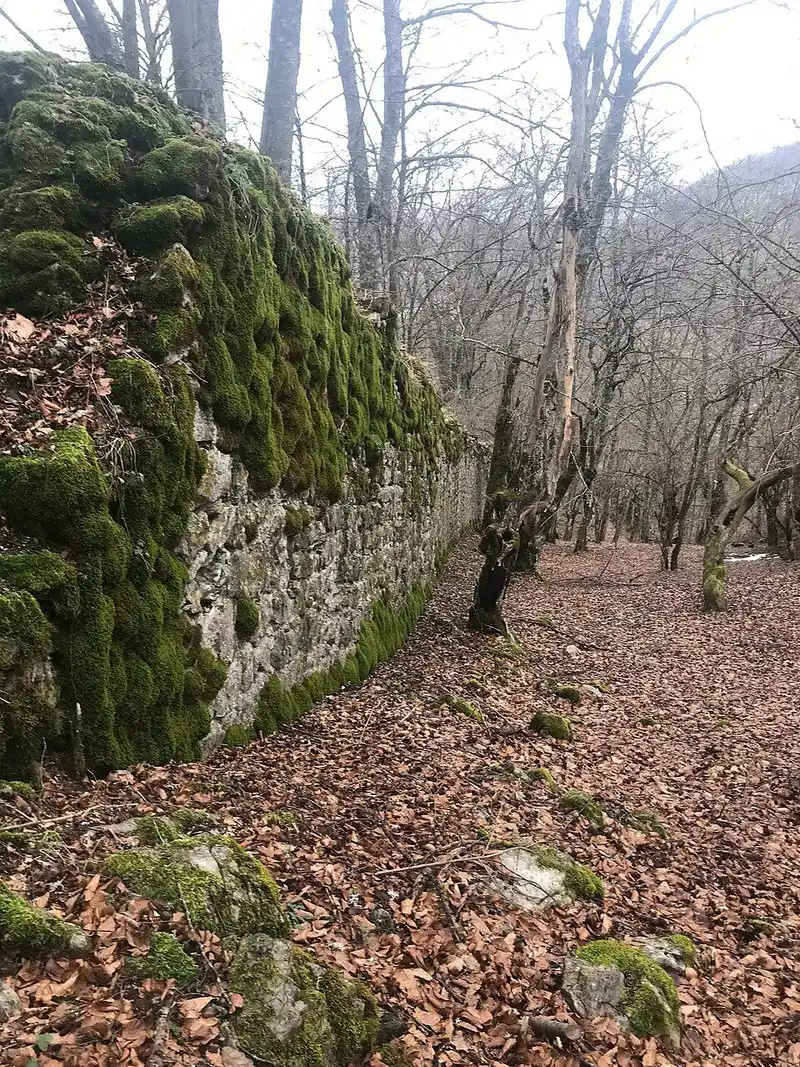
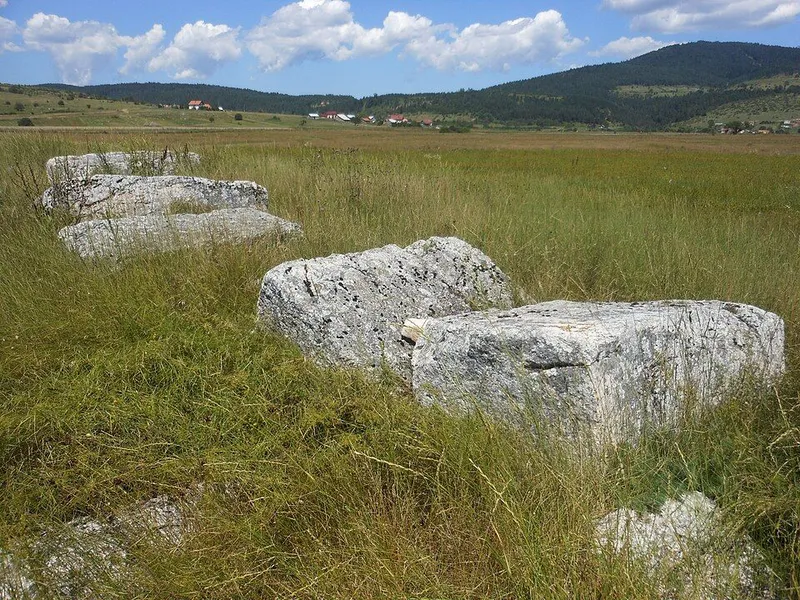
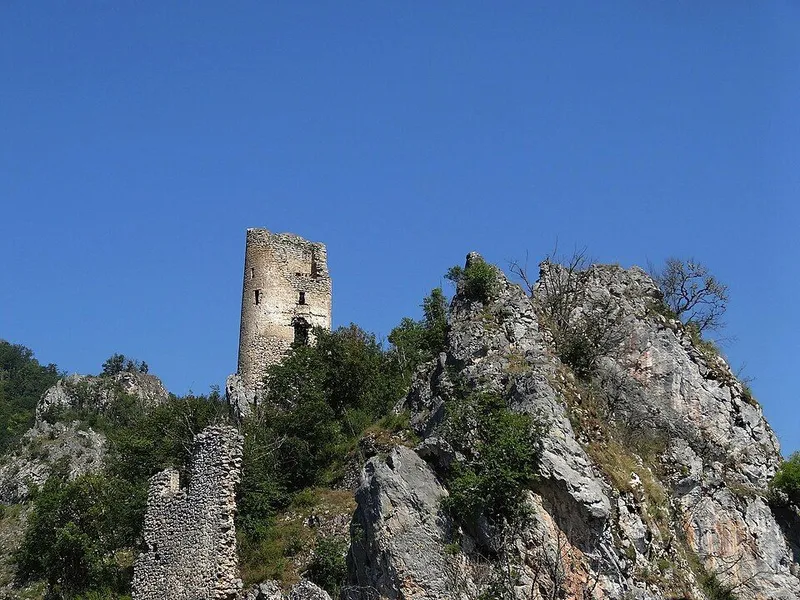
Less than a kilometre away lies Mračna pećina, also called Banj stijena, whose length of around 1200 metres has now been surveyed; a third cave is Golubovićka. Along the Prača run remains of the Austro-Hungarian Sarajevo–Višegrad railway with numerous tunnels; the old line would lend itself to a cycle path. A hydroelectric plant from 1950 is still in operation. From the Middle Ages come the remains of the fortified town of Borač and several stećak necropolises, for example at Varošište and Lađevine; particularly representative tombstones were taken to the National Museum in Sarajevo. The park description names Banj stijena, Karačići and Bošnjakinja as viewpoints.