The Pavlović family's new castle
The Pavlović family owned two castles, built a few decades apart and only a few kilometres from each other. Pavlovac is regarded as the newer one and was also known in the sources as Novi or Novi Grad, the new castle. When it was built is disputed: some medieval charters point to 1392, while researchers from the Slovenian Academy of Sciences name Duke Pavle Radinović as its builder around 1415, at any rate before 1463. A fortification probably stood on the site earlier and was rebuilt in the 15th century.
The first written mention dates from 11 May 1423, when envoys from Dubrovnik wrote to their government from Sotto Noui in Praza, the settlement below the new castle at Prača. They had been sent to Vojvoda Radoslav Pavlović. Between 1447 and 1449 a certain Vukašin Milavčić of Prača appears several times in debt registers.
In the 14th and 15th centuries Prača was an important trading place and caravan stop, and the castle was meant to protect this market. In 1463 the Ottomans captured and destroyed Pavlovac. In 1489 it was the seat of the nahiye of Prača, and in 1550 it was already recorded as abandoned.
Walls and towers
The castle stands on a rock above the left bank of the Prača, where the river has cut a deep canyon. Its plan is irregular, shaped by the terrain and by the period when siege artillery appeared. Overall it extends over about 100 × 50 metres. It is approached from the north-west. The northern and north-eastern sides were guarded by four pentagonal towers. There is no classic keep; a bastion takes its place. On the east stands a square tower, where the ramparts reach up to 7 metres in places, with a deep ditch in front.
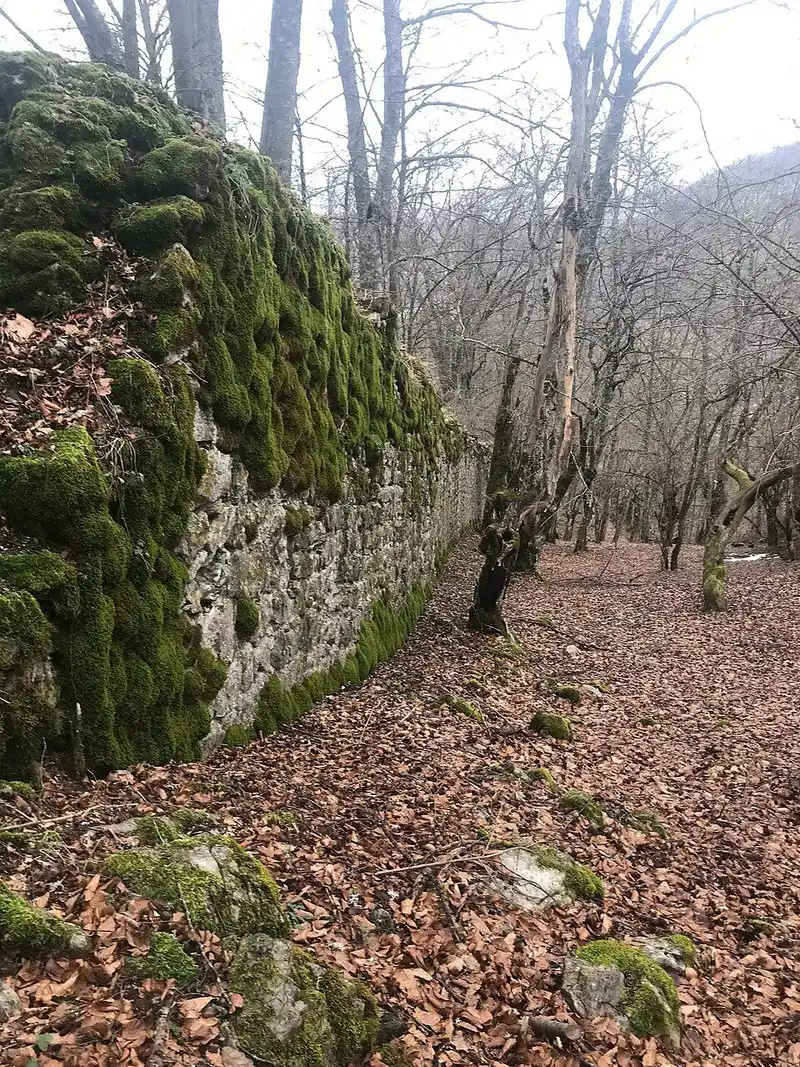
Well-preserved walls and the remains of at least five towers can still be seen today, hidden in the undergrowth and commanding the Prača valley. One of the walls is 1.35 metres thick and over 6 metres high, and has survived for more than 600 years.
Excavations since 2025
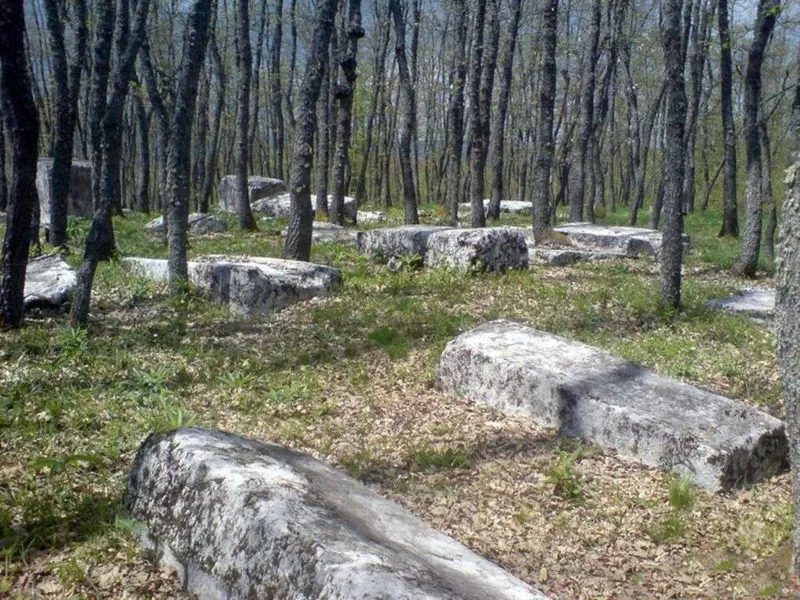
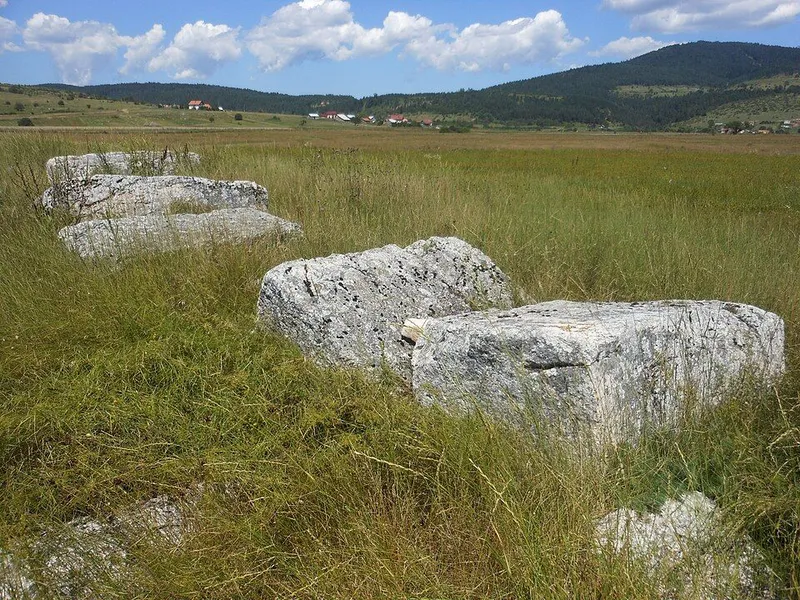
Pavlovac had never been investigated by archaeologists until 2025, when an international team working within the European research project STONE spent three weeks digging there with the Regional Museum of Goražde and the University of Sarajevo. One group worked at the tower called Crkvina, where medieval walls are clearly visible. A second examined a cemetery with stećci, the medieval tombstones of Bosnia, east of the castle hill. It had been damaged by earlier forestry work; the team recorded 25 surviving stones, the remains of 23 original stećci. Microscopic traces of clothing point to the high standing of those buried there.
In the following season a gabled stećak on a pedestal came to light in the Crkvina at the castle's highest point, leading researchers to suggest that the church there may have been not only a place of worship but also a mausoleum. Animal bones, potsherds and fragments of glass goblets shed light on diet in the 14th and 15th centuries, while arrowheads reflect the castle's role in controlling the Prača market and the trade route between the Adriatic coast and the interior. At the Podgrad cemetery four more graves and a previously unknown stećak were uncovered.