On the edge of Gatačko polje
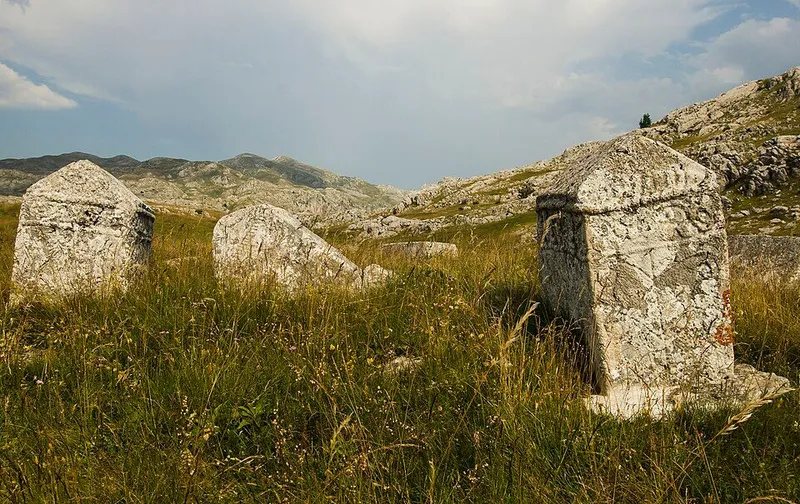
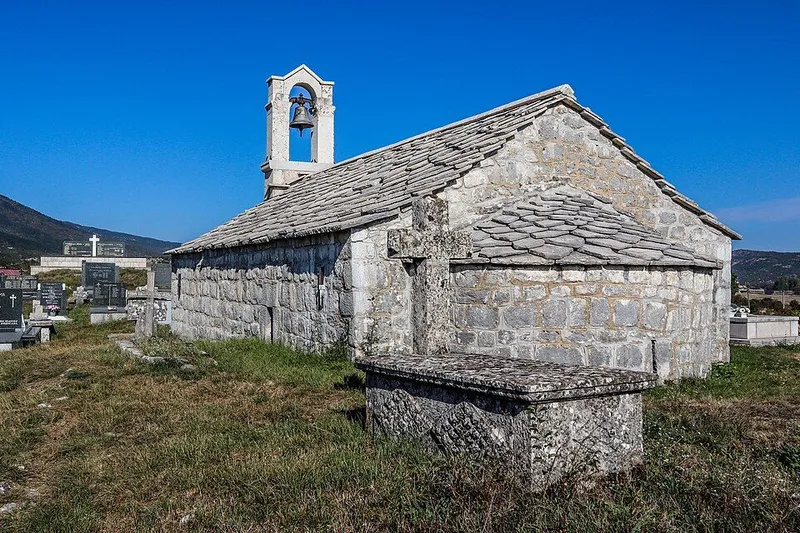
Srđevići lies 4 kilometres south-west of Gacko on the edge of the wide Gatačko polje. The churchyard is reached from the east by an access road that branches off the main road between Nevesinje and Gacko. The church stands on a gentle rise in the village's Orthodox cemetery and is sunk almost halfway into the ground. Next to it are a few old gravestones and some more recent ones.
In the summer of 2005 the Commission to Preserve National Monuments declared the church, together with the cemetery, a national monument of Bosnia and Herzegovina. The church belongs to the Eparchy of Zahumlje and Herzegovina of the Serbian Orthodox Church.
The voivodes' church
The first written records of Srđevići date from the early 15th century, in the Dubrovnik archives and the Sopoćani book of commemoration. The village probably took its name from the prominent Srđević family. The church was probably built by the voivodes of Gacko from this family or by their relatives, the Trkovići.
The Trkovići are regarded as the church's founders. Their grave lies on the other side of the village, at a place called Vrtina: a shared tomb of the three voivodes Radoje, Petar and Ivan Trković, whose names are written on three dressed stones around the grave. They probably died in a conflict with the Ottoman authorities at the end of the 16th century. An inscription on a stećak at Tvrdoš Monastery near Trebinje mentions, in 1595, Jovan Srđević, who had probably fled there from the unrest in Gacko. The church was damaged again in 1790 or 1798.
Built of stone – and of stećci
The church has a single nave on a rectangular plan, with an apse and a bell gable. Outside it measures 10.25 by 5.60 metres, inside 8.85 by 3.95 metres. The massive walls of large stone blocks laid in horizontal courses are unplastered on the outside. The roof is covered with stone slabs that overlap at the ridge. Light enters only through small windows in the south wall and narrow openings in the apse and below the bell gable.
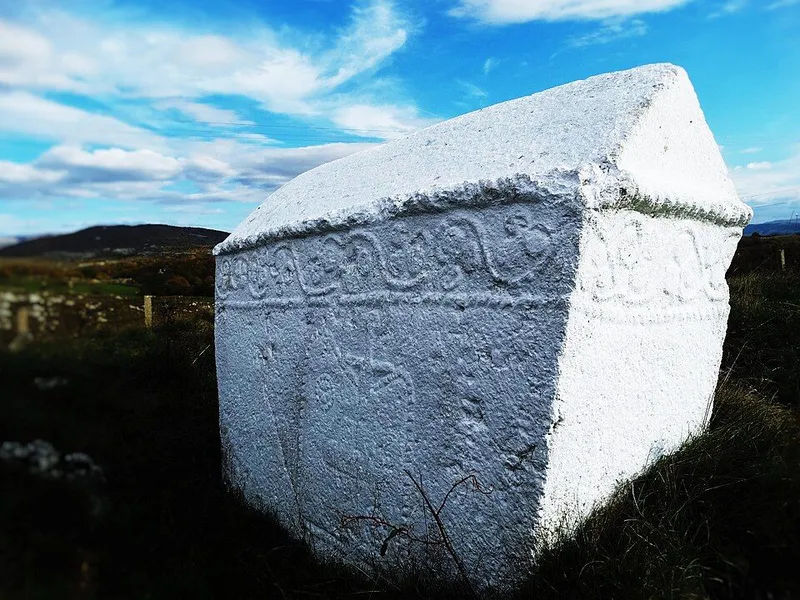
The rectangular doorway is in the west wall, and the simple wooden door measures 77 by 150 centimetres. The door jambs and the 350-centimetre lintel are stećci from the surrounding area, medieval tombstones on which faint decoration can still be made out. The bell gable of finely dressed limestone is 6.8 metres high and was added in the 19th century.
Frescoes by an unknown master
Frescoes from the Ottoman period are rare in Bosnia and Herzegovina; the Commission counts 17 such sites. Srđevići is one of them: the church was painted by an unknown, well-trained master whom the Commission counts among the important Serbian painters of his time. The whole interior was once painted. A traveller noted in 1898 that almost all the images had been whitewashed and only Christ with the four Evangelists in the sanctuary could still be made out.
Today only traces of the painting survive, with larger fragments on the east wall and in the apse. In the apse, the Church Fathers Basil the Great and John Chrysostom appear, led by the Archangels Michael and Gabriel. On the north wall, the remains of a dragon point to St George. In 1970 an older layer of painting was found on the south wall next to the entrance, so the church probably had frescoes even before the 16th century. The paintings were cleaned and consolidated in 1966 and 1967; in 2005, however, the Commission found that cracks and damp were harming the fragments.