A valley on the Sutjeska
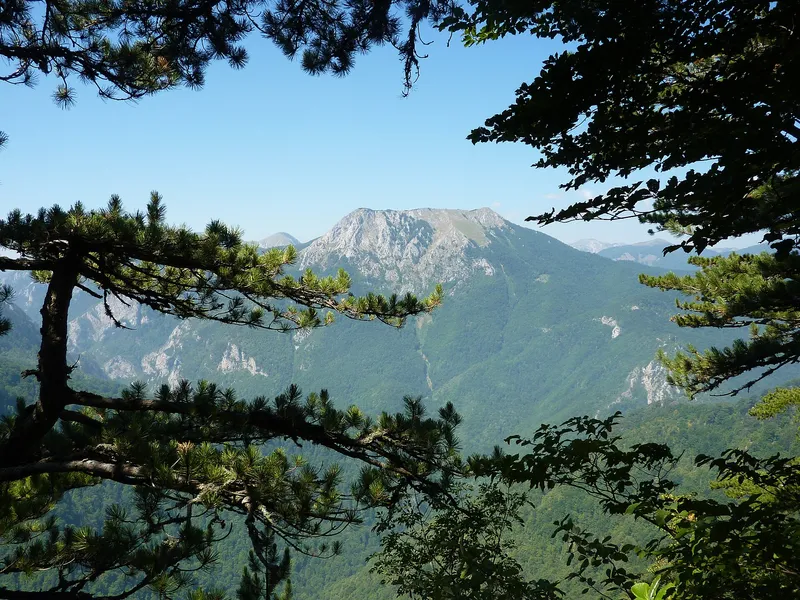
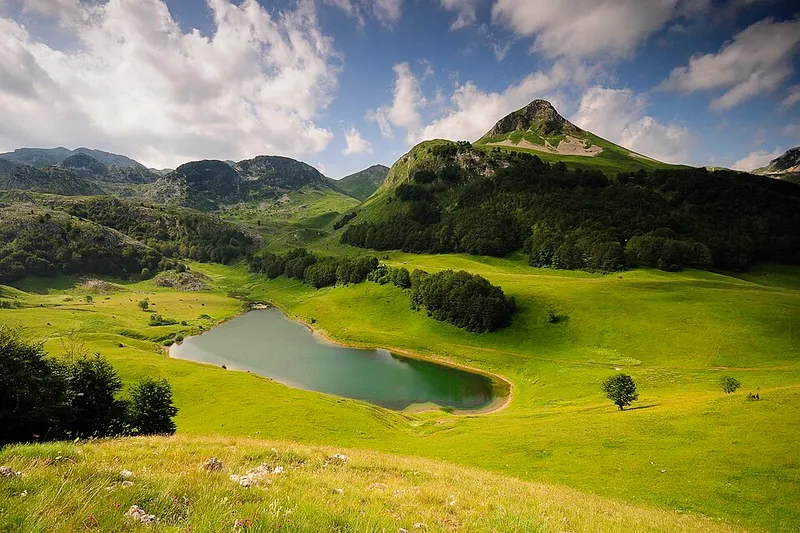
Tjentište is a widening of the Sutjeska valley about three kilometres long and one kilometre wide, with its floor at around 560 metres above sea level. It lies between the Prosječenica and Ćurevo gorges; foothills of Zelengora rise on one side, and Volujak, Maglić, Vučevo and Perućica on the other. The 2013 census counted 94 inhabitants in the village.
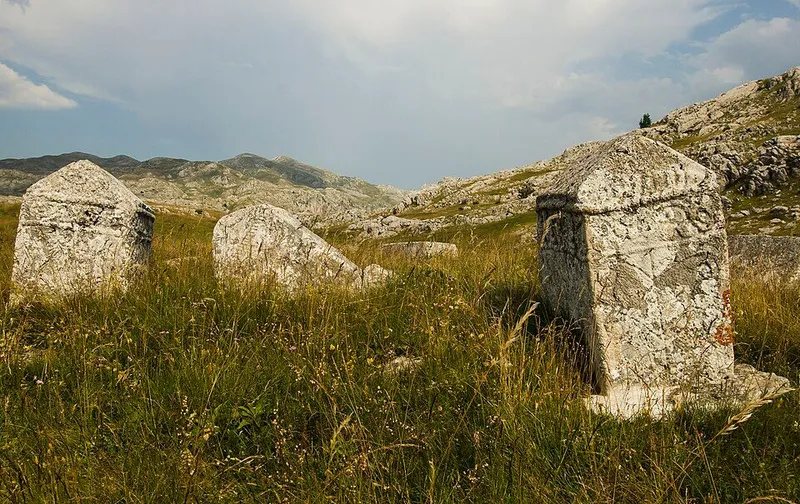
In the Middle Ages Tjentište was a caravan station on the road linking the coast with eastern Bosnia: caravans from Dubrovnik came here via Trebinje, Bileća, Gacko and Čemerno and went on to Foča. The first written mention dates from 15 February 1418, when two merchants from Tjentište borrowed money from a Dubrovnik nobleman. The area belonged to the lands of the noble Kosača family. More than 300 stećci, medieval tombstones, have been recorded in and around Tjentište.
The Battle of the Sutjeska
The Battle of the Sutjeska, also called the Fifth Offensive or Operation Schwarz, was a turning point of the National Liberation War. It lasted from May until 15 June 1943, as the Partisans fought to break through the German encirclement. More than 7000 Partisans were killed, over 750 of them women.
The first modest memorials appeared as early as 1958. The site was enlarged later on, adding the monument, the ossuary holding the remains of 3301 Sutjeska fighters, a small amphitheatre, a museum, the memorial house and a series of further monuments around Tjentište.
The monument in the Valley of Heroes
The monument above the ossuary was erected in 1971 and unveiled by Tito. Miodrag Živković, who taught at the Belgrade Faculty of Applied Arts, created two symmetrically placed, jagged blocks, two white concrete wings 19 metres high. Between them opens a breach shaped from fighters and columns on the move, symbolising the breakout from the encirclement. Đorđe Zloković handled the structural design. Behind the breach lies the Plato brigada, a terrace with stone bands bearing the names of the units.
Apart from the main monument there are further memorial sites, for example at Ljubin grob, Borovno brdo, Krekovi, Donje bare and Dragoš Sedlo, all completed in 1987. In February 2018 part of the hill on which the monument stands slid away. After many organisations and governments had offered help, the hill was stabilised by the end of 2018.
The memorial house and protection
The Memorial House of the Battle of the Sutjeska was designed by the architect Ranko Radović based on an idea by Dušan Plenča; the raw-concrete building covers 3000 square metres. Inside, assistants of Krsto Hegedušić painted frescoes following his concept and cartoons; the frescoes remained unfinished. During the war of 1992–1995 the house was wrecked and Hegedušić's work was riddled with bullets and disfigured, while the monument survived. The names of more than 7000 fallen fighters are recorded in the museum.
On 23 September 2009 the National Assembly of Republika Srpska passed a decree protecting the Valley of Heroes as a cultural asset of exceptional importance. The protected area covers 70.5 hectares, and its protection is carried out by the manager of the protected area.