The tombstones
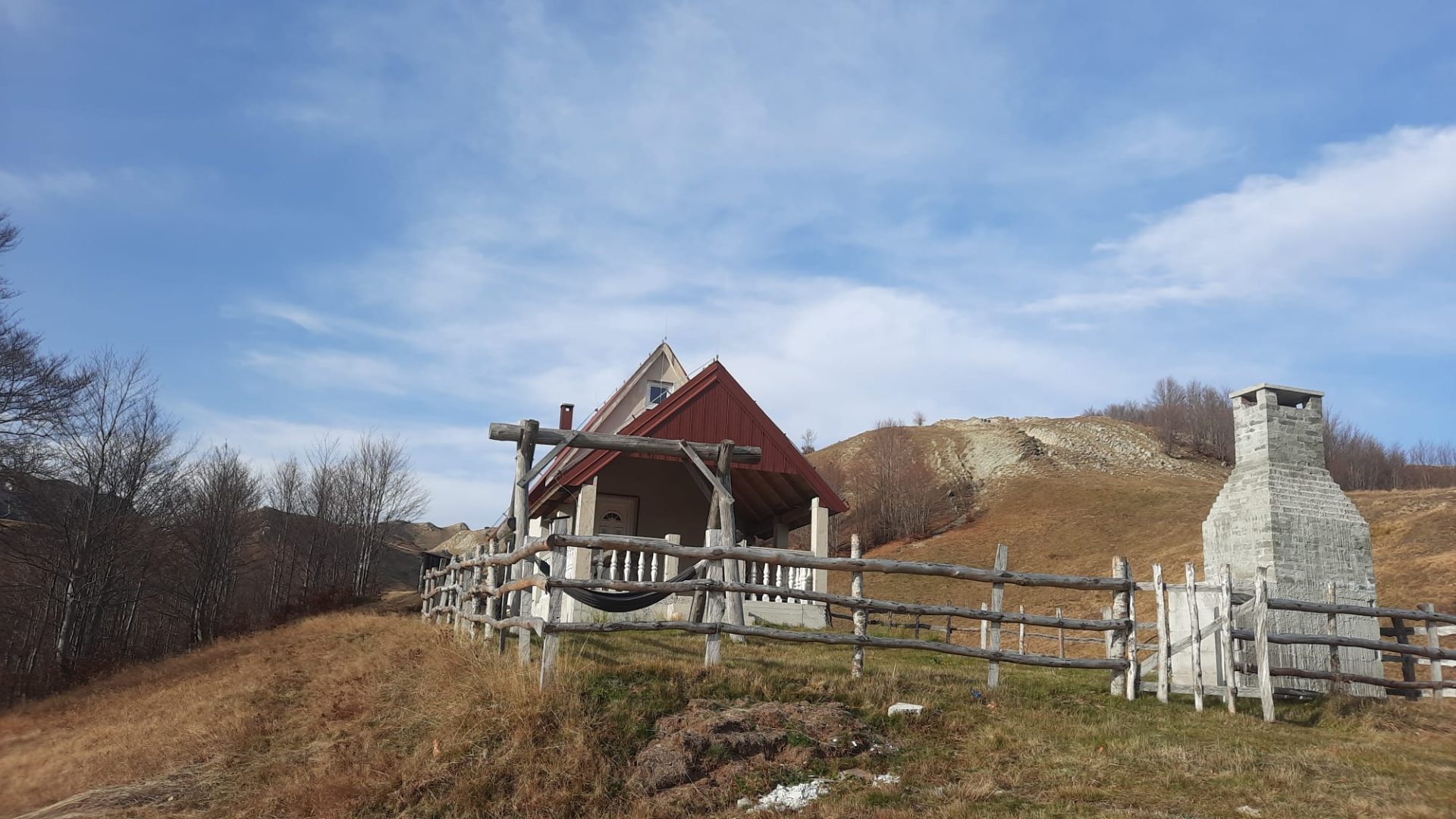
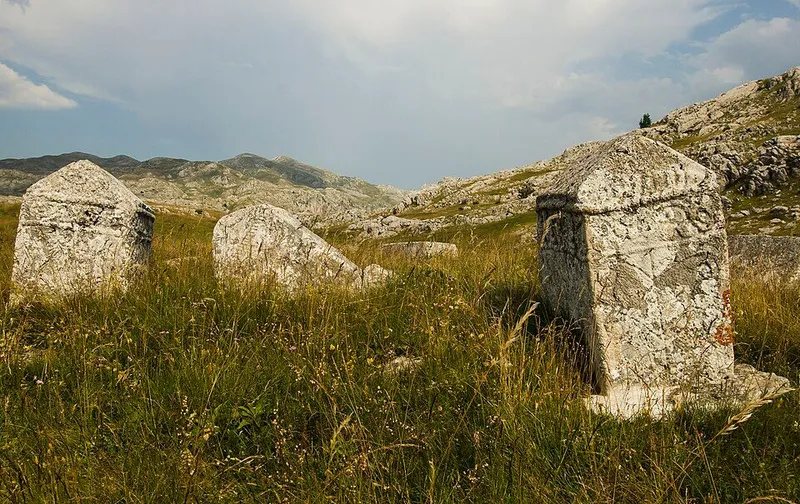
Čengića Bara is a summer settlement of livestock herders in the high karst field of Kladovo polje. The necropolis lies at the centre of the site, with a gravel road along its northern edge. The stones are of limestone, carefully worked, well preserved and set in rows from west to east. They came from the Majdan quarry, some 100 metres to the southeast.
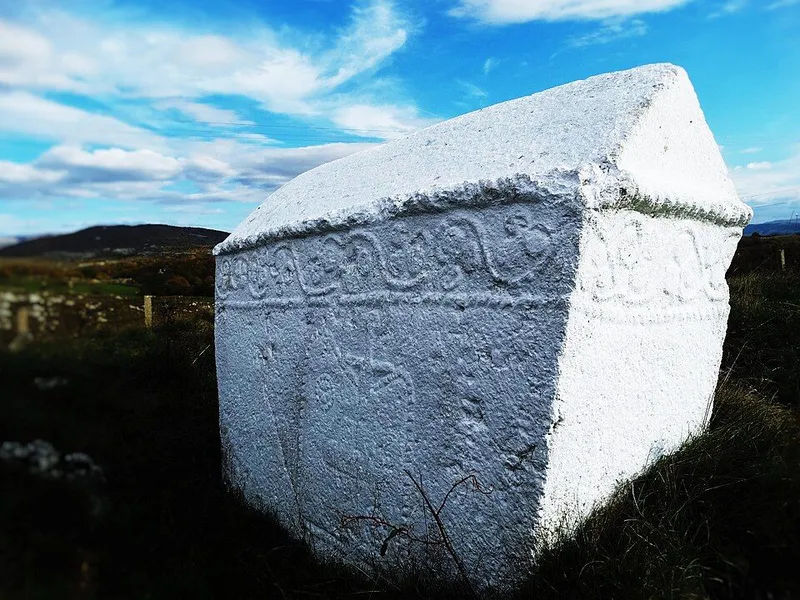
According to the records of the Commission to Preserve National Monuments there are 52: 11 slabs, 35 chests, many of them tall and set on bases, and 6 gabled stones. The rather tall gabled stones in particular are regarded as a hallmark of this necropolis. The heritage institute of Republika Srpska recorded 54 stones in 2012.
Carvings and inscription
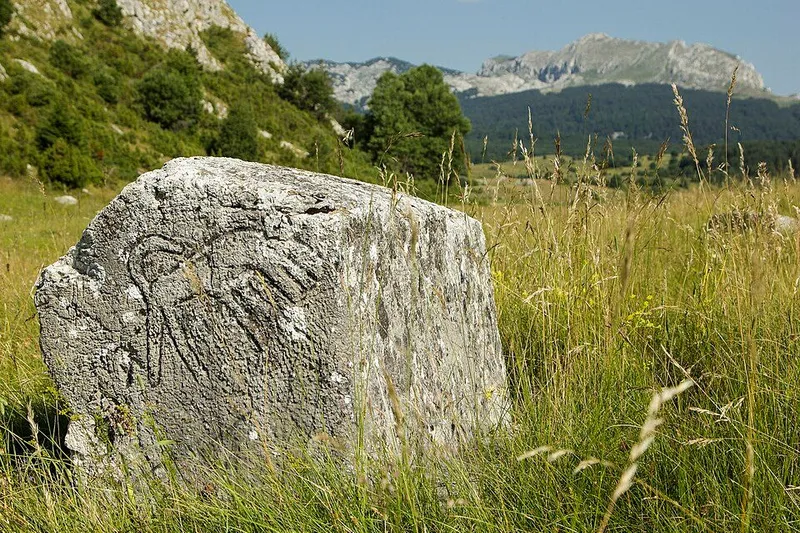
19 stones are decorated: one slab, 12 chests and 6 gabled stones. Above all there are twisted bands and friezes of winding trefoil vines, along with shield and sword, stylised plants, crosses in wreaths, birds, deer and deer hunts, round dances and jousts.
Stone number 45 carries a two-line inscription in Bosnian Cyrillic. It names the dead man: here lies Stojan Opodinović.
Herders and traders
The Kalinovik area has seen little archaeological research. From antiquity there are remains of a road network that linked Bosnian trading and mining towns with Hum, Dubrovnik and the coast. The routes were guarded by military camps, and probably only a few people lived here, keeping livestock. From early times farmers from the lowlands of Herzegovina came up to the southwestern part of the mountains.
In the Middle Ages the area was well populated, and people lived mainly from trade and stock-raising. It belonged to the county of Zagorje, whose chief place, Kučevo, is first mentioned in 1180. A customs post of the voivode Sandalj Hranić Kosača in 1406 shows that Zagorje was part of Bosnia. The necropolises around Kalinovik were recorded from 1954 to 1956 by Šefik Bešlagić together with Đuro Basler, Pavao Anđelić, Mehmed Mujezinović and Ranko Rosić; they have never been excavated.
Protection and condition
In October 2010 the Commission to Preserve National Monuments declared the necropolis a national monument, and in 2016 it became one of 28 sites of the stećci World Heritage property. The inscribed area covers 0.38 hectares, the buffer zone 1.9 hectares.
The 2017 description calls the condition good, but many stones have been damaged by the weather and are heavily affected by lichen and moss. Many have sunk and cannot be seen in full; how many are decorated can only be established once they have been cleaned. In 2011 the site was surveyed and photographed stone by stone.