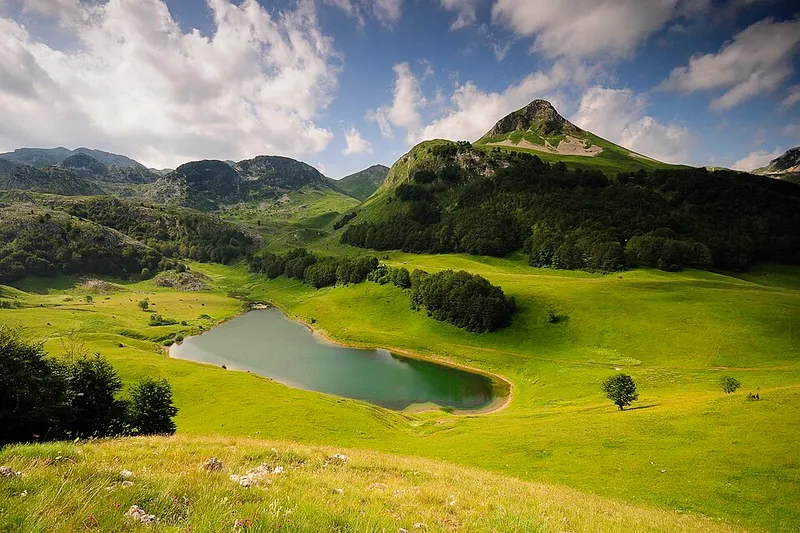
The lake
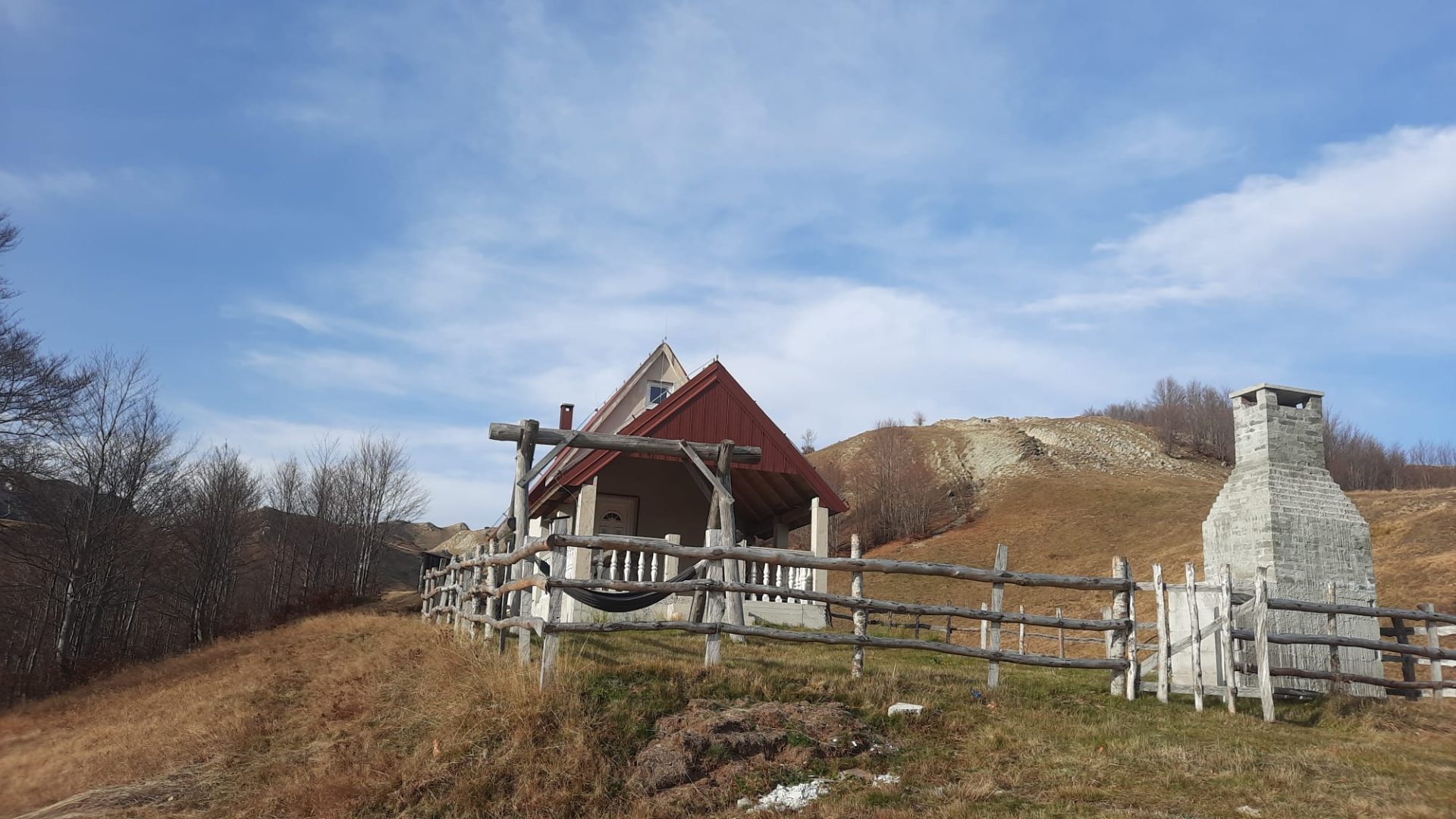
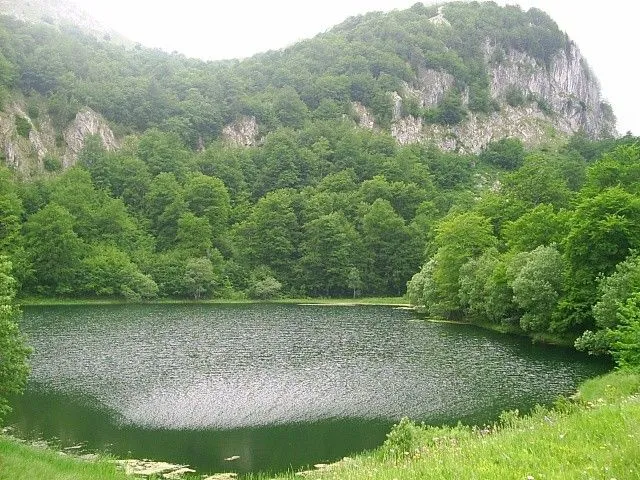
The lake is one of the cirque lakes among the glacial lakes of Zelengora. It is about 350 metres long and around 100 metres wide, with an average depth of about 5 metres and a maximum of roughly 5.5 metres; its surface covers about 3.5 hectares. Meadows and hills surround the water, with the slopes of Zelengora rising above them. The shore shelves gently, the bed and the shoreline are overgrown with water plants, and in summer the lake is good for a swim.
To the east rise the peaks of Orlovac and Orlovača, to the south Stog (1,821 m) and to the north Ljeljen (1,765 m). To the south-east stands Bregoč (2,014 m), the highest peak of Zelengora. Brown trout and Arctic char live in the lake, and rainbow trout have also been introduced. Nearby are katuns, shepherds' huts, with flocks of sheep and herds of cows and horses, and the area shows visible traces of earlier settlement.
The lakes of Zelengora
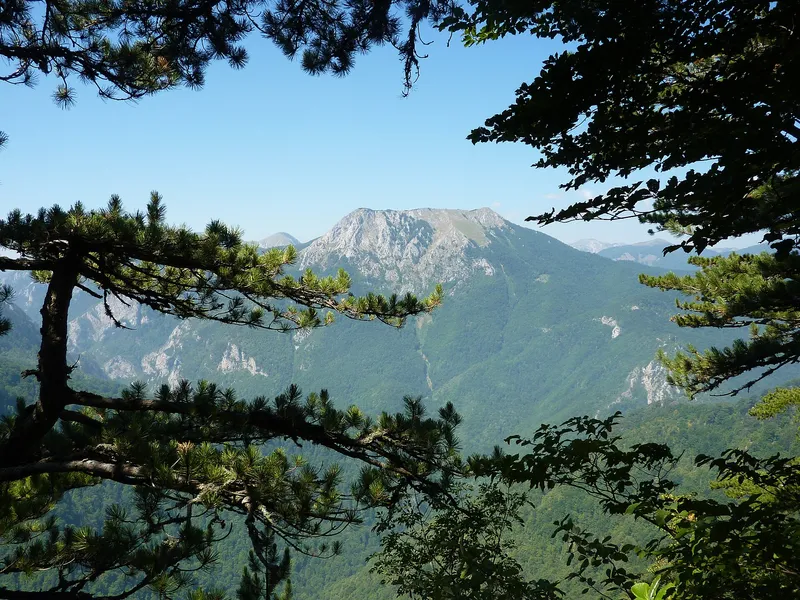
Geologically, Zelengora belongs to the Dinaric Alps and is made up mainly of sedimentary rock, above all limestone. The Neretva rises in these mountains, as does the Hrčavka, a tributary of the Sutjeska. The deep canyon of the Sutjeska separates Zelengora from Maglić and Volujak; the national park administration describes it as a gentle range, in contrast to those two.
At the foot of its peaks lie lakes that the park administration calls “mountain eyes”. Five of them are inside the park boundaries: besides Orlovačko Lake, these are Donje Bare, Gornje Bare, Crno jezero and Bijelo jezero. About one kilometre away is Jugovo jezero, also called Borilovačko jezero, the only artificial lake on Zelengora; it is stocked with rainbow trout every year.
Hiking from the lake
A marked trail to Bregoč starts at the lake. It heads south along a livestock track, climbs steadily to the ridge and then turns east to the summit at 2,014 metres. To the west a path leads to Štirinsko jezero and Kotlaničko jezero in the western part of Zelengora.
The four lakes Kotlaničko, Štirinsko, Borilovačko and Orlovačko can be linked in a single day of hiking. Beyond Štirinsko jezero this circuit descends a gully into the forested part of the mountain.
History and protection
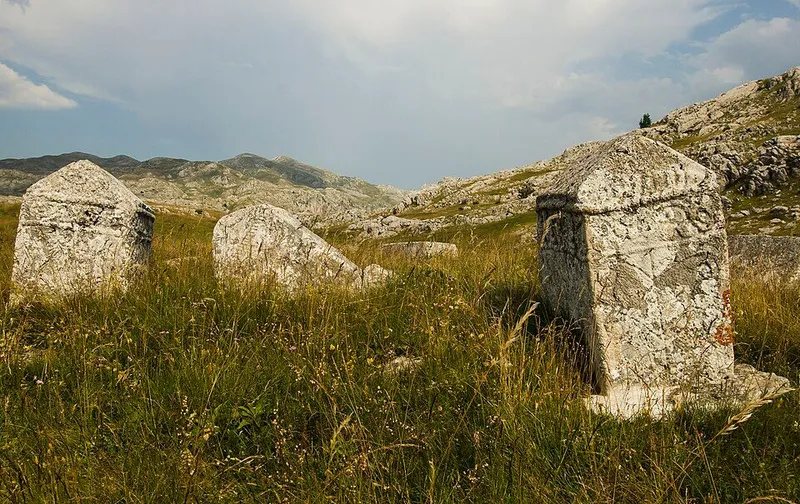
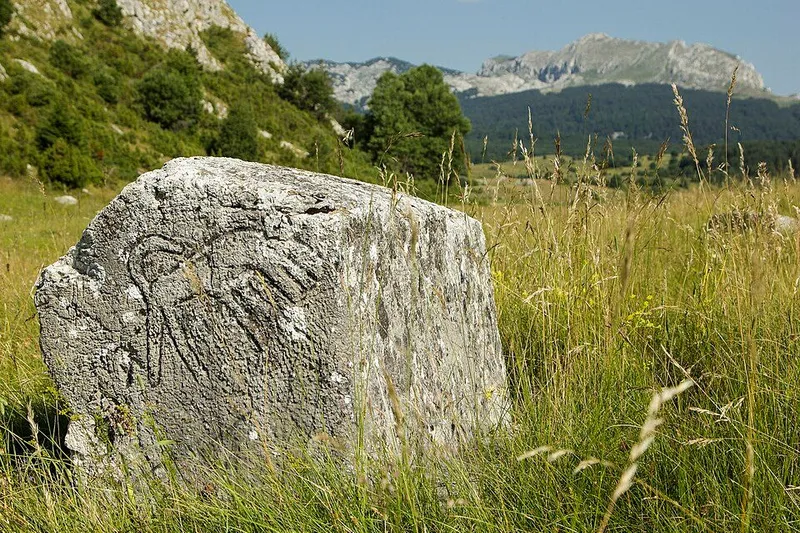
Zelengora has stećci, medieval tombstones. Seven of them stand just west of Jugovo jezero, and a necropolis of 80 stećci lies between Klek and Štirinsko jezero. In 1943, during the Second World War, the range became the scene of fierce fighting in the Battle of the Sutjeska.
On 13 January 1962 the National Assembly of Bosnia and Herzegovina passed a law declaring the Sutjeska area a national park. In 2000 the park was placed in IUCN Category II.
Tips for your visit
Camping in the national park is only allowed in areas the park administration has approved for it. According to the administration, Orlovačko Lake is where people in the park camp most often. The lake can also be reached by car from the south, coming from the direction of Čemerno.