Setting and tombstones
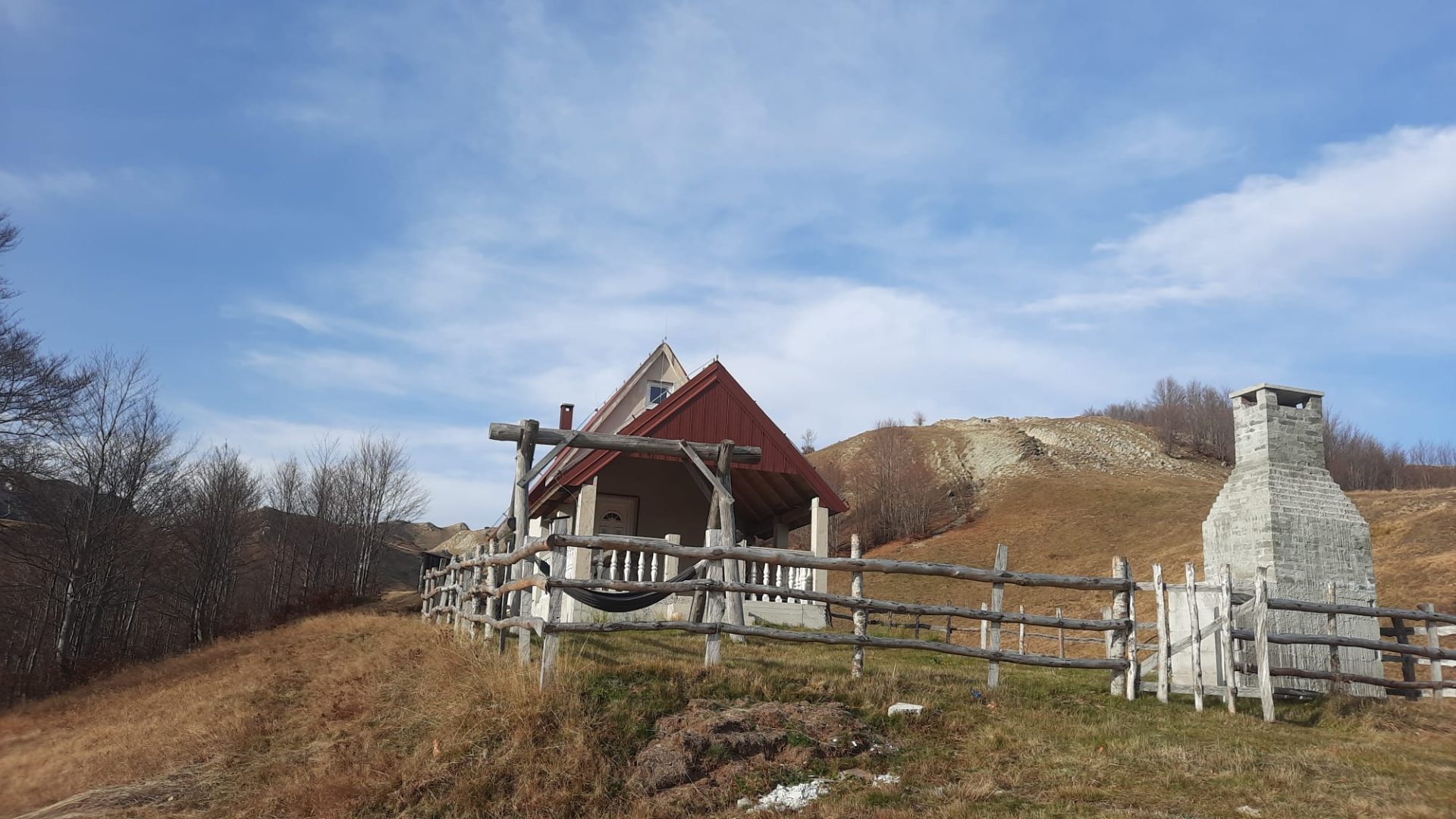
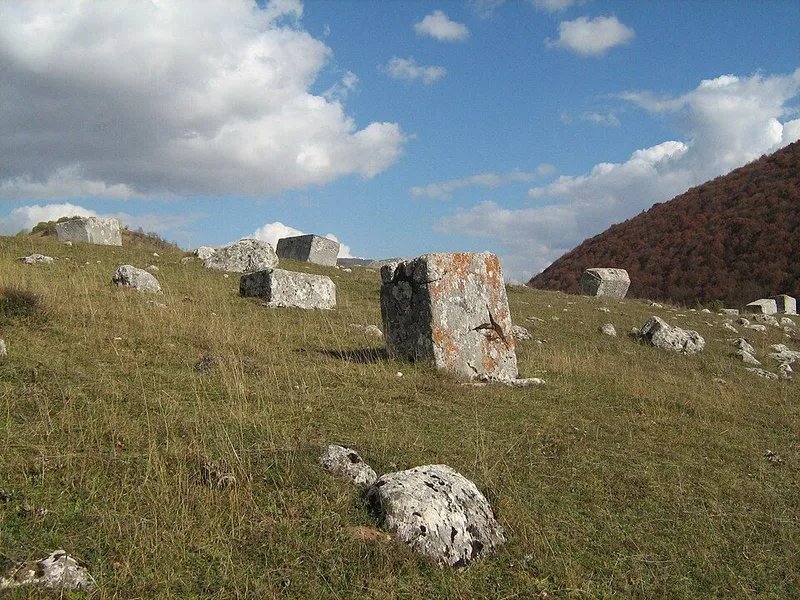
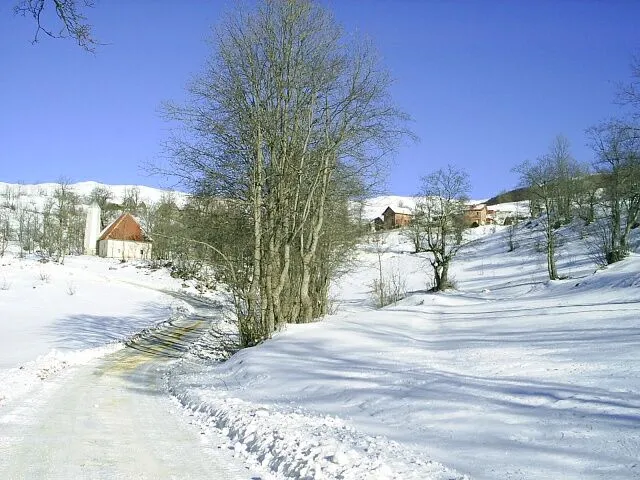
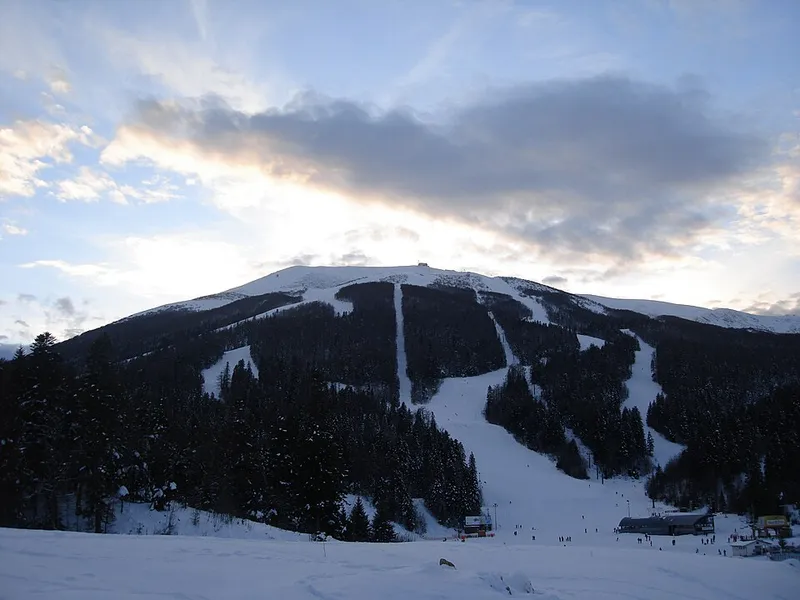
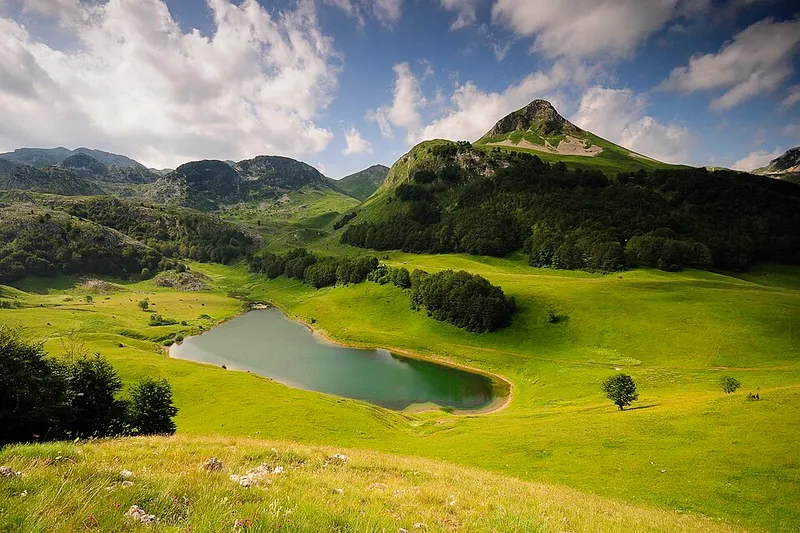
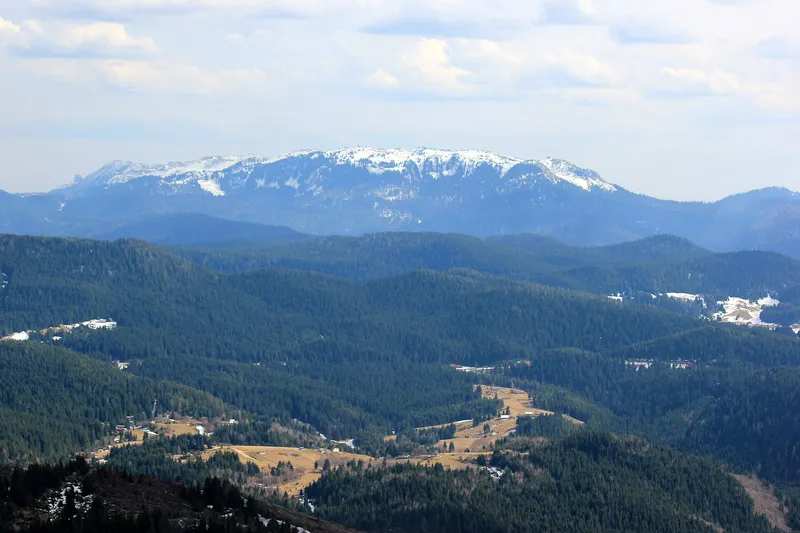
The field is ringed by karst hills to the south and east, while to the west and north the wooded slopes of Treskavica rise gently at first and then steeply. Springs nearby feed streams that water the field and then vanish underground. The necropolis lies on slightly raised ground in the south of the field, some 300 metres from spot height 1396 on Gradac; the quarry was just a few dozen metres to the southwest at the foot of the hill.
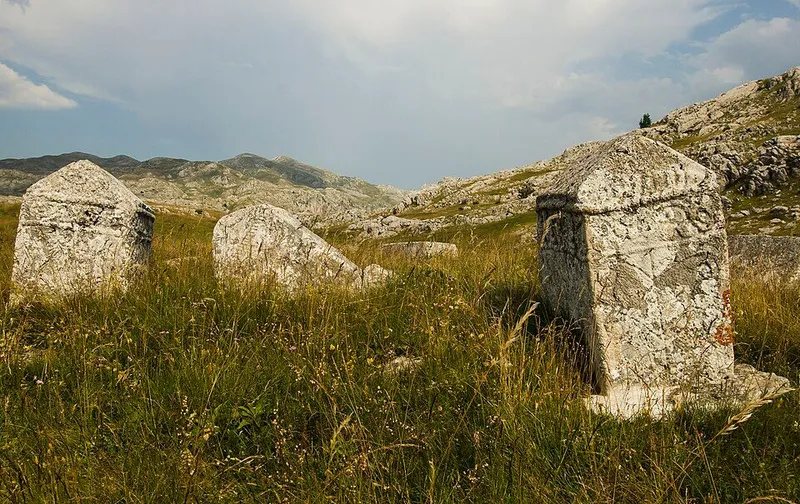
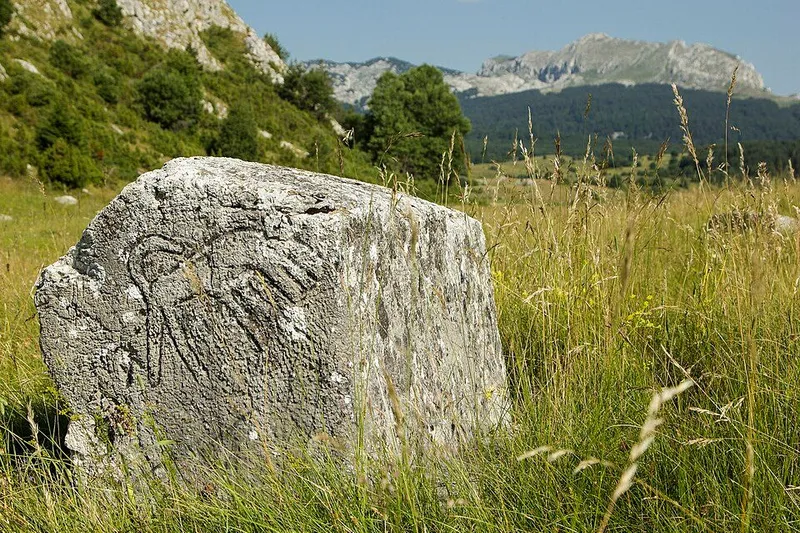
According to the records of the Commission to Preserve National Monuments there are 87 stećci: 54 chests, 27 slabs, 4 gabled stones and 2 crosses. The heritage institute of Republika Srpska counted 71 in 2012. Most lie west to east. Between them you can make out graves simply edged with stones; in one of these a human skeleton was found at a depth of 100 cm. The two crosses, numbers 86 and 87, are carefully cut, 180 and 200 cm tall and undecorated, but are now broken, toppled and sunken.
Pictures in stone
14 stones are decorated. Hunting and dancing scenes stand out, a dog appears several times, and there are images of winged dragons. There are no inscriptions.
The sunken slab number 3 shows on its top a shield over a long, straight sword; on the shield sits a fabulous beast with a branching tail, probably a heraldic emblem. Beside it stands a man about as tall as the shield, one hand on his hip and the other on sword and shield, in a short garment that flares at the hem. Below is a cross-rosette made of four linked wreaths.
The small chest number 10 on a base, probably a child's grave, is decorated on every side: shield and sword, a crescent with a swastika below it on either side, two figures in motion, a horseman and three figures holding hands as if in a round dance. On the tall chest number 42 a bent arm holds a sword. On the north side a rider hunts, with animals resembling chamois ahead of him and a man with a sword; on the end face three men in pointed caps dance a round dance, the leader raising his free hand high.
Kalinovik and the county of Zagorje
The surroundings of Kalinovik are little explored archaeologically, but remains of hillforts and settlements show that people lived here in prehistory. Gradac above Gvozno is a prehistoric fort; a field survey in 1953 found Bronze and Iron Age material there. In antiquity roads crossed the area, linking Bosnian trading and mining towns with Hum, Dubrovnik and the coast; traces can be seen at Jažići, Mosorovići and Bukvica.
In the Middle Ages the area was well populated. Kučevo, centre of the county of Zagorje, is first mentioned in 1180. Zagorje belonged to Bosnia; in 1406 the voivode Sandalj Hranić Kosača kept a customs post here, and charters of Alfonso V, King of Aragon and Naples, from 1444 and 1445 list Valentin and Obalj as fortified places. About 500 metres northwest of the necropolis Šefik Bešlagić came across overgrown walls with a semicircular bulge resembling a church apse. From 1954 to 1956 the necropolises around Kalinovik were recorded, but they have not been investigated archaeologically.
Protection and condition
In November 2005 the Commission to Preserve National Monuments declared the Gvozno necropolis a national monument, and in 2016 it became one of 28 sites of the stećci World Heritage property. The inscribed area covers 0.27 hectares, the buffer zone 7.1 hectares. The 2017 description calls the condition satisfactory and the necropolis preserved in its original form. Many stones, however, have sunk so deep and are so mossy that neither their dimensions nor the exact number of decorated stones can be established. In 2011 the site was surveyed and photographed stone by stone.