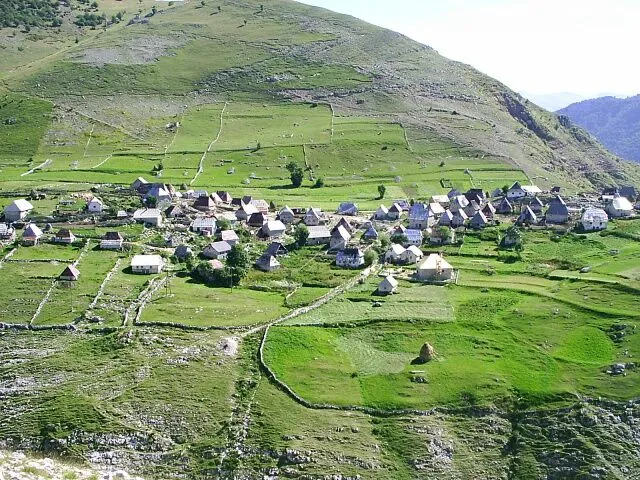
Setting above the gorge
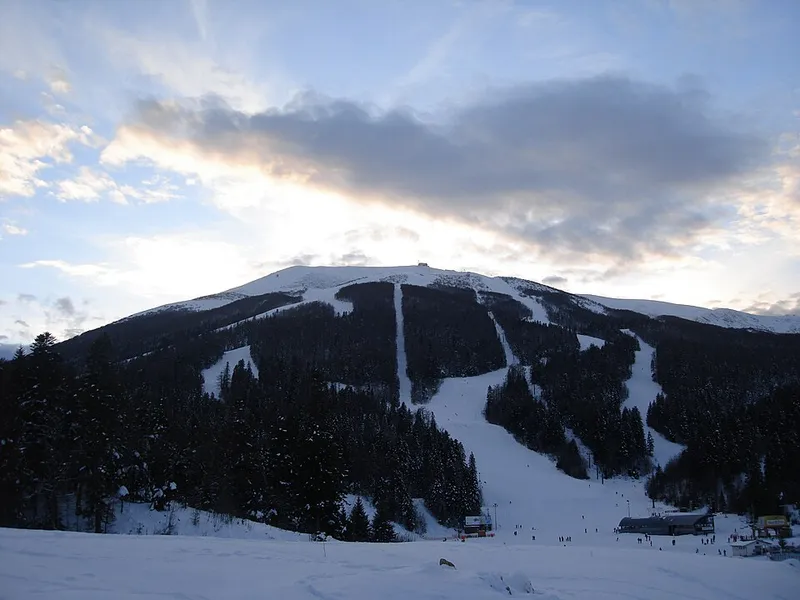
The village lies in the Konjic area, on the steep slopes of the Rakitnica gorge, between the peaks of Lovnica (1856 m) and Obalj (1896 m). The heritage commission puts it at about 1472 metres; other sources give 1495 metres. Bjelašnica itself is a bare, largely waterless limestone plateau with rich pastures in places; its summit reaches 2067 metres.
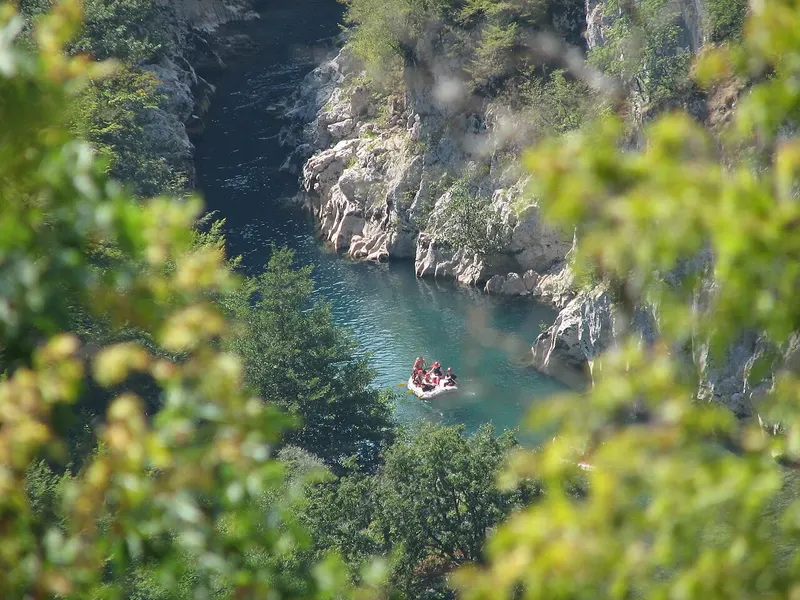
From a viewpoint above the village you look across to the Visočica range, which drops 800 metres to the Rakitnica. According to local folklore, a dragon once came from this gorge.
From summer camp to village
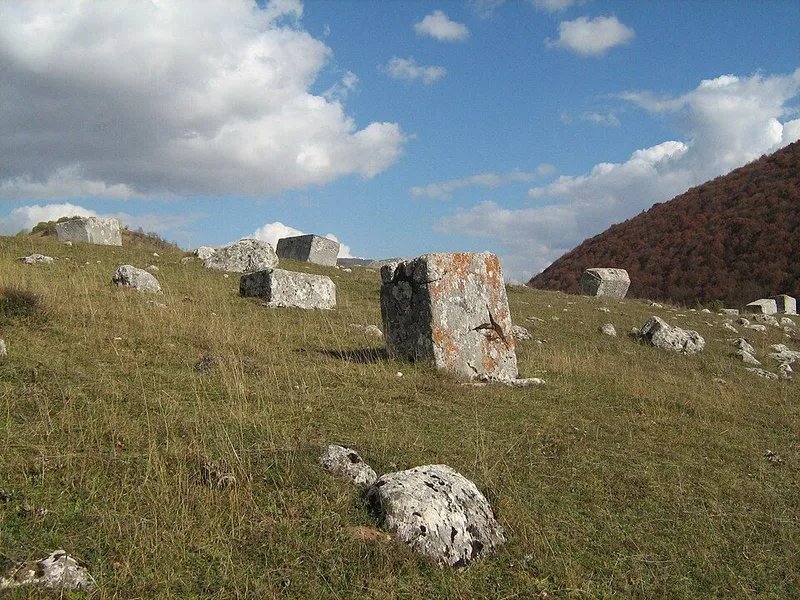
Twenty-seven stećci show that people lived here as early as the Middle Ages. The present village goes back to herders from Herzegovina: most people on Bjelašnica come from the Nevesinje, Mostar and Ljubuški areas. Around St George's Day on 6 May they drove their flocks up the mountain, returning around St Luke's Day on 31 October. Over time some stayed for good and founded villages such as Lukomir, Umoljani and Čuhovići.
In the early 20th century Gornji Lukomir was still a summer village, where the people of Donji Lukomir brought their animals to graze; it was home to the Čomor and Masleša families. In the 1950s the people of Donji Lukomir moved up for good, drawn by better paths and plentiful drinking water. In 1985 the National Museum in Sarajevo counted 43 permanent households in Gornji Lukomir, while Donji Lukomir stood abandoned. The school was built in 1958.
Cottages, mosque and stećci
The village is protected as a whole: 96 buildings, including 46 cottages, 49 outbuildings and the former school, plus two necropolises with stećci. Most houses date from the 1950s to the 1970s but are modelled on much older huts. Typical are small stone cottages with tall hipped roofs, set between pastures and rocks. They were covered with wedge-cut wooden shingles known as šimla; in the late 1980s the villagers laid galvanised iron sheets over them for protection.
Built in 1968, the mosque stands on the village's western fringe. It is made of undressed stone, has a shingle roof and a minaret with a wooden shaft. On the hillock of Vlaško groblje stand 18 stećci, six of them decorated with motifs such as swords, a shield or a stylised cross. About 100 metres to the north-west, at Jezerine, there are nine more.
Life through the year
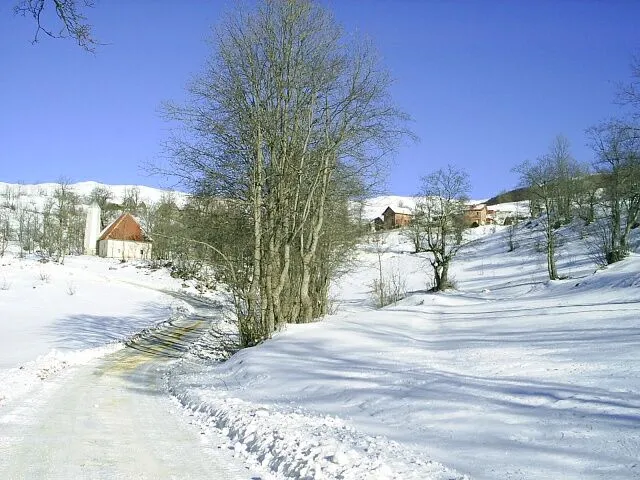
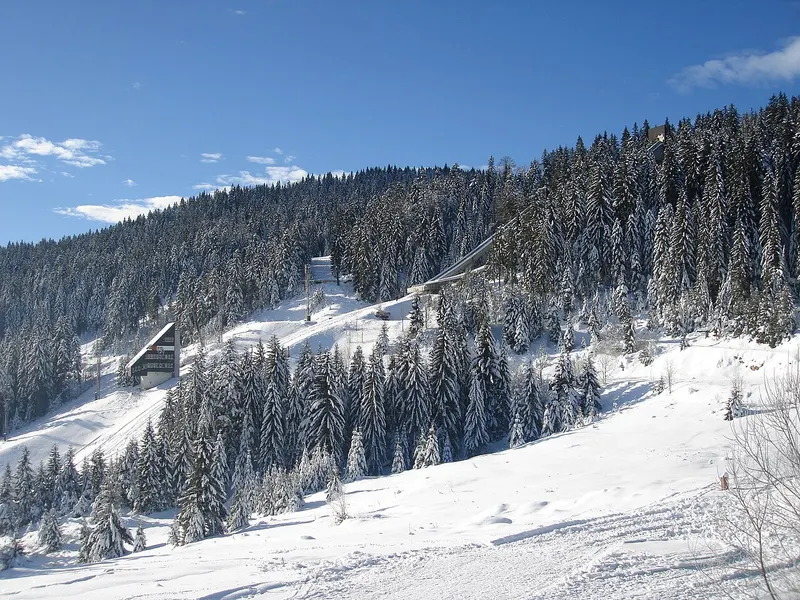
Today Lukomir is lived in seasonally. From May to October people work their fields and tend their animals; in good weather up to 4000 sheep graze the meadows around the village. At night they are kept in stone pens and guarded by Bosnian sheepdogs. Some villagers still wear traditional clothing and make handwoven woollen crafts. In winter they move to lower ground, as heavy snow cuts the village off for about half the year.
In 2009 the heritage commission noted that the changes since the end of the war in 1995 threaten what makes the village distinctive, above all the close bond between people and nature.
Getting there and trails
The last 11 kilometres of the approach are a winding gravel road through karst and meadows. On foot, two mountain paths lead from Umoljani to Lukomir. From the village, trails run along the edge of the gorge to Čuhovići and Umoljani and down into the Rakitnica.