The source of the Bosna
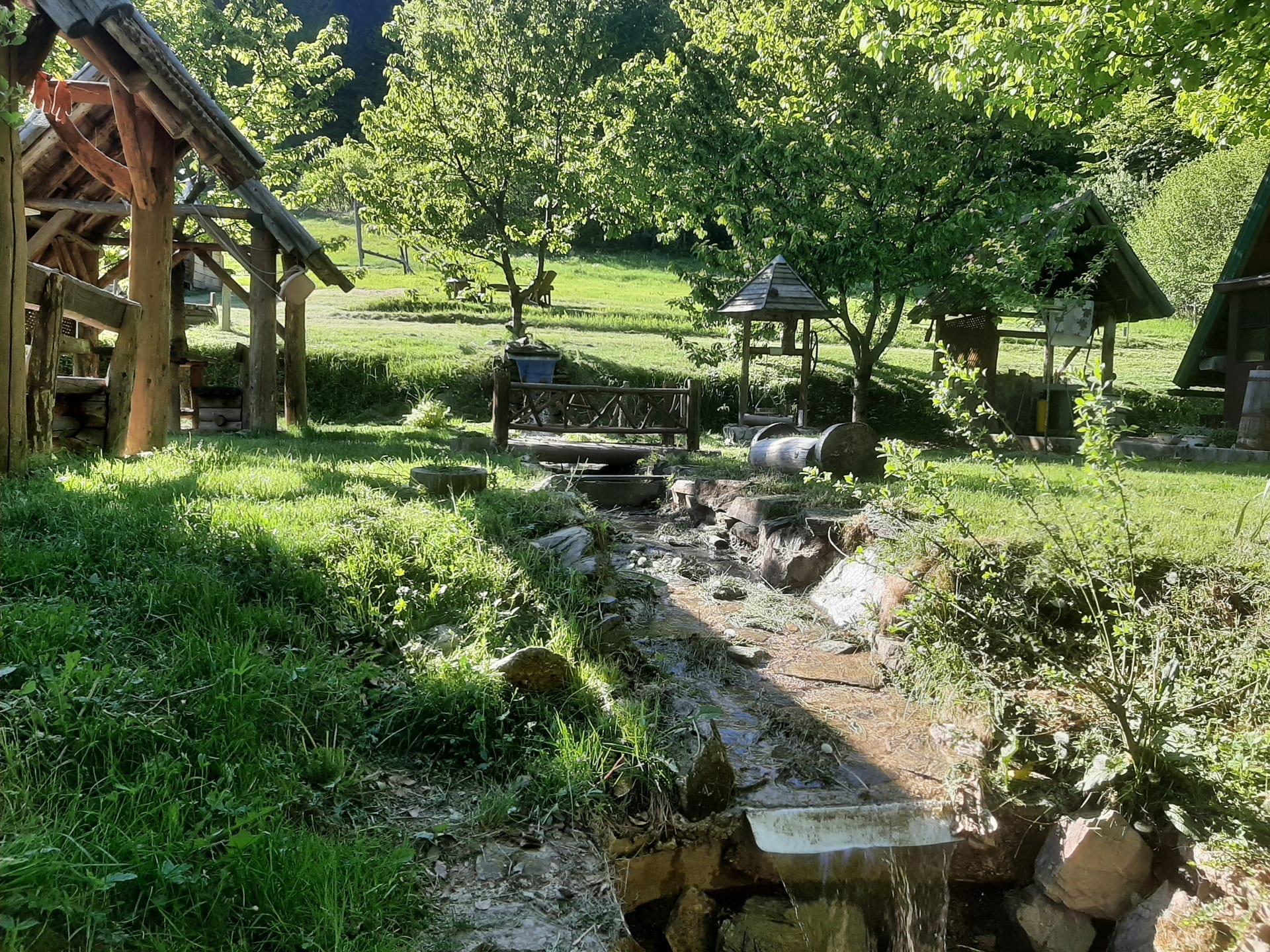
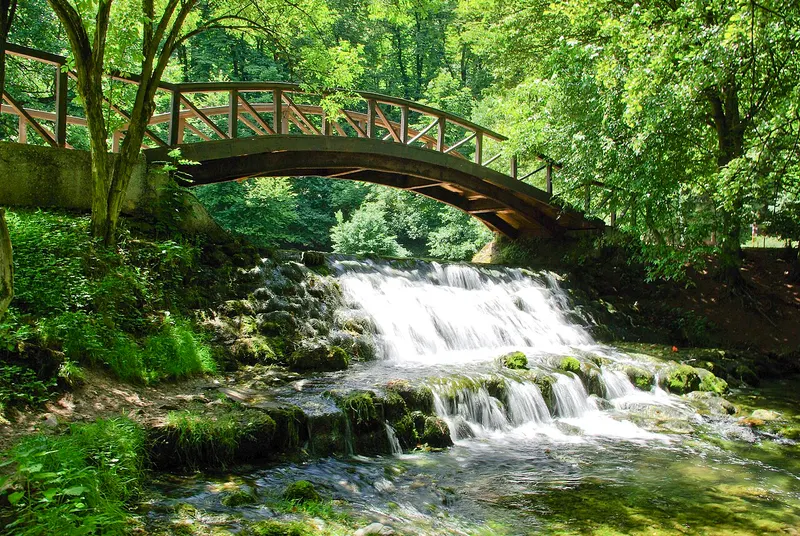
The Vrelo Bosne area lies south-west of Sarajevo below Igman and Bjelašnica, which also form the spring's catchment. Six springs and numerous streams merge here into a single watercourse, the Mala Bosna. The origin of the name Bosna is uncertain; one theory links it to the old Indo-European word bosana, meaning water.
The same area holds the Bačevo wellfield, the main source of drinking water for Sarajevo. Protecting the springs is vital for the water supply of almost 400,000 people in Sarajevo Canton.
Park, ponds and wildlife
Since 2006 the 603-hectare area has been a protected natural monument, managed by the canton's agency for protected areas. The park consists of many small islets linked by bridges across the streams. Swans, the emblem of the spring, live on the ponds alongside ducks. Vrelo Bosne has been a favourite outing since Austro-Hungarian times.
Native brown trout dominate the streams; non-native rainbow trout and grayling have adapted well. The invertebrates include two endemic small crustaceans and three endemic insects. Twenty mammal species and more than 26 plant communities have also been recorded.
The Velika aleja
From Ilidža the Velika aleja runs for 3.5 kilometres to the source. It is lined by two rows of plane trees and dozens of horse chestnuts. Villas from the Austro-Hungarian period stand on both sides, built as retreats for the high society of the day.
The avenue is closed to cars. Visitors walk, cycle or take one of the carriages running here since 1895.
Ilidža: baths since antiquity
The Ilidža area holds remains of Neolithic, Illyrian and Roman settlements, and its thermal baths were used in Roman, Ottoman and Austro-Hungarian times. In 1893 a Neolithic settlement was found here by chance. In Roman times the settlement of Aquae S. was the administrative and cultural centre of the region.
The turning point came in 1885, when the provincial government took over the spa. The hotels “Hungarija”, “Austria” and “Bosna” were built, as were the villas and the avenue itself; visitors came to hunt, fish, ride, go boating and hike. Hotel Bosna is regarded as a monumental example of the “Swiss style” in Bosnia. Here the heir to the throne, Franz Ferdinand, and his wife Sophie spent their last night before taking the morning train to Sarajevo.
The Roman Bridge
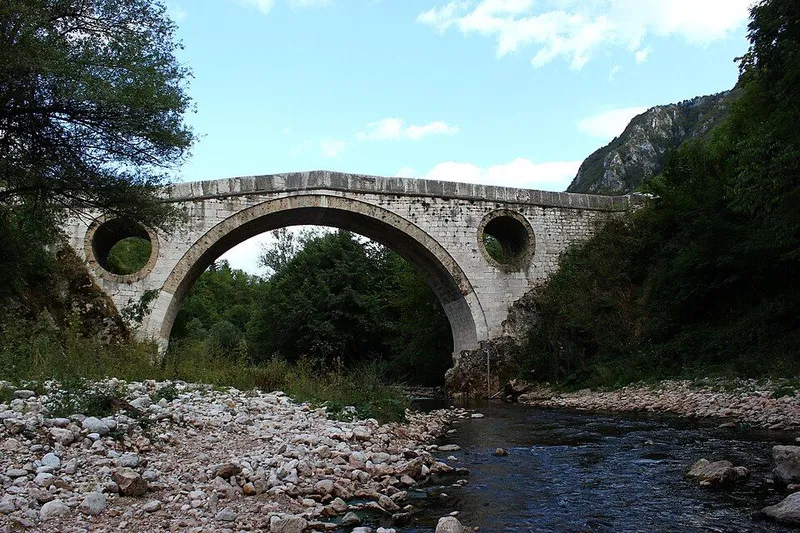
About 2 kilometres below the source, the bridge at Plandište spans the Bosna; locals call it Rimski most, the Roman Bridge. It was probably built or thoroughly renewed between 1530 and 1550: the first to mention it was the Venetian envoy Catarino Zeno, who passed through Sarajevo in 1550 and described a stone bridge with seven arches. Who built it is unknown; the suggested builders are Rustem Pasha, Semiz Ali Pasha or Gazi Ali Pasha. The arches grow higher and wider towards the middle, typical of Ottoman bridges.
The bridge owes its name to a Roman spolium: set into the downstream parapet is a stone slab with a low relief showing a standing nude figure. Since 2005 the bridge has been a National Monument of Bosnia and Herzegovina.