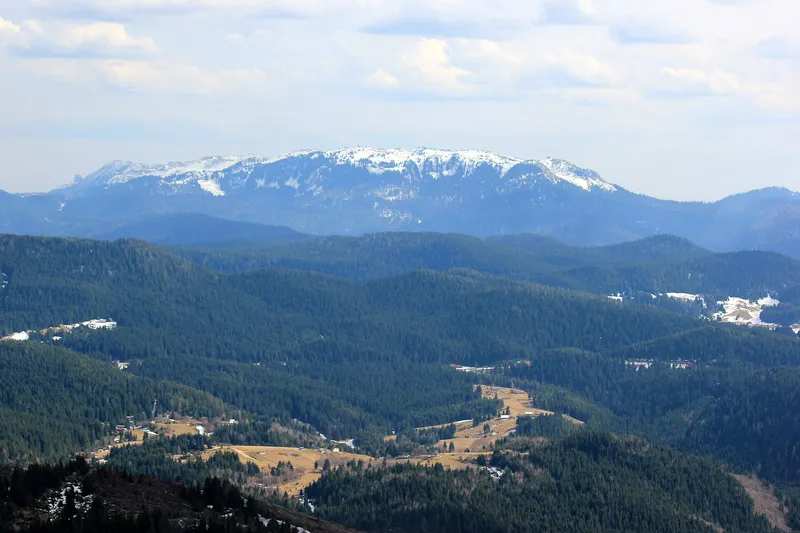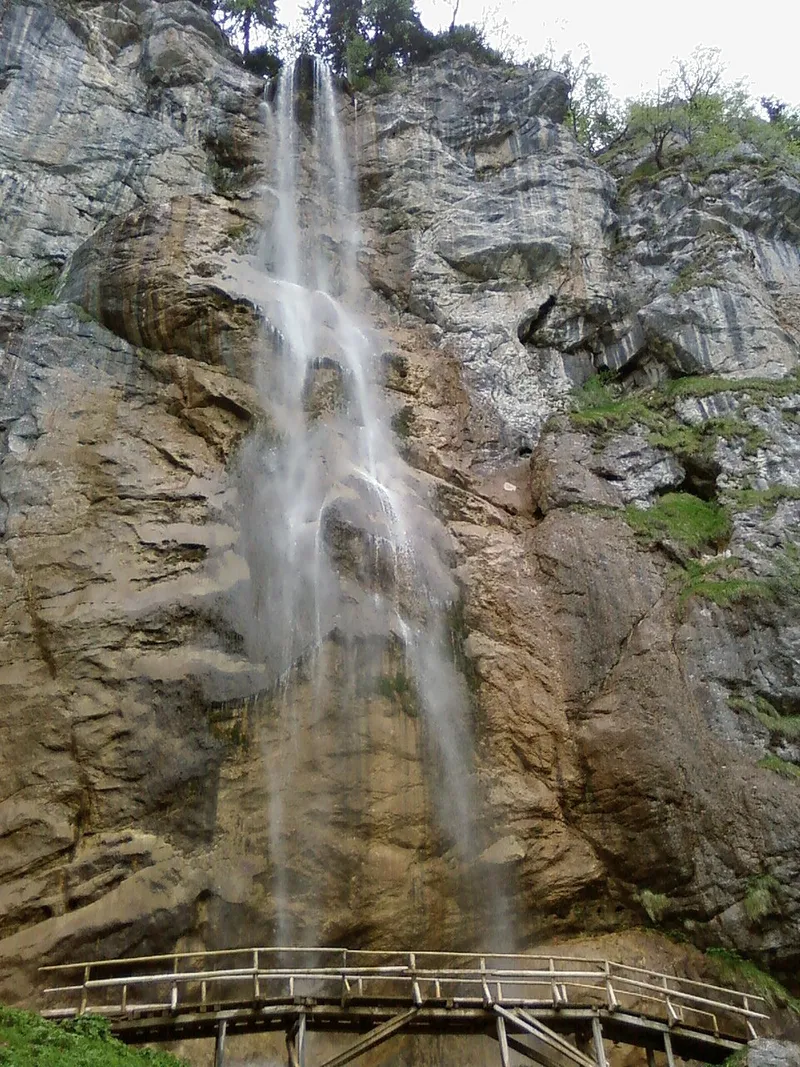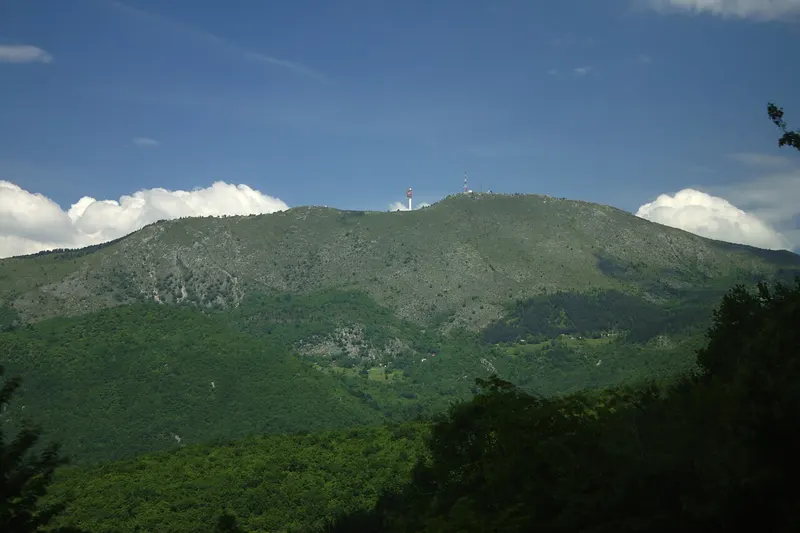
The mountain above the city
Trebević lies partly in Sarajevo Canton and partly in Istočno Sarajevo in Republika Srpska. Via Mali and Veliki Stupanj it merges into Jahorina, and its main summit is called Sofe.
The origin of the present name is uncertain. One theory holds that an altar to a Slavic god, probably Perun, once stood here, giving rise to the word “trebevište”. There are also signs that the Illyrians, who had a settlement at today's Debelo brdo, sacrificed animals in sinkholes near the summit.
The cable car
The first cable car began running on 3 May 1959. It linked Bistrik at 583 metres with the Vidikovac station at 1160 metres; the lead designer was František Šup from Czechoslovakia, and the system had 50 cabins for 4 passengers each. During the siege of Sarajevo the line and both stations were completely destroyed. Ramo Biber, who looked after the upper station, was among the war's first victims: he was killed on 2 March 1992, and the Vidikovac station now bears his name.
The rebuilt cable car opened on 6 April 2018. Leitner supplied the system; the architect Mufid Garibija designed the route and stations. Of its 33 gondolas, each for ten passengers, five carry the colours of the Olympic rings and one the colours of the flag of Bosnia and Herzegovina; the rest are black.
The Olympic bobsleigh track
At the XIV Olympic Winter Games, held in Sarajevo in 1984, the bobsleigh and luge events took place on Trebević. The track was designed by the architect Gorazd Bučar; construction began on 1 June 1981 and assembly was completed on 30 September 1982.
During the siege, Bosnian Serb forces used the track as an artillery position, and fighting holes were drilled into one of the last turns. Restoration began in June 2014, including the removal of overgrowth and graffiti. After the first repairs, bobsleigh and luge athletes from Bosnia and Herzegovina and several other countries began using the track regularly for summer training.
Forests, plants and wildlife
Trebević has had protected status as a park forest since 1954. On 9 April 2014 the Assembly of Sarajevo Canton declared the part in Stari Grad municipality a protected landscape; it covers 400.2 hectares in three zones, including a strictly protected core zone. The part in Republika Srpska has also been protected as a nature park since 2022.
The forests are typically Dinaric: thermophilic beech woods, hop-hornbeam woods and stands of fir and spruce, among which grows the Serbian spruce (Picea omorika). Records list 99 plant species, 14 fungi including Caesar's mushroom, and 26 bird species. The wolf, brown bear and northern white-breasted hedgehog are on the Federation's Red List. The nose-horned viper is common in rocky terrain.
Traces of history
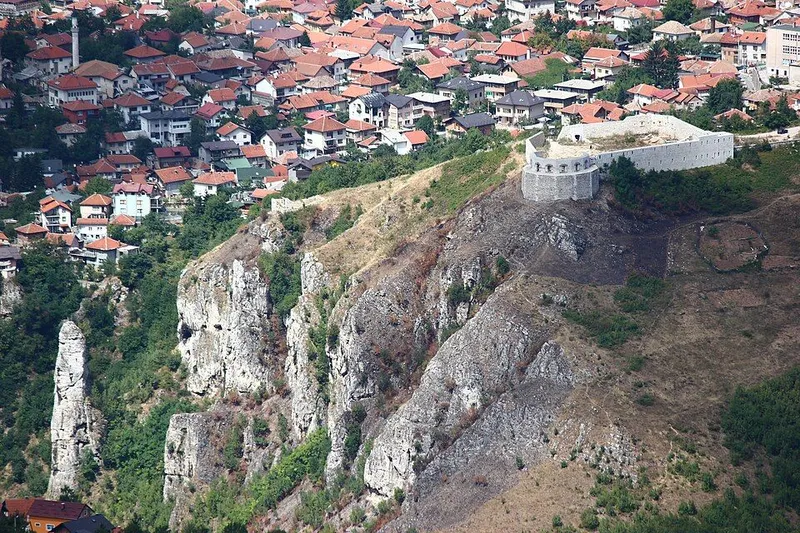
In Austro-Hungarian times the mountain gained importance above all for military reasons, as the whole city can be seen from its slopes. Fortifications were built on several high points, and their remains can still be seen. At the same time the slopes were reforested and hiking trails laid out. Under the Kingdom of Yugoslavia, Sarajevo's first mountaineering associations were founded and the first mountain huts built.
The cultural heritage of the protected landscape includes the Čolina kapa observatory in the Bistrik Tower fortress, the remains of the Draguljac fortress and the Austro-Hungarian Bistrica–Hrid waterworks.