Early records and abandonment
The oldest written record dates from 1617, when a scribe named Petar copied the book Lestvica in the church of St Nicholas known as Vozuća. In 1622 a Trebnik was written here under the prior Serafion, and in 1628 the monk Zaharije Vozućanin copied a prayer book. In the 17th century, monks from Vozuća appear in the commemorative books of Beočin and Kruševo.
After Austria's defeat in its war against the Ottomans, many monks left the monastery in 1690. By 1691 there were apparently no monks left, and the monastery stood empty for more than a century. The church was originally dedicated to St Nicholas; after its renovation in the 19th century it was consecrated to the Holy Trinity in 1865.
Renewal and years of war
Between 1856 and 1859 the dilapidated church was renovated; inscriptions above the west door and on the drum of the dome record the work. In 1858 a primary school was built beside the church, where the priests at first did the teaching; it closed in about 1894. The church was re-roofed in 1884 and given a wooden bell tower in 1894.
The 20th century was hard on the monastery. In 1917 the Austro-Hungarian military authorities took the bell down from the tower, on 5 September 1941 the police of the Independent State of Croatia looted the church, and on 14 February 1942 the Muslim militia set fire to the school and the bell tower. After the Second World War the monastery was repaired and in 1970 listed as a Category I cultural monument; a new wooden bell tower followed in 1989. At the end of 1995 the monastery was vandalised, and afterwards the copper sheeting was stripped from the roof. Around 2000 the church received a temporary roof.
The Holy Trinity church
The church is a single-nave building with a narthex, side choirs, a dome on a high drum and an apse at the east end. It is 16.80 metres long, and the cross on the dome stands about 17.40 metres above the floor. The drum is octagonal on the outside and the apse five-sided. The very tall, narrow dome windows alternate with small columns and arches, forming rows of blind arcades. Three kinds of local stone were used, including tufa for the vaults and dressed serpentine for the outer wall faces. Many scholars see the church, like those of Liplje and Udrim, in the tradition of the Raška school.
The nave floor had a circular stone inlay with an eight-pointed star of dark purple stone, surrounded by eight hexagons of red marble. No frescoes have survived. After the 1856–1859 renovation Todor Stanić Gračanić painted icons for the church; they were probably lost when it was looted in 1941.
Setting and condition
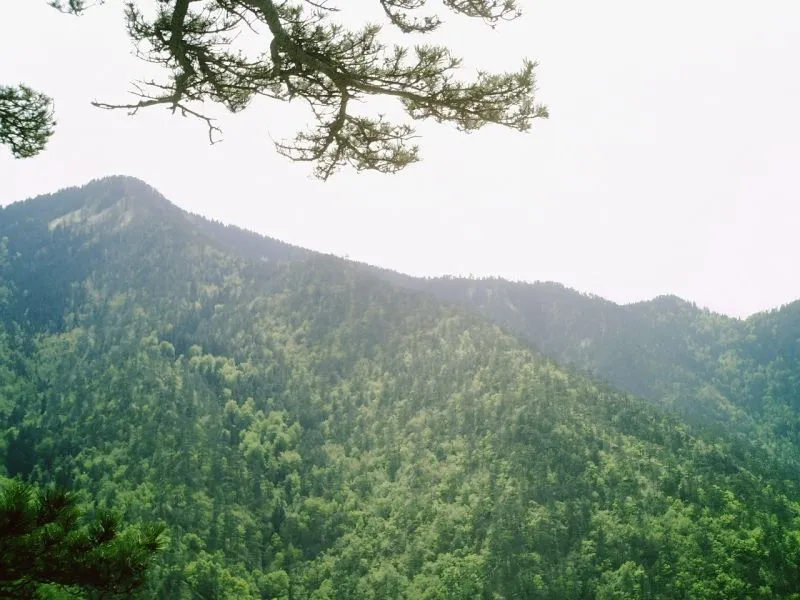
At Vozuća, 25 kilometres from Zavidovići, a 6-kilometre road branches off the Žepče–Zavidovići–Banovići–Živinice regional road and leads past the hamlets of Maričići, Kalajši, Jeličići and Lipa to the monastery. Across the small Vozućica river, close to the church, is a drinking-water spring used during worship.
Members of the Commission to Preserve National Monuments visited the monastery in December 2003, and the 2004 decision describes the church as being in poor condition: the vault of the narthex had cracks up to 15 centimetres wide, doors and windows were missing and the bridge over the Vozućica had been destroyed. In 2010 the renovation of the monastery was still under way.