Setting in Visočko polje
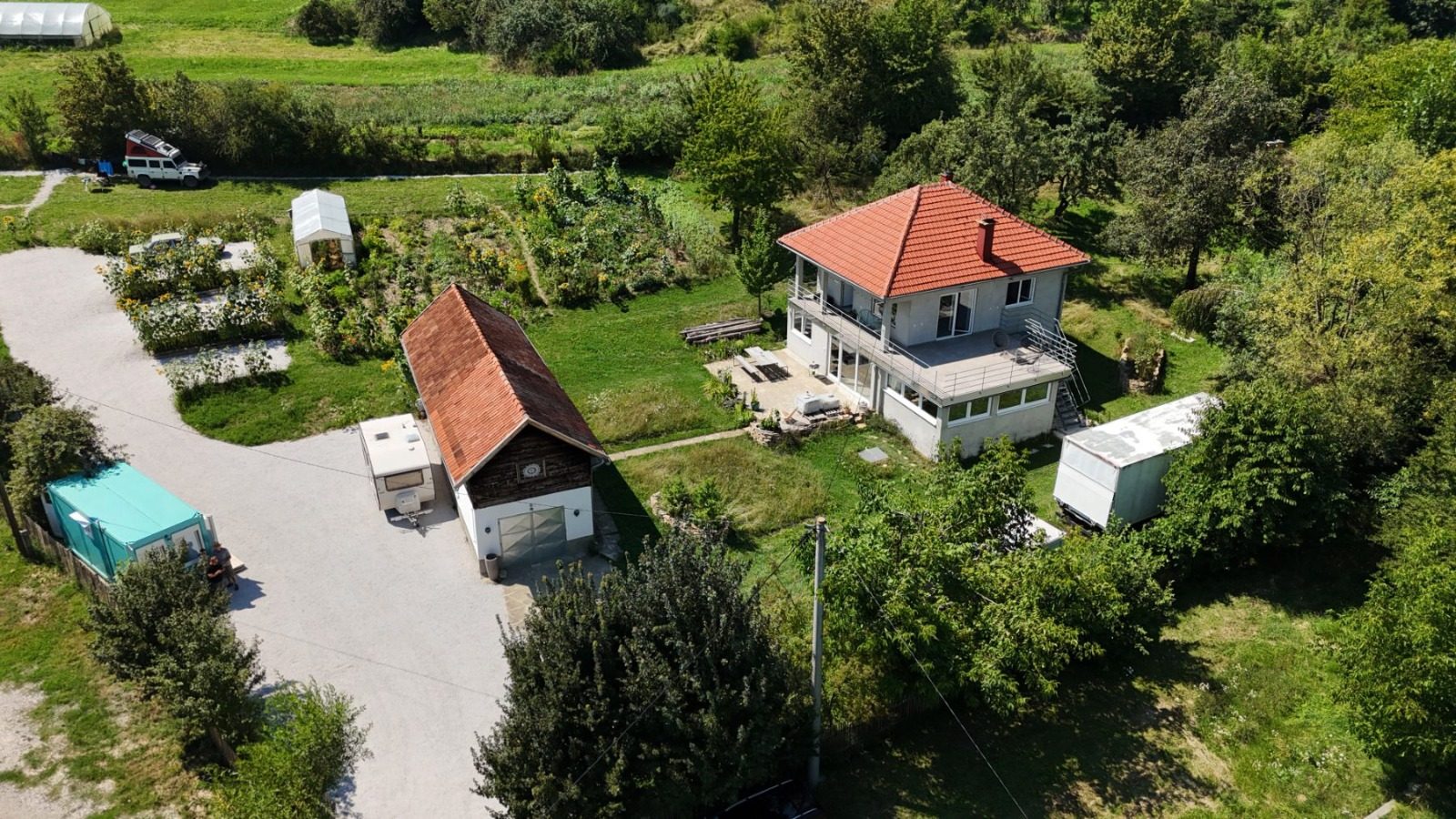
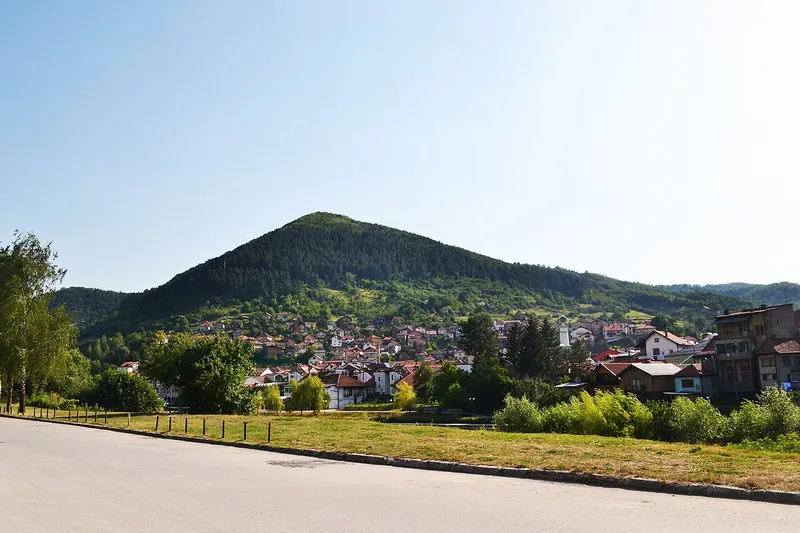
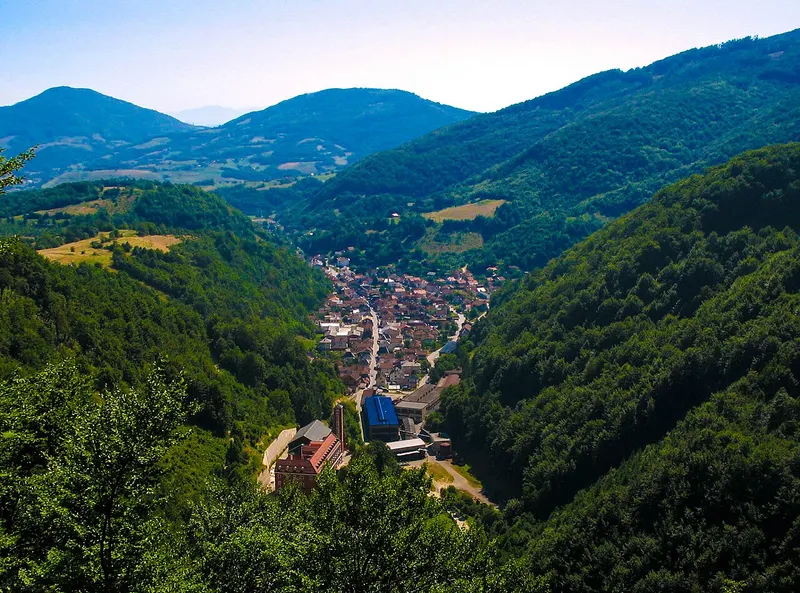
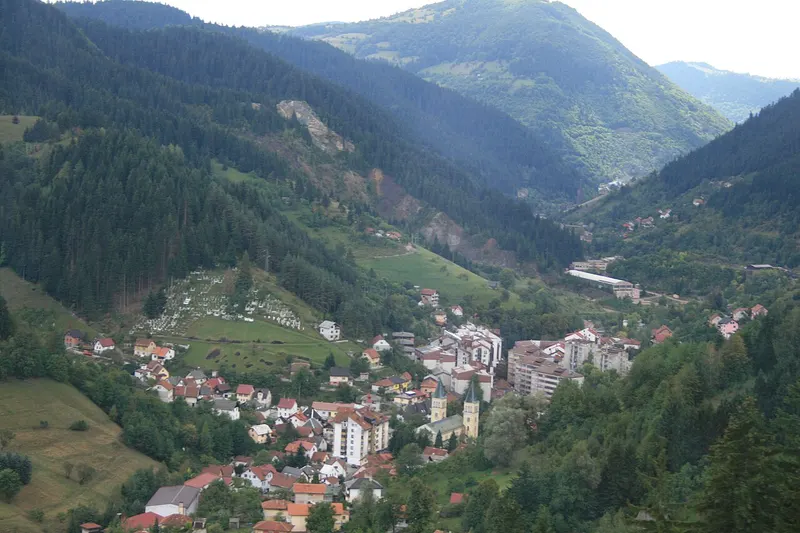
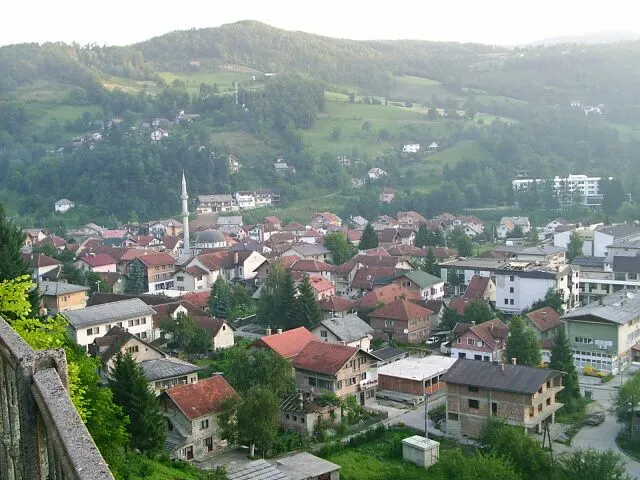
The village of Arnautovići, which received its present name in the 17th or 18th century, is medieval Mile. It lies in Visočko polje on the right bank of the Bosna, near the mouth of the Goruša, about 2 kilometres from the old settlement of Podvisoki; even closer are Biskupići and Moštre, political and cultural centres of medieval Bosnia. From here the route ran north to Sutjeska and Bobovac. The church stood on the site of a Neolithic settlement dating from around 2600 to 2400 BC.
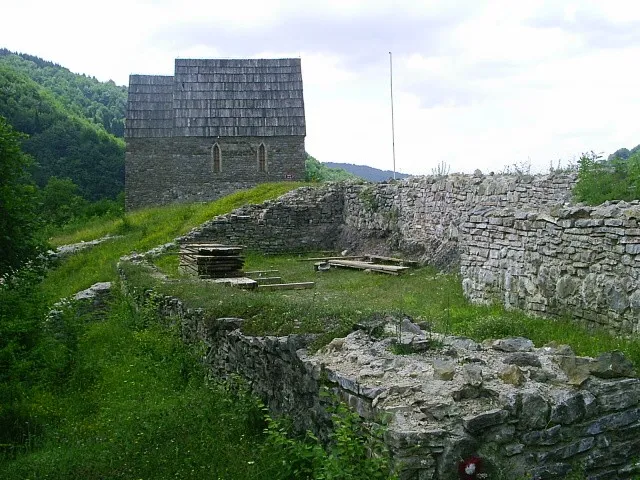
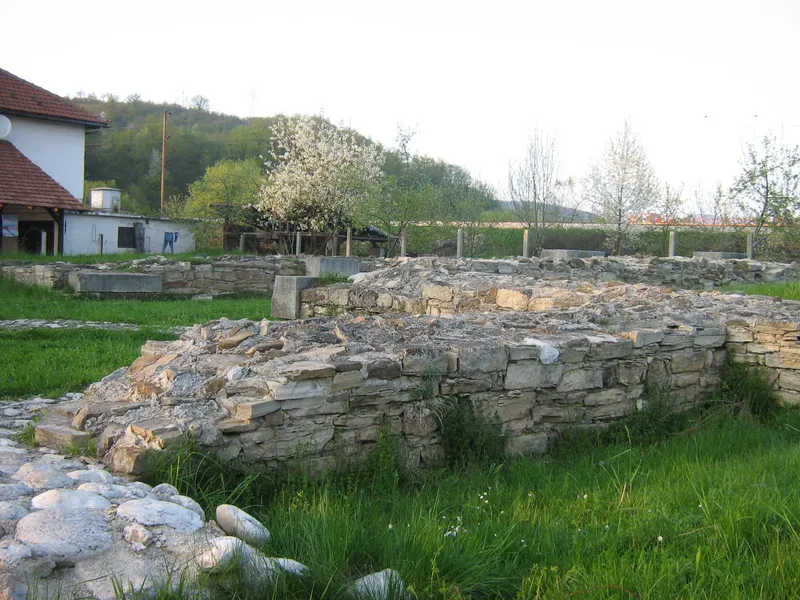
The present appearance of the site was shaped by railway construction in 1947: the ruins were roughly levelled and barracks for youth labour brigades put up on them, and a narrow-gauge railway, later a road, cut the site and the church in two.
Seat of the bans, friary and assembly place
Mile is first mentioned in 1244 in a charter of King Béla IV as a possession of the Bosnian diocese, by a church of Saints Cosmas and Damian. In the 14th century Mile was a seat of the bans and a centre of state life. Ban Stjepan II Kotromanić founded the first Franciscan friary of St Nicholas here; with the establishment of the Franciscan vicariate in 1340, Mile became the seat of church institutions, and the friary kept the rulers’ charters. Bosnian state assemblies met at Mile, and from 1367 to 1407 sources record cash donations from Dubrovnik merchants to the friary.
Whether Tvrtko I was crowned king at Mile in 1377 is disputed. The archaeologist Pavao Anđelić argued that he was; the historian Ćirković instead placed the coronation in Serbian territory, perhaps at the monastery of Mileševa. Around 1600 Bishop Baličević noted in a report that the church was called the royal chapel. The friary was abandoned in 1697 during the Great Turkish War.
Churches and royal tombs
The excavations reveal four building phases. The older Gothic church was probably built around 1340, shortly after the friary was founded; a larger Gothic church was added later.
More than 100 graves have been recorded, 36 of them inside the church; around it lay a necropolis with stećci. The grave of Ban Stjepan II, who died in 1353, could not be confirmed archaeologically, although chroniclers such as Mavro Orbini report that he was buried here at his own wish. The tomb of Tvrtko I, who became ban in 1353 and king in 1377, lay in the rear part of the choir. Above it stood reddish-brown stone slabs with low figural reliefs and a carefully carved stećak, of which only a badly damaged block remains today. The tomb contained remains of a brocade mantle bearing the royal coat of arms, as well as gold rings.
Excavations and visiting
The first excavations were carried out in 1909 and 1910 by Patsch, a curator at the National Museum in Sarajevo; the site was systematically investigated in 1976 and 1977 under Pavao Anđelić. The finds from the royal tomb belong to the medieval collection of the National Museum (Zemaljski muzej) in Sarajevo, while other finds are kept by the Heritage Museum in Visoko, which displays some of them. On site, the foundation walls can be seen; in 2015 the municipality of Visoko, together with the Heritage Museum, funded lighting and conservation work in which damaged wall tops were repaired.